Every home is built from materials that gradually change over time. Some are designed to last for decades with very little attention, while others naturally wear out through daily use, weather exposure, or normal aging. Knowing how long these materials typically last can help homeowners plan maintenance more effectively and avoid being surprised by unexpected repairs.
It’s important to remember that no material comes with an exact expiration date. Two homes built in the same year may age very differently depending on climate, maintenance, usage, and installation quality. A roof in a mild climate may last much longer than the same roofing material exposed to frequent storms, while flooring in a busy family home may wear faster than flooring in a lightly used guest room.
Instead of treating lifespan estimates as fixed deadlines, it’s more useful to view them as general planning tools. Understanding what normal aging looks like makes it easier to decide whether a material simply needs maintenance or whether replacement is becoming the more practical option.
Time Is Only One Part of the Story
Many homeowners assume that replacing something should depend entirely on its age. In reality, performance often matters much more than the calendar.
For example, an older window that still seals properly and operates smoothly may continue serving the home well for many years. On the other hand, a much newer fixture exposed to heavy moisture, poor installation, or unusual wear may require attention much sooner than expected.
Looking at condition, performance, and visible wear together provides a far more accurate picture than relying on age alone.
Daily Wear Adds Up Gradually
Most household materials don’t fail suddenly. Instead, they experience thousands of small stresses over many years.
Cabinet doors are opened and closed countless times. Floors support continuous foot traffic. Countertops experience repeated cleaning, spills, and temperature changes. Exterior materials expand and contract with changing weather throughout every season.
Because these changes happen slowly, homeowners often adapt to them without noticing that a surface or fixture is no longer performing as well as it once did.
Recognizing gradual wear makes it easier to plan improvements before small issues become larger expenses.
Roofing Materials Usually Show Their Age First
A roof protects nearly every part of the home below it, making its condition especially important.
Although roofing materials vary significantly, most begin showing visible signs of aging long before complete replacement becomes necessary. Curling shingles, missing sections, repeated repairs, or visible deterioration may all indicate that the roof is approaching the later stages of its service life.
Regular inspections help homeowners understand whether maintenance is still practical or whether replacement planning should begin.
Waiting until water enters the home often limits the available repair options.
Flooring Ages According to How It’s Used
The lifespan of flooring depends not only on the material itself but also on how much daily activity it experiences.
A hardwood floor in a formal dining room may remain in excellent condition for decades, while the same material installed near a busy entrance experiences far more wear from shoes, moisture, and frequent cleaning.
Similarly, carpet in a guest bedroom usually ages much more slowly than carpet in a family room used every day.
Understanding usage patterns often explains why different parts of the same home age at different rates.
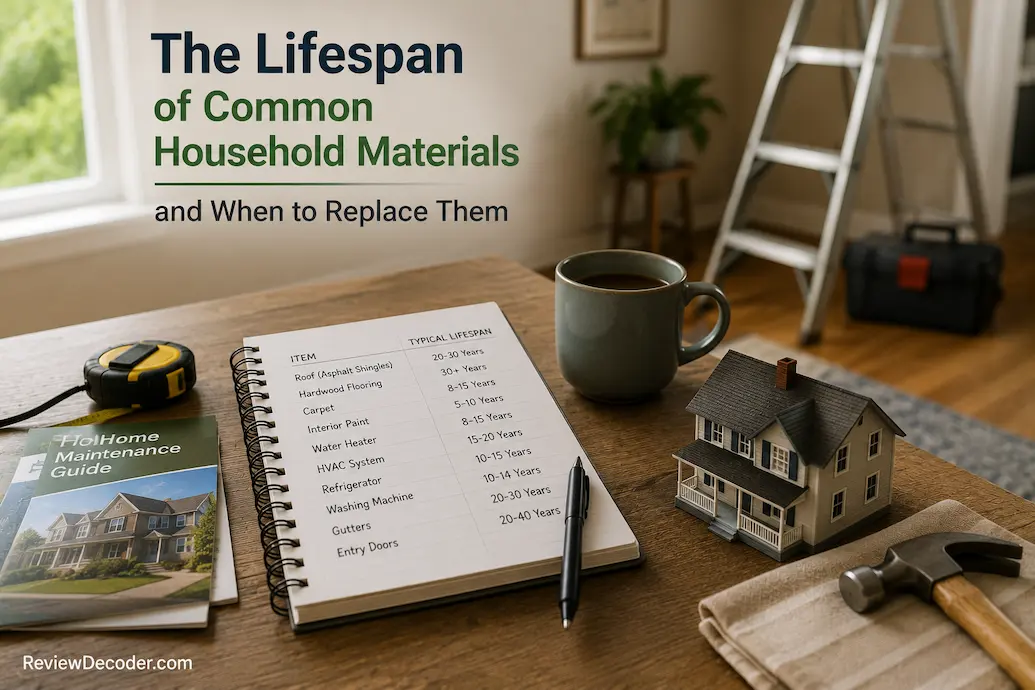
Typical Lifespans of Common Household Materials
| Household Material | Typical Service Life* | Signs It May Need Replacement |
|---|---|---|
| Asphalt roofing | 20–30 years | Frequent repairs, missing or curling shingles |
| Hardwood flooring | Several decades with proper care | Deep wear, structural damage, repeated refinishing no longer practical |
| Carpet | 8–15 years | Permanent stains, worn fibers, persistent odors |
| Interior paint | 5–10 years | Peeling, fading, repeated touch-ups no longer blend |
| Exterior caulk | 5–10 years | Cracking, shrinking, separation from joints |
*Actual lifespan varies depending on maintenance, climate, installation quality, and everyday use.
Paint Protects More Than Appearance
Paint often receives attention because of its appearance, but it also serves as a protective layer for many household surfaces.
Over time, sunlight, moisture, cleaning, and normal wear gradually reduce its effectiveness. Small areas of fading may simply affect appearance, while peeling or cracking can expose the material underneath to additional wear.
Refreshing paint before severe deterioration develops often helps preserve the surfaces beneath it rather than simply improving the room’s appearance.
Sealants Have a Limited Working Life
Many homeowners rarely think about caulk until visible gaps appear around sinks, tubs, windows, or exterior joints.
Sealants remain flexible for many years, but repeated exposure to moisture, temperature changes, and sunlight gradually causes them to shrink or crack. Once these changes happen, water and air may begin reaching areas they were originally designed to protect.
Replacing deteriorated sealant is often much simpler than repairing damage caused by prolonged moisture intrusion.
Windows Don’t Always Need Immediate Replacement
Older windows are frequently replaced for comfort or energy efficiency rather than because they’ve completely failed.
Drafts, damaged weather seals, difficulty opening, condensation between insulated panes, or declining performance may all suggest that replacement should be considered. However, many older windows continue functioning well when properly maintained.
Evaluating performance rather than simply focusing on age usually leads to better long-term decisions.
Countertops Can Last Longer Than Expected
Countertops experience daily contact with food, cookware, cleaning products, and moisture, yet many materials remain durable for decades when cared for appropriately.
Visible scratches or stains don’t always indicate that replacement is necessary. Structural damage, persistent water intrusion, or surfaces that can no longer be maintained effectively often provide more meaningful reasons to consider upgrading.
Different countertop materials naturally age in different ways, making routine care an important factor in extending their useful life.
Cabinets Often Outlast Their Finish
Kitchen and bathroom cabinets are frequently replaced because their appearance changes, even though the cabinet boxes themselves remain structurally sound.
Loose hinges, worn finishes, chipped paint, or outdated hardware don’t necessarily mean the entire cabinet system has reached the end of its life.
In many homes, updating finishes or hardware restores both appearance and function without requiring full replacement.
Understanding the difference between cosmetic aging and structural wear helps homeowners make more cost-effective decisions.
Household Appliances Wear From Use, Not Just Age
Major appliances are often expected to work for many years, but their lifespan depends largely on how they’re used and maintained rather than simply how long they’ve been installed.
A washing machine used several times each day naturally experiences more wear than one used only a few times each week. Likewise, a refrigerator placed in a hot garage may work harder than one operating in a climate-controlled kitchen.
Instead of replacing appliances based solely on age, pay attention to changing performance. Increasing energy use, unusual noises, repeated repairs, or declining efficiency often provide clearer signs that replacement may soon become more economical than continued maintenance.
Heating and Cooling Systems Benefit From Consistent Care
Heating and cooling equipment operates quietly in the background for much of the year, so it can be easy to overlook until something stops working.
These systems generally provide many years of reliable service when you perform routine maintenance regularly. Dirty filters, restricted airflow, neglected inspections, and postponed servicing, however, can shorten their useful life and reduce efficiency long before major components fail.
A system that still heats or cools the home but struggles to maintain comfortable temperatures or requires frequent repairs deserves closer evaluation rather than immediate replacement.
Plumbing Fixtures Usually Show Wear Before Failure
Faucets, showerheads, toilets, and valves rarely stop functioning without warning.
More commonly, they begin developing small leaks, reduced water flow, corrosion, loose handles, or worn seals. These gradual changes often indicate that certain components need maintenance while the fixture itself remains perfectly serviceable.
Complete replacement usually becomes worthwhile when repairs become frequent, replacement parts are difficult to obtain, or the fixture no longer performs reliably despite maintenance.
Estimated Service Life of Additional Household Components
| Household Component | Typical Service Life* | Common Signs It’s Nearing Replacement |
|---|---|---|
| Water heater | 8–15 years | Rust-colored water, leaks, inconsistent heating |
| Heating and cooling system | 15–20 years | Frequent repairs, reduced efficiency, uneven temperatures |
| Refrigerator | 10–15 years | Constant running, poor cooling performance |
| Washing machine | 10–14 years | Excessive vibration, repeated leaks, repair costs increasing |
| Gutters | 20–30 years | Rust, sagging sections, repeated leaks |
| Entry doors | Several decades | Warping, poor sealing, structural deterioration |
*Actual lifespan depends on installation quality, maintenance, local climate, and frequency of use.
Exterior Materials Face the Toughest Conditions
Unlike indoor surfaces, exterior materials deal with sunlight, wind, rain, snow, humidity, and changing temperatures every year.
Because of this constant exposure, siding, gutters, decks, fences, and exterior trim gradually age even if they receive regular maintenance. Small cracks, peeling finishes, loose fasteners, or localized weather damage often appear long before complete replacement becomes necessary.
Routine inspections help identify areas where maintenance can slow further deterioration and extend the material’s useful life.
Repair and Replacement Are Not Opposite Decisions
Many homeowners think they must choose between repairing everything or replacing it all. In reality, the better decision often depends on the condition of the specific material.
For example, replacing a damaged section of flooring may make perfect sense if the surrounding floor remains in excellent condition. On the other hand, repeatedly repairing a roof nearing the end of its expected service life may eventually cost more than replacing it altogether.
Considering both current condition and future maintenance expenses usually leads to better long-term decisions than focusing only on today’s repair bill.
Maintenance Often Extends Service Life More Than Expected
No maintenance routine can make a material last forever, but consistent care often adds years of useful performance.
Cleaning gutters before blockages develop, replacing worn sealants promptly, maintaining heating and cooling systems, protecting wood finishes, and addressing small leaks early all reduce unnecessary stress on household materials.
Many expensive replacements occur sooner than necessary because people repeatedly postpone minor maintenance instead of letting the material reach its natural limit.
Habits That Help Household Materials Last Longer
| Maintenance Habit | Long-Term Benefit |
|---|---|
| Inspect roofing and exterior after major storms | Identifies small damage before it spreads |
| Replace damaged caulk promptly | Helps prevent moisture intrusion |
| Service heating and cooling equipment regularly | Supports efficiency and longer equipment life |
| Address leaks while they’re still minor | Protects surrounding materials from water damage |
| Clean gutters and drainage systems | Reduces moisture-related deterioration |
These simple habits often delay costly replacements while helping household materials perform as intended.
Every Home Ages at Its Own Pace
Two houses built on the same street can look entirely unique after twenty years.
One may still have well-preserved flooring, efficient windows, and durable exterior finishes because routine maintenance has been consistent. Another may require significant repairs simply because small issues have continued for years.
Climate, occupancy, construction quality, maintenance history, and everyday use all influence how quickly materials age. That’s why expected lifespan should be viewed as a helpful guideline rather than a fixed schedule.
Frequently Asked Questions
How accurate are household material lifespan estimates?
They are general averages rather than guarantees. Maintenance, installation quality, environmental conditions, and daily use all influence how long a material actually lasts.
Should I replace something as soon as it reaches its expected lifespan?
Not necessarily. Many materials continue performing well beyond their average service life if they remain structurally sound and function properly.
Is repairing usually cheaper than replacing?
In many situations, yes. However, repeated repairs on materials nearing the end of their useful life may eventually cost more than replacement.
Which household materials benefit the most from regular maintenance?
Roofs, heating and cooling systems, gutters, sealants, exterior wood, flooring, and plumbing fixtures all tend to last longer when you perform routine maintenance consistently.
What’s the best way to avoid unexpected replacement costs?
Regular inspections, prompt attention to small issues, and planning for materials approaching the later stages of their expected lifespan can help spread costs over time instead of facing emergency replacements.
Final Thoughts
Every material in a home follows its own aging process. Some components, such as roofing, flooring, appliances, and heating systems, gradually lose efficiency through years of daily use, while others mainly respond to weather, moisture, or changing environmental conditions. Understanding these typical lifespans helps homeowners recognize the difference between normal aging and signs that replacement planning should begin.
Rather than waiting for something to fail, it’s often more practical to monitor performance, address small maintenance needs promptly, and evaluate whether repairs continue to make sense. With thoughtful care and realistic expectations, many household materials can provide reliable service well beyond their average lifespan, helping homeowners reduce unexpected expenses while maintaining a safer, more comfortable, and better-performing home.

Hamza Farooq is a home improvement and organization writer who shares practical advice on cleaning, simple DIY fixes, and smart home organization. He focuses on creating easy-to-follow guides that help readers solve everyday household problems with realistic, affordable solutions. His goal is to make home maintenance simpler, more efficient, and accessible for anyone looking to improve their living space.