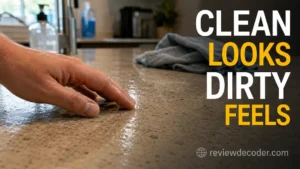
Cleaning is supposed to remove dirt, but some routines can quietly work against that goal. A cloth gets used across several surfaces, a spray is applied a little too heavily, dust is wiped with a damp rag, or the same mop water stays in use longer than it should. Nothing looks obviously wrong while it is happening. The room may even look cleaner afterward. Yet the next day, surfaces can feel sticky, dusty, streaky, or dirty again much sooner than expected.
This does not mean that ordinary cleaning habits are inherently bad. Most problems come from small details that are easy to miss. A routine that works well for one surface may be unsuitable for another, and a method that removes visible dirt can sometimes spread a thinner layer of residue across a much larger area. Over time, these small inefficiencies can make cleaning more difficult without anyone realizing what is happening.
The useful question is not simply whether you are cleaning often enough. It is whether your routine is actually removing material from the home or moving it around.
When Wiping Becomes Redistribution
One of the easiest ways for a cleaning routine to become less effective is to confuse wiping with removal. A dirty surface can look dramatically better after a cloth passes over it, even when much of the material has simply been moved elsewhere.
Imagine a kitchen counter with a thin layer of cooking residue. A damp cloth removes the obvious marks from one section, but if that cloth becomes loaded with grease, the next passes can spread a smaller amount over surrounding areas. The original spot disappears, but the surface now has a faint film across a larger section.
The same thing can happen with dust. A cloth that has already collected fine particles may push some of them into corners, across furniture edges, or onto another nearby surface. The room appears cleaner because the visible concentration has decreased, but the material has not necessarily left the room.
A useful cleaning routine therefore needs a point at which the dirt actually leaves the cleaning tool and the home. Otherwise, repeated wiping can become a very efficient way of redistributing small amounts of contamination.
The Cloth Can Quietly Become The Dirtiest Tool In The Room
A cleaning cloth can start clean and gradually become a carrier of everything it has picked up. Dust, cooking oils, hair, product residue, food particles, and moisture can accumulate in its fibers.
The problem isn’t simply that the cloth is dirty. It is that a dirty cloth can become less effective at collecting anything else.
If you use the same section repeatedly, material picked up from an earlier surface can be transferred onto the next one. This is particularly noticeable when moving from high-contact or greasy areas to surfaces that otherwise stay relatively clean.
Folding a cloth so that a fresh section is available can help during a cleaning session. Separate cloths can also make sense for different tasks, especially where a surface has a unique type of residue from the one cleaned immediately before it.
The important distinction is between using a cloth repeatedly and using the same dirty section repeatedly. A reusable cloth is not the problem. Failing to manage what the cloth has collected is the problem.
Too Much Cleaning Product Can Leave The Surface Worse
More cleaner can feel like a sensible response to stubborn dirt. If a small amount didn’t work, why not use more?
The problem is that many products are designed to work at a particular concentration and with a particular application method. Applying a large amount can leave excess product behind after the original dirt has been loosened.
That residue can change how the surface feels. It may become slightly sticky, slick, dull, or more likely to collect fine dust. The homeowner then sees the surface becoming dirty again quickly and assumes it needs to be cleaned more frequently.
Another cleaning session adds more product, which can make the cycle even harder to break.
This situation is especially frustrating on smooth surfaces because the residue may be difficult to see. The surface can look polished while attracting dust and fingerprints more readily than it did before.
A better routine starts with using the amount recommended for the product and surface rather than treating extra cleaner as a substitute for better technique.
Cleaning In The Wrong Order Can Create Extra Work
The order in which you perform tasks matters more than many people realize.
Dusting after wet cleaning, for example, can put particles back onto surfaces that have just been cleaned. Similarly, wiping a heavily dusty area with a wet cloth can turn loose particles into a damp residue that is harder to remove.
There is also a difference between cleaning a high surface and a low surface. If you disturb dust from shelves or furniture without considering where it will settle, some of it may end up on already cleaned areas.
A practical routine usually benefits from thinking about where loosened material will go next. The objective isn’t merely to complete a series of cleaning tasks. It is to prevent one task from undoing another.
This is why a short routine performed in a sensible sequence can sometimes produce a better result than a much longer cleaning session performed in a random order.
Your Mop Water Can Tell A Different Story
Floors create another version of the same problem.
A mop may begin with relatively clean water and gradually collect whatever is on the floor. If that water remains in use for too long, the cleaning solution becomes increasingly loaded with dirt.
The mop can then leave a thin layer of dirty water across sections of the floor that had not been as dirty originally. The floor may look wet and freshly cleaned while still drying with residue behind.
This is one reason a floor can sometimes feel different after mopping even though it appears cleaner. A faint film can affect the way socks or bare feet move across the surface.
The exact approach depends on the flooring material and cleaning product, but the general principle is simple: a cleaning solution has a limited capacity to carry away material. Once it becomes heavily contaminated, continuing to use it does not make the cleaning process more efficient.
Some Cleaning Habits Create More Moisture Than Necessary
Moisture itself is not the enemy, but unnecessary moisture can complicate cleaning.
Using a heavily soaked cloth or mop can leave more water behind than the surface needs. That water has to evaporate, and anything dissolved or suspended in it may remain behind when it does.
This becomes particularly noticeable on surfaces where water spots or mineral deposits are common. Repeatedly leaving water to dry in place can gradually create a different cleaning problem from the one you started with.
Moisture can also make dust and loose particles behave differently. What would have been easy to remove while dry can become a smear or film after being mixed with water.
The goal isn’t to avoid moisture completely. It is to use enough to perform the task without turning the cleaning process into unnecessary wetting and drying.
The Cleanest-Looking Areas May Not Be The Ones That Need The Most Attention
Another problem with routines is that they tend to follow visibility.
People naturally clean what looks dirty. A visibly marked countertop gets attention, while the edge of a cabinet, underside of a handle, or frequently touched control may receive much less.
This can create a strange imbalance. Large visible surfaces receive repeated cleaning while small areas that contribute to the spread of dirt are overlooked.
Frequently touched surfaces are particularly easy to miss because they may lack enough accumulated material to appear dirty. Hands can transfer oils and particles without producing obvious marks.
A better routine doesn’t mean cleaning everything constantly. It means occasionally examining the places that are handled frequently or are difficult to see rather than allowing the routine to become entirely dependent on visible dirt.
Reusing The Same Cleaning Path Can Spread Residue
There is a subtle difference between cleaning a surface systematically and repeatedly moving the same material around.
If a cloth starts in a heavily contaminated area and moves directly into a cleaner section, some of the material picked up from the first area can travel with it. The cleaner section then receives a small amount of the original residue.
This is particularly relevant on large countertops, tables, mirrors, and other continuous surfaces.
Working in manageable sections and turning or refolding the cloth as needed can reduce this problem. The point isn’t to follow a complicated professional cleaning system. It is simply to avoid allowing the dirtiest part of a surface to determine what gets spread across the rest.
Cleaning Products Can Also Change How Dust Behaves
A surface that repeatedly becomes dusty after cleaning may not necessarily be producing more dust.
A thin residue can change the surface’s characteristics enough to make fine particles more noticeable or easier to hold. Certain finishes and product residues can also make fingerprints and small particles stand out more clearly.
Such scenarios can create a misleading cycle:
surface looks dusty → clean it → apply product → surface develops residue → dust becomes noticeable → clean again.
The homeowner interprets this as a dust problem when part of the issue may actually be the cleaning process.
If a particular surface repeatedly develops the same film or attracts visible dust shortly after being cleaned, it can be useful to reconsider the amount and type of product being used rather than simply increasing cleaning frequency.
Scrubbing Harder Is Not Always The Answer
When a surface doesn’t look clean enough, stronger physical effort is an obvious reaction. But pressure does not compensate for the wrong cleaning method.
Scrubbing can sometimes spread a soft residue into a thinner film. On finished surfaces, repeated aggressive cleaning can also wear the finish over time. Once the surface becomes scratched, dulled, or uneven, it may become harder to clean and more likely to show marks.
This creates another unwanted cycle:
surface becomes difficult to clean → scrubbing increases → finish changes → surface becomes even harder to maintain.
The appropriate response to stubborn material depends on what the material actually is. Grease, mineral deposits, dried food, dust, and product residue should not automatically be treated as the same problem.
Before increasing pressure, identify the residue.
A Routine Can Become Too Complicated
There is another way cleaning can make a home harder to maintain: by becoming unnecessarily complicated.
A routine with too many products, specialized steps, repeated passes, and separate procedures for every small task can become difficult to follow consistently. Once a routine becomes burdensome, people may rush through it, skip important steps, or use products interchangeably.
A simpler routine is often easier to perform correctly.
That doesn’t mean every surface should be treated exactly the same way. Material-specific care still matters. But there is a difference between necessary differences and unnecessary complexity.
A useful routine should make the next cleaning session easier, not create a growing collection of tasks that have to be remembered every time.
How To Tell If Your Routine Is Working Against You
You don’t need to completely redesign your cleaning habits to find out whether they are causing problems.
Search for patterns.
If surfaces feel sticky soon after cleaning, consider product residue or grease.
If floors feel tacky after mopping, check the cleaning solution, mop condition, and how much water is left behind.
If dust seems to return unusually quickly, check whether it is actually being removed or simply moved around.
If a surface looks streakier after you clean it than before, consider the cloth, product quantity, drying conditions, and type of surface.
If the same area repeatedly requires several cleaning passes, the problem may be the method rather than the amount of effort.
These observations turn cleaning from a repetitive chore into a simple troubleshooting exercise.
A Better Routine Removes More Than It Moves
The best cleaning routine isn’t necessarily the one with the most products or the longest checklist. It is the one that consistently takes unwanted material away from the surface without creating another layer of residue.
That often means starting with the least complicated explanation. Is the cloth actually clean enough? Is too much product being used? Is dirty water being reused too long? Is loose dust being mixed with moisture? Is one surface being cleaned with a method intended for another?
Small adjustments can make a bigger difference than adding another product to the cupboard.
Cleaning should leave the home progressively easier to maintain. If every session seems to create a new layer of dust, residue, streaks, or extra work, the routine deserves to be examined rather than simply repeated.
The goal isn’t to clean more aggressively. It is to remove what doesn’t belong there, avoid spreading it elsewhere, and leave the surface in a condition that doesn’t create unnecessary work the next time around.

Hamza Farooq is a home improvement and organization writer who shares practical advice on cleaning, simple DIY fixes, and smart home organization. He focuses on creating easy-to-follow guides that help readers solve everyday household problems with realistic, affordable solutions. His goal is to make home maintenance simpler, more efficient, and accessible for anyone looking to improve their living space.