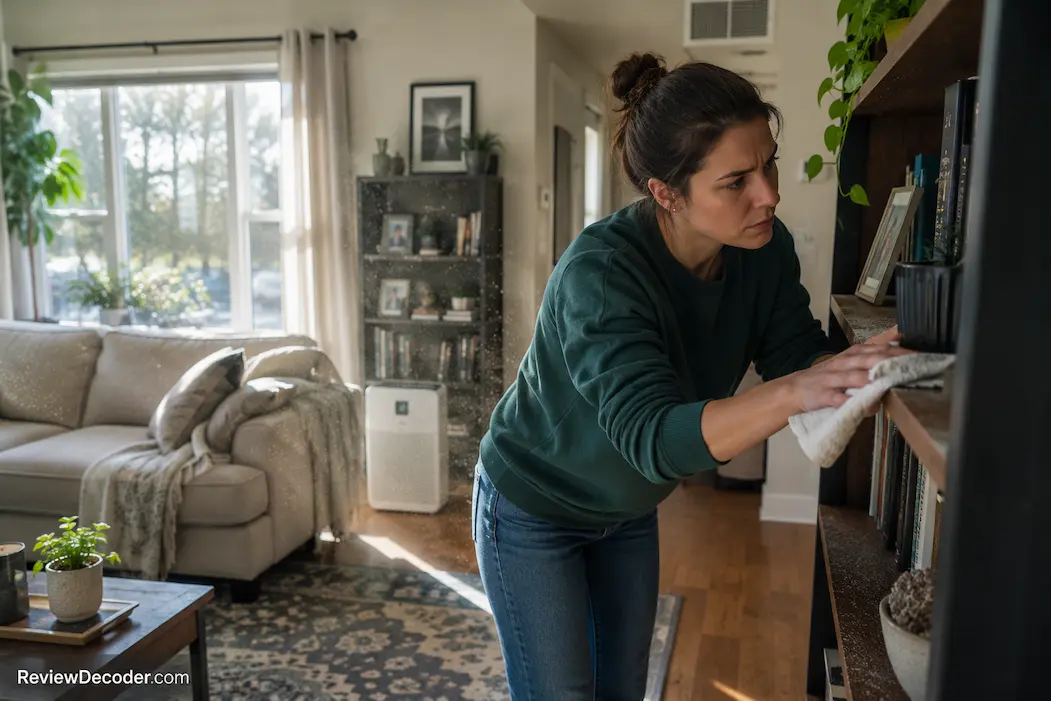
You wipe the shelves, vacuum the floor, and clean the television stand. Everything looks fresh again—until a few days later, when a thin layer of dust has already returned. Many homeowners assume they simply need to clean more often, but that’s rarely the whole story.
Dust is constantly being created and carried into a home. Some of it comes from outdoors through open doors, windows, and tiny air leaks. Some of it is produced indoors by everyday life. Clothing fibers, pet hair, tiny particles from upholstery, cooking residue, and even normal human activity all contribute to what eventually settles on furniture and floors.
The important question isn’t why dust exists—it always will. The better question is why one home seems to stay clean for weeks while another collects visible dust only days after cleaning. The answer usually lies in understanding where the dust is coming from and how it moves through your home.
Dust Doesn’t Appear Overnight
It can feel as though dust magically returns while no one is looking, but the process is continuous.
Every time someone walks across a carpet, opens a window, shakes out a blanket, or sits on a fabric sofa, tiny particles become airborne. Heating and cooling systems circulate air throughout the house, carrying those particles until they eventually settle on horizontal surfaces.
Because this cycle happens every day, cleaning only removes the dust that’s already visible. When the source stays the same, a new layer starts to form almost immediately.
Understanding this cycle helps explain why cleaning alone rarely solves persistent dust problems.
Indoor Air Is Usually the Biggest Contributor
Many people assume most household dust blows in from outside. While outdoor particles certainly play a role, a large percentage of dust often originates inside the home itself.
Natural skin shedding, fibers released from clothing and towels, lint from bedding, and tiny particles from carpets all become part of the indoor environment. Every normal activity—from making the bed to folding laundry—can release microscopic particles into the air.
Homes with more upholstered furniture, thick carpets, and heavy fabric curtains often produce more indoor dust simply because these materials constantly release and trap fine fibers over time.
Air Movement Determines Where Dust Collects
Have you ever noticed that some shelves always become dusty while others stay relatively clean?
Dust doesn’t settle evenly throughout a house. Air circulation influences where particles travel before coming to rest. Ceiling fans, heating vents, cooling systems, open windows, and even the way people move through a room all affect airflow.
Areas with limited air movement sometimes allow dust to settle quickly, while spaces near vents may collect debris because moving air continually deposits new particles there.
Instead of asking why one room gets dusty faster than another, it’s often more useful to ask how air moves through that space every day.
Common Sources of Household Dust
| Dust Source | How It Enters or Forms | What You May Notice |
|---|---|---|
| Clothing and fabric fibers | Released during everyday use | Dust on furniture and floors |
| Skin particles | Naturally shed by people and pets | Fine household dust throughout rooms |
| Outdoor dirt and pollen | Enter through doors, windows, and shoes | More dust near entrances and windows |
| Carpets and rugs | Trap and release particles when walked on | Dust returns soon after vacuuming |
| Pet hair and dander | Produced naturally by animals | Extra buildup around furniture and floors |
Understanding where dust comes from makes it easier to reduce it at the source instead of simply removing it after it settles.
Your Heating and Cooling System Can Spread Dust
A heating or cooling system is designed to circulate air, which also means it circulates airborne particles.
When filters become dirty or maintenance is delayed, the system may move more dust through different rooms before particles eventually settle on furniture and flooring. Even a properly functioning system cannot eliminate dust completely because new particles constantly enter the home.
Regular maintenance helps the system perform more efficiently, but it’s equally important to recognize that airflow itself influences how dust moves around the house.
Tiny Gaps Around the Home Matter More Than You Think
Homes are not perfectly sealed structures. Small gaps around doors, windows, utility pipes, and other openings can allow outdoor air—and the particles it carries—to enter.
This becomes especially noticeable in dry, windy weather or in homes located near busy roads, construction areas, or open fields where airborne dust is naturally higher.
Even though these openings may seem insignificant, they can contribute to a continuous supply of fine particles entering the home throughout the year.
Carpets Can Store Dust Even After Cleaning
Carpets do an excellent job of trapping dust, which can actually help prevent it from remaining airborne. However, every step across the floor can release some of those particles back into the room.
This doesn’t necessarily mean carpets should be removed. Instead, it highlights the importance of regular maintenance and recognizing that carpets function as both dust collectors and dust reservoirs.
Homes with large carpeted areas often experience a different pattern of dust accumulation than homes with mostly solid flooring.
Clutter Gives Dust More Places to Settle
Dust naturally settles on horizontal surfaces, which means every decorative object, stack of papers, picture frame, or unused appliance creates another area that requires cleaning.
The issue isn’t decoration itself. Rather, it’s the number of surfaces available for dust to collect.
A shelf holding twenty small decorative items usually takes much longer to dust than one displaying only a few carefully chosen objects. Over time, reducing unnecessary surface clutter can noticeably shorten routine cleaning without changing how often dust is produced.
The Type of Fabric in Your Home Makes a Difference
Soft furnishings contribute to both comfort and household dust.
Curtains, upholstered chairs, blankets, cushions, and bedding all release tiny fibers through normal use. This process happens gradually and is generally invisible, but over months and years those fibers become part of the dust circulating indoors.
Homes with multiple fabric-covered surfaces may naturally accumulate dust more quickly than spaces with fewer textiles, especially if people use those fabrics frequently.
Humidity Changes the Way Dust Behaves
Dust doesn’t simply appear or disappear based on humidity, but moisture levels inside the home can influence how dust moves through the air.
Very dry indoor air often allows lightweight particles to remain airborne for longer periods before settling on furniture and shelves. On the other hand, excessive humidity may cause dust to stick more easily to surfaces, making it harder to remove during routine cleaning.
Keeping indoor humidity within a comfortable range helps create a healthier indoor environment while reducing some of the conditions that contribute to persistent dust problems.
Pets Add More Than Just Hair
Pet owners are often familiar with loose fur, but hair is only one part of the picture.
Dogs and cats naturally shed skin cells, carry small amounts of outdoor dirt indoors, and leave tiny fibers from toys, bedding, and scratching posts throughout the home. Every time a pet runs through the house or jumps onto furniture, some of these particles become airborne.
This doesn’t mean pets are the main cause of dust, but they can increase the amount of material circulating indoors, especially during seasonal shedding periods.
Cleaning Methods Can Sometimes Spread Dust Around
It sounds surprising, but certain cleaning habits can move dust instead of removing it.
For example, using a dry cloth on dusty furniture may push fine particles back into the air, where they eventually settle again. Sweeping very dusty floors can have a similar effect if the particles become airborne before being collected.
The goal is not just to move dust around but to remove it from the home as effectively as possible. Small adjustments to cleaning techniques often make a noticeable difference over time.
Finding the Real Source of Household Dust
| What You Notice | Possible Cause | Practical Long-Term Approach |
|---|---|---|
| Dust returns within a day or two | Indoor dust sources and constant air movement | Review cleaning habits and reduce unnecessary dust sources |
| Heavy dust near windows or doors | Outdoor air entering through gaps | Check weather seals and entry points |
| More dust after using heating or cooling | Air circulation and maintenance needs | Inspect filters and follow recommended maintenance schedules |
| Dust mainly around carpets | Trapped particles being released during use | Maintain carpets regularly and reduce tracked-in dirt |
| Extra dust during pet shedding seasons | Fur and dander | Groom pets regularly and clean pet resting areas more often |
Searching for patterns usually provides more useful information than focusing on one dusty shelf.
Shoes Bring the Outdoors Inside
Every trip outside leaves tiny particles on shoe soles. Dirt, sand, pollen, and fine dust can all enter the house without being immediately visible.
Once those particles dry, normal walking gradually breaks them into even finer dust that spreads throughout nearby rooms.
A simple habit like removing shoes near the entrance can significantly reduce the amount of outdoor material entering the home over the course of a year.
Air Filters Need Regular Attention
Air filters work continuously while your heating or cooling system is operating. As they capture airborne particles, they gradually become less effective if they aren’t replaced or cleaned according to the manufacturer’s recommendations.
A neglected filter doesn’t create dust by itself, but it may reduce the system’s ability to capture particles efficiently.
Including filter checks as part of routine home maintenance helps support cleaner indoor air and allows the system to operate more effectively.
Some Rooms Naturally Collect More Dust
Not every room accumulates dust at the same rate.
Bedrooms often contain multiple fabric surfaces, including bedding, clothing, curtains, and upholstered furniture. Living rooms usually combine carpets, sofas, decorative items, and frequent foot traffic. Entryways collect particles brought in from outdoors, while storage rooms may gather dust simply because they’re disturbed less often.
Recognizing these natural differences helps set realistic expectations. A room with more fabrics and daily activity will usually require more frequent dusting than a rarely used guest room.
Habits That Help Reduce Dust Over Time
| Habit | Why It Helps |
|---|---|
| Remove shoes near the entrance | Reduces outdoor dirt entering the home |
| Maintain heating and cooling filters | Supports cleaner circulating air |
| Reduce unnecessary surface clutter | Leaves fewer places for dust to settle |
| Wash bedding and fabric items regularly | Removes accumulated fibers and particles |
| Check doors and windows for air leaks | Limits outdoor dust entering indoors |
These habits focus on reducing dust at its source instead of simply cleaning it after it appears.
You Can Reduce Dust, But You Can’t Eliminate It Completely
Every occupied home produces dust. People move, fabrics wear, doors open, and air circulates throughout the day. Expecting a completely dust-free house isn’t realistic.
The objective is to reduce unnecessary dust rather than constantly fighting an endless cycle of cleaning. Addressing the underlying causes—such as indoor particle sources, tracked-in dirt, airflow, and routine maintenance—usually has a much greater impact than dusting more frequently.
A home that accumulates dust more slowly naturally requires less effort to keep clean.
Conclusion
A home that becomes dusty quickly isn’t always a sign that you’re cleaning incorrectly. More often, it’s the result of everyday activities, indoor air movement, fabrics, outdoor particles, and the natural way people live in their homes. Dust is constantly being created and redistributed, which is why simply wiping surfaces rarely solves the problem for long.
The most effective strategy is to understand where the dust is coming from and reduce those sources whenever possible. Paying attention to airflow, maintaining heating and cooling systems, limiting tracked-in dirt, caring for fabric surfaces, and reducing unnecessary clutter can all make a noticeable difference. While no home can remain completely dust-free, addressing the real causes can help it stay cleaner for longer and reduce the amount of time spent dusting each week.
Frequently Asked Questions
Why does my house get dusty only a few days after cleaning?
Dust is produced continuously through normal daily activities. Fabrics, skin particles, outdoor dirt, air circulation, and household movement all contribute to new dust forming soon after cleaning.
Does opening windows increase household dust?
It can. Open windows allow fresh air inside, but they may also bring pollen, fine dirt, and other airborne particles, particularly during windy conditions or high-pollen seasons.
Are carpets responsible for most household dust?
Carpets trap a significant amount of dust, but they are only one source. Clothing, bedding, upholstered furniture, pets, and outdoor air also contribute to overall dust levels.
Do air filters really make a difference?
Yes. Properly maintained filters help capture airborne particles as air moves through the heating and cooling system, supporting cleaner indoor air and more efficient system performance.
Would it be possible to stop dust completely?
No. Dust is a normal part of every lived-in home. The most practical approach is reducing the sources of excess dust and preventing unnecessary particles from entering or circulating indoors.

Hamza Farooq is a home improvement and organization writer who shares practical advice on cleaning, simple DIY fixes, and smart home organization. He focuses on creating easy-to-follow guides that help readers solve everyday household problems with realistic, affordable solutions. His goal is to make home maintenance simpler, more efficient, and accessible for anyone looking to improve their living space.