Few things feel more satisfying than finishing a home organization project. Shelves are neatly arranged, drawers close without effort, and everything finally seems to have its own place. For a while, daily life feels easier. Then, almost without noticing, items begin appearing on countertops again, closets become crowded, and once-organized spaces slowly return to their previous state.
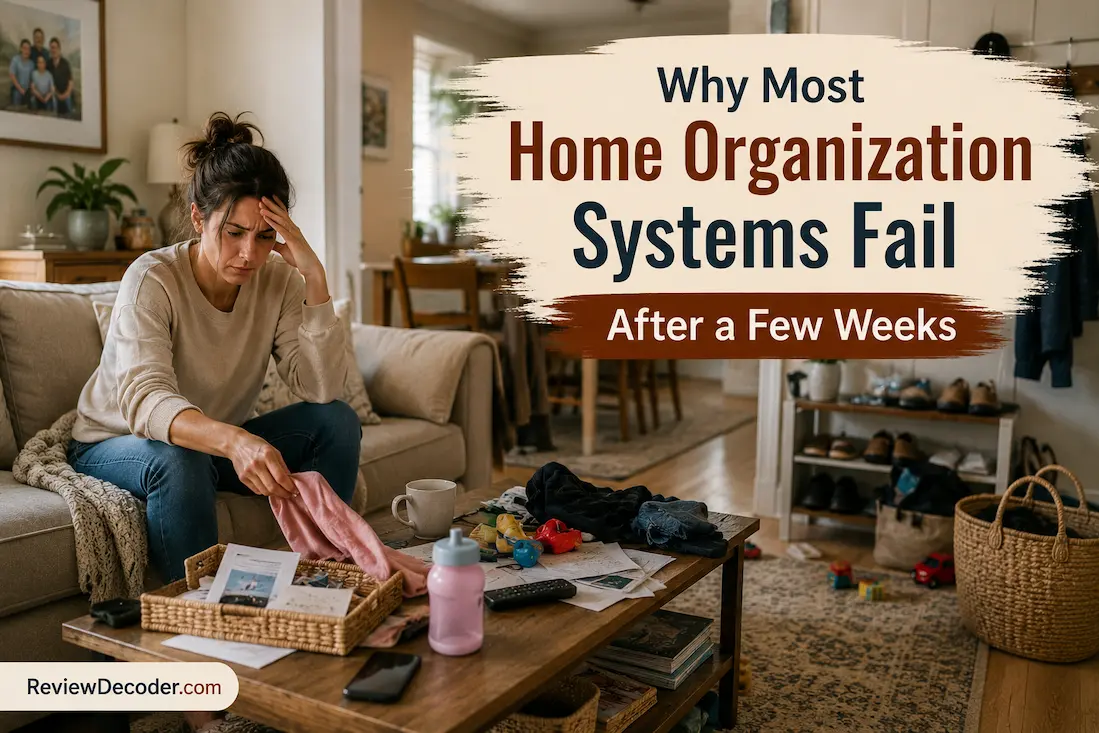
Many people assume the cycle happens because they lack discipline or simply aren’t organized enough. In reality, the problem is often the system itself. An organization method that looks impressive on the first day may not fit the way people actually live, work, and move through their homes every day.
A successful organization system doesn’t measure its success by how tidy it looks immediately after completion. Its real value becomes clear several weeks later, when ordinary routines have tested whether it can handle real life without requiring constant attention.
Good Intentions Don’t Always Match Everyday Habits
When people organize their homes, they usually imagine ideal routines rather than typical ones.
It’s easy to picture yourself folding every blanket immediately, putting every document into its proper folder, or returning every item to its exact location. Daily life, however, is often unpredictable. Busy mornings, weary evenings, unexpected visitors, and changing schedules naturally interrupt even the best intentions.
An organization system that only works during perfect days usually struggles during ordinary ones.
The more a system depends on flawless habits, the more difficult it becomes to maintain over time.
Every Extra Step Reduces the Chance Something Gets Put Away
Convenience plays a much larger role in organization than many people realize.
Imagine storing an everyday item inside three separate containers on the highest shelf of a closet. Although the space may look beautifully organized, retrieving the item takes time, and putting it back requires repeating every step.
Eventually, people begin leaving the item on the nearest table because it’s simply easier.
This isn’t laziness. It’s a normal response to unnecessary effort.
Homes tend to remain organized when storage is almost as convenient as leaving an item out in the open.
Storage That Looks Beautiful Isn’t Always Practical
Many organization ideas are designed primarily for photographs rather than everyday living.
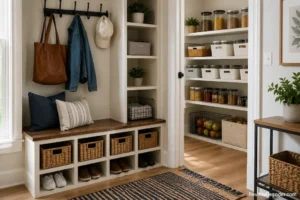
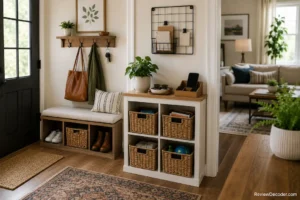
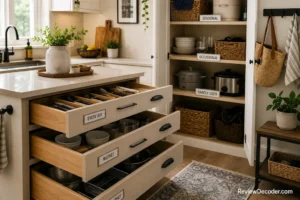
Perfectly labeled containers, color-coordinated shelves, and decorative baskets certainly create attractive spaces, but appearance alone doesn’t guarantee long-term success.
If family members can’t immediately recognize where something belongs, or if containers become difficult to access after a few weeks, the system gradually loses its effectiveness.
Practical organization usually survives longer than decorative organization because it prioritizes everyday use over visual perfection.
Why Organization Systems Often Stop Working
| What Happens | Why It Happens | Long-Term Effect |
|---|---|---|
| Items stay on counters | Storage isn’t convenient enough | Clutter slowly spreads |
| Drawers become disorganized again | Too many categories to maintain | People stop sorting items |
| Closets become overcrowded | New belongings enter without review | Available space gradually disappears |
| Family members ignore the system | Storage isn’t intuitive | Organization depends on one person |
| Frequently used items stay outside storage | Putting them away takes too much effort | Surfaces fill up over time |
Most organization systems don’t fail all at once. They gradually become less practical for everyday routines.
Life Changes Faster Than Storage Systems
Homes constantly evolve.
Children grow older, work schedules change, hobbies develop, seasons change, and new belongings gradually enter the house. A storage system that worked perfectly six months ago may no longer match today’s routines.
The problem isn’t that the original organization was poor. It’s that the home changed while the storage system remained exactly the same.
A successful organization adapts as household needs change instead of assuming daily life will remain constant forever.
Too Many Categories Create Unnecessary Decisions
Detailed organization often feels satisfying during the initial setup.
Separating every item into highly specific categories may create an impressive appearance, but it also increases the number of decisions required every time something is put away.
After a busy day, people naturally prefer simple choices over complicated ones.
If deciding where something belongs requires stopping to think each time, many items eventually end up on the nearest available surface instead.
Simple organization systems often last longer because they reduce decision fatigue.
One Person Can’t Maintain an Entire Household Alone
In shared homes, organization usually succeeds only when everyone understands how the system works.
If one family member creates an elaborate storage arrangement while everyone else struggles to follow it, the responsibility gradually falls onto a single person.
Eventually, maintaining the system becomes exhausting.
The strongest organization methods are usually the ones that require the least explanation. When storage locations feel obvious, everyone can participate without needing constant reminders.
Empty Space Doesn’t Stay Empty Forever
One of the biggest reasons organization systems slowly fail is that they rarely account for future purchases.
Books, clothing, kitchen tools, decorations, school supplies, and seasonal items continue entering the home throughout the year. If every shelf, drawer, and cabinet is already completely full on the day you organize them, you have nowhere to put new belongings.
Leaving a small amount of unused storage space may seem inefficient initially, but it often prevents overcrowding later.
An organization system with room to grow usually lasts much longer than one already operating at full capacity.
Organizing Isn’t a One-Time Project
Many people approach organization as something they complete once and never revisit.
In reality, every home benefits from occasional adjustments.
Items that were once used daily may become unnecessary. Storage areas may need to change as routines evolve. Some spaces naturally become busier than others over time.
Small, periodic updates require far less effort than waiting until every room needs to be reorganized from the beginning.
Thinking of organization as an ongoing process rather than a finished project makes long-term success much more achievable.
Perfection Can Become the Biggest Obstacle
Many organization projects begin with high expectations. Every shelf is arranged carefully, every container is labeled, and every item has an exact location. While this can look impressive, it often creates a system that feels difficult to maintain.
After a few busy days, even small disruptions become noticeable. Instead of quickly putting things back, people postpone the task because restoring the system feels like too much work. Gradually, a few misplaced items become many.
Homes usually stay organized longer when the system allows for ordinary imperfections instead of demanding constant precision.
Convenience Wins Every Time
One simple question explains why some storage ideas succeed while others disappear after a few weeks:
“Is the task easier than leaving the item where it is?”
If the answer is no, the storage solution will probably struggle.
For example, people are far more likely to use a laundry basket placed where they normally change clothes than one located across the house. Likewise, everyday kitchen utensils stored near the cooking area naturally return to their place because doing so requires very little effort.
People often use convenient systems. They usually avoid systems that interrupt their routine.
Buying More Organizers Doesn’t Always Solve the Problem
When clutter returns, it’s tempting to buy additional bins, baskets, drawer dividers, or storage containers. While these products can certainly be useful, they don’t automatically improve organization.
Sometimes the real issue isn’t a lack of storage—it’s simply having too many belongings for the available space or storing frequently used items in inconvenient locations.
Adding more containers without addressing those underlying issues may only hide the clutter temporarily rather than preventing it.
Good organization begins with thoughtful decisions, not just additional storage products.
Habits That Keep Organization Systems Working
| Everyday Habit | Long-Term Effect |
|---|---|
| Returning commonly used items immediately | Prevents surfaces from filling with clutter |
| Reviewing storage every few months | Keeps the system aligned with changing needs |
| Leaving some shelves and drawers partially empty | Makes room for future belongings |
| Using simple categories | Reduces daily decision-making |
| Placing storage close to where items are used | Encourages consistent use |
Small habits performed regularly usually have a greater impact than occasional large organizing sessions.
Every Household Needs Flexibility
A storage arrangement that works perfectly for one family may create frustration for another.
Households with young children, remote workers, frequent guests, pets, or changing schedules all develop different patterns of daily activity. Trying to copy someone else’s organization system without adapting it to your routines often leads to disappointment.
The best systems reflect how the people living in the home actually behave rather than how they wish they behaved.
Flexibility allows organizations to continue working even as routines naturally change.
Maintenance Is Easier Than Starting Over
Many people wait until clutter becomes overwhelming before organizing again. By that point, the task feels much larger than it really needs to be.
Making small adjustments occasionally keeps the system functioning without requiring an entire weekend of sorting and reorganizing. You can often complete these tasks in short sessions.
Regular maintenance helps prevent the cycle of complete organization followed by complete disorder.
Signs an Organization System Needs Adjustment
| What You Notice | What It Usually Means |
|---|---|
| The same items are always left out | Storage isn’t convenient enough |
| One drawer or shelf is constantly overflowing | Space no longer matches current needs |
| Family members keep asking where things belong | The system isn’t intuitive |
| New purchases have nowhere to go | Storage capacity wasn’t planned for growth |
| Organizing feels exhausting every few weeks | The system has become too complicated |
These signs don’t necessarily mean the entire system has failed. Often, a few practical adjustments restore its effectiveness.
Long-Term Organization Is Built Around Everyday Life
Homes remain organized not because everything stays perfectly arranged, but because it becomes easy to return things to their proper place.
When storage locations match natural habits, maintenance requires very little thought. Items gradually return where they belong because doing so feels automatic rather than like another household chore.
That’s why long-lasting organization often looks surprisingly simple. It removes unnecessary effort instead of adding more rules.
Final Thoughts
Most home organization systems don’t fail because people stop caring about keeping their homes tidy. They fail because the system doesn’t fit the way everyday life actually works. Storage that requires too many steps, demands constant decisions, or leaves no room for changing routines gradually becomes difficult to maintain, no matter how attractive it looked at the beginning.
The most successful organization methods are usually the simplest ones. They make frequently used items easy to access, allow space for future changes, and support the natural habits of everyone in the household. When an organization system works with daily routines instead of against them, it becomes much easier to maintain—not just for a few weeks, but for years.

Hamza Farooq is a home improvement and organization writer who shares practical advice on cleaning, simple DIY fixes, and smart home organization. He focuses on creating easy-to-follow guides that help readers solve everyday household problems with realistic, affordable solutions. His goal is to make home maintenance simpler, more efficient, and accessible for anyone looking to improve their living space.