When a home starts feeling short on storage, the natural reaction is to look for something new to buy. A larger cabinet, another shelving unit, plastic containers, an under-bed organizer, or a piece of furniture with built-in storage can all seem like sensible solutions. But many homes already contain more usable storage space than their owners realize. The problem is that some of it is hidden, inconvenient, poorly arranged, or simply being used for things that don’t need to occupy valuable space.
The overlooked space is rarely one enormous empty area. More often, it consists of small pockets spread throughout the home: the back of a deep cabinet, the upper section of a wardrobe, the inside of a door, an unused corner, the space beneath furniture, or a shelf that is technically available but difficult to access. Individually these areas may not seem important. Together, they can reduce clutter considerably.
Before adding another storage product, it is worth finding out what your home already offers. The process is less about squeezing more belongings into every available gap and more about matching overlooked space with the things that genuinely belong there.
Start By Looking At Storage, Not Clutter
A useful storage audit begins differently from ordinary decluttering. Instead of picking up individual objects and asking where they should go, look at the storage spaces themselves.
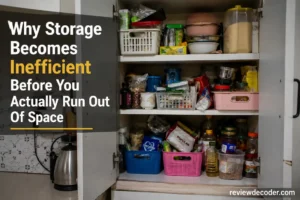
Open every cupboard, wardrobe, drawer, cabinet, and shelving unit. Don’t just look at what is stored there. Look at how much of the available volume is actually being used. A shelf may be only half full but still feel unavailable because items have been placed in a way that blocks the rear section.
Deep cabinets are particularly easy to underestimate. The front portion can become crowded while the space behind it remains difficult to reach. That does not necessarily mean the cabinet needs more capacity. It may need a better arrangement.
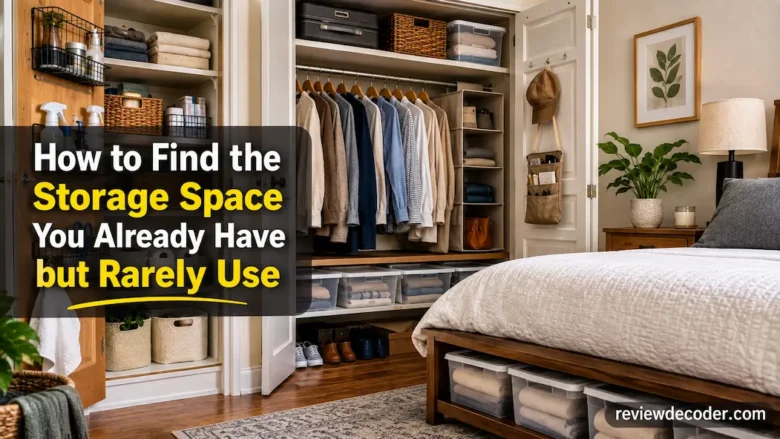
The same principle applies to wardrobes. Hanging clothes may occupy the central portion while the upper area, floor-level space, or inside of the doors remains unused. Storage capacity often disappears because of poor access rather than a true lack of space.
Check The Space Above Eye Level
One of the most commonly overlooked areas in a home is the space above normal reach.
People tend to organize storage at the height they use most frequently. Everyday items sit on convenient shelves, while higher sections stay empty or become places where you forget miscellaneous objects.
High storage is not ideal for things you use every day, but it can be valuable for seasonal or occasional belongings. Spare bedding, decorations, luggage accessories, rarely used serving items, and similar possessions may not need to occupy the easiest-to-reach shelves.
Before using high areas, check their structural suitability and ensure you can access stored items safely. The goal is not to create a precarious pile above your head. It is to recognize that vertical space is part of the storage capacity already built into the room.
Look Inside Cabinet Doors
People often pay attention to cabinet interiors while ignoring the doors.
The inside of a cupboard door can provide a small amount of additional storage for lightweight, frequently used items when the door and hardware can safely support the chosen solution. Cleaning supplies, small kitchen tools, stationery, grooming items, or other compact belongings may fit particularly well in these locations.
The advantage is that the storage occupies a surface that otherwise performs only one function: closing the cabinet.
But door storage needs to be approached carefully. Adding too much weight can affect hinges, and items that protrude too far can prevent the door from closing properly. Measure the available depth and consider the movement of the door before treating it as usable storage.
A few centimeters of practical space can be more valuable than a much larger area that is difficult to access.
Examine The Back Of Deep Shelves
Deep shelves often look spacious because they can hold large amounts of material. In practice, they can become inefficient when items at the front block everything behind them.
This is common in kitchen cabinets, bathroom cupboards, wardrobes, and utility storage. Objects pushed toward the back may become forgotten because reaching them requires moving several other things first.
Rather than automatically adding another organizer, first check whether the existing shelf has layers of items on it. Shorter items may allow wasted vertical space above them. Frequently used items may be occupying the easiest access area even though they could be stored elsewhere.
Sometimes a simple change in positioning makes the back of the shelf useful again. Other times, a shallow pull-out tray or similar solution may make sense. The important step is identifying the wasted capacity before purchasing anything.
Don’t Ignore The Space Under Furniture
Furniture often creates small areas that are difficult to notice during normal use.
Beds, sofas, benches, cabinets, and some tables can leave usable space underneath them. Whether to use that space depends on its height, accessibility, dust exposure, and the type of items you store there.
Under-bed space is particularly useful for belongings that don’t need daily access. Seasonal clothing, spare linens, luggage, and other infrequently used items can sometimes be stored there without adding another piece of furniture.
However, an empty gap is not automatically good storage. If it is difficult to clean, prone to dampness, or so low that retrieving anything becomes frustrating, filling it may simply turn unused space into an unpleasant storage area.
The best hidden storage is space that can be accessed and maintained without creating another problem.
Look At Corners Before Buying More Furniture
Corners are often treated as leftover space because standard furniture is usually designed around straight walls and rectangular footprints.
A corner that appears empty may not have enough room for a large cabinet, but it may still support a narrow shelf, small storage unit, or another appropriately sized solution.
More importantly, check whether the corner is already being partially used. A chair pushed into a corner, a basket that is rarely accessed, or a piece of furniture positioned several inches away from the wall may create a pocket of space that has become functionally invisible.
You don’t necessarily need to fill every corner. An empty area can be useful for movement and visual balance. The purpose of the audit is to distinguish genuinely useful storage opportunities from spaces that are better left open.
Measure Vertical Space, Not Just Floor Space
When people think about storage, they often think in terms of square footage. But storage is three-dimensional.
A small floor area with several feet of usable height can provide considerably more capacity than its footprint suggests. This is why tall shelving, stacked containers, and properly designed vertical storage can be effective in rooms where floor space is limited.
Before adding anything, measure the height between existing shelves and the ceiling or cabinet top. You may find that a large portion of the available vertical volume remains unused.
The trick is not to fill that volume indiscriminately. Items stored higher up should generally be things that don’t need constant access, while frequently used possessions should remain within comfortable reach.
Check Whether Drawers Are Being Used Efficiently
A drawer can be full and still contain wasted space.
Items may be lying in a single layer when the drawer has enough height for another arrangement. Small objects can also become mixed together, making the drawer feel full because every item occupies more practical space than necessary.
Before adding another drawer unit, empty one existing drawer and examine its contents. Group similar objects, remove things that don’t belong there, and see how much usable volume remains.
The same exercise can reveal that several drawers are storing categories that could be combined. Sometimes, consolidating related items can free an entire drawer without removing anything important from the home.
Storage efficiency often comes from reducing duplication and improving access rather than physically increasing capacity.
Reconsider What Deserves Prime Storage
The easiest-to-reach storage is valuable. It shouldn’t automatically be given to whatever happens to be stored there now.
Look at the items occupying your most convenient shelves and drawers. Are they used every day, every week, once a year, or almost never?
If rarely used belongings occupy the best storage positions, while frequently used items are squeezed into awkward corners, the home can feel as though it lacks storage even when considerable capacity exists.
Reassigning storage based on frequency of use can make a surprising difference. Everyday objects deserve convenient locations. Occasional items can move higher, deeper, or farther away.
This doesn’t create additional physical storage, but it can create additional usable storage, which is often what the household actually needs.
The Space Behind Doors And Between Objects Counts
Small gaps can be surprisingly useful when they are considered collectively.
The area behind an open door, the gap beside a cabinet, the space between furniture and a wall, or the unused section beside a wardrobe may accommodate narrow items that otherwise end up leaning against walls or sitting on floors.
These spaces are particularly useful for long or flat objects that are awkward to store elsewhere.
At the same time, don’t turn every gap into storage. Doors need clearance, ventilation may be necessary around certain appliances, and some narrow spaces are difficult to clean. Storage should work with the room rather than obstructing its normal functions.
Check The Top Of Cabinets And Wardrobes
The top of a tall cabinet or wardrobe is another area that can become invisible simply because it is above normal eye level.
If the surface is accessible and safe to use, it can provide room for infrequently needed belongings. Decorative boxes or suitable containers can also make this area look more intentional than a collection of loose objects.
Before using it, check for dust, heat, moisture, and the weight limits of the furniture. Some items may not be appropriate for elevated storage, particularly if retrieving them requires unstable furniture or excessive reaching.
The important point is simply to recognize the volume that already exists above large furniture.
Find Storage By Following Where Things Accumulate
There is another way to discover unused storage: pay attention to where clutter repeatedly appears.
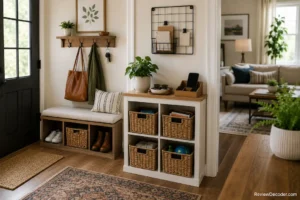
If mail always collects on the same table, that may indicate the home lacks a convenient place for incoming paperwork. If cleaning supplies keep gathering beside the sink, their current storage location may be too inconvenient. If shoes repeatedly end up beside the door, the household may need accessible entryway storage rather than more storage somewhere else.
Clutter is often evidence of a storage mismatch.
Instead of moving the same objects back into their assigned locations every day, ask why they aren’t staying there. If a location is too far away, too difficult to access, or requires too many steps, people naturally create temporary storage somewhere more convenient.
The solution may already exist elsewhere in the home.
Don’t Turn Every Empty Space Into Storage
An important part of finding hidden storage is knowing when to leave space alone.
Not every empty surface is wasted capacity. Open floor area allows people to move comfortably. Empty shelves can make frequently used storage easier to access. Gaps around furniture can provide visual breathing room and make cleaning easier.
A home can become harder to maintain when every available space is filled with something.
The purpose of an audit is therefore not to achieve maximum occupancy. It is to identify useful capacity that can reduce clutter without complicating everyday life.
If storing something in a particular location means moving three other objects every time you need it, the space may technically be available but practically unsuitable.
A Simple Storage Audit Can Reveal More Than Buying New Organizers
You can perform a useful storage audit in one room at a time. Start by opening every existing storage area and looking for unused height, depth, corners, door surfaces, and awkward gaps.
Then identify the belongings that currently sit in inconvenient places. Ask why they ended up there and whether another storage area could accommodate them more effectively.
Only after this should you consider buying an organizer or storage product. You may discover that the home needs fewer new products than expected and simply needs existing capacity rearranged.
This approach also prevents a common problem: buying containers for clutter without deciding what the containers are supposed to solve. A storage product can make a crowded space look neater temporarily while leaving the underlying organization unchanged.
The Best Hidden Storage Is Usually The Storage You Can Actually Use
Finding unused storage isn’t about squeezing belongings into every empty corner. It is about discovering capacity that has been overlooked because it is high, deep, narrow, hidden behind something, poorly assigned, or inconveniently arranged.
The most useful opportunities are usually the ones that improve everyday access without creating additional maintenance. A high shelf for seasonal items, a better use of cabinet depth, an empty drawer that can be reclaimed, or a suitable space under furniture can all reduce pressure on the rest of the home.
Before deciding that your house needs another cabinet or a larger storage system, take a closer look at what is already there. Measure the spaces, follow the clutter, reconsider what occupies prime locations, and separate genuinely useful capacity from empty space that is better left open.
You may find that the home doesn’t have as little storage as it seems. It may simply be using its existing storage in ways that make much of that capacity difficult to see, reach, or use.

Hamza Farooq is a home improvement and organization writer who shares practical advice on cleaning, simple DIY fixes, and smart home organization. He focuses on creating easy-to-follow guides that help readers solve everyday household problems with realistic, affordable solutions. His goal is to make home maintenance simpler, more efficient, and accessible for anyone looking to improve their living space.