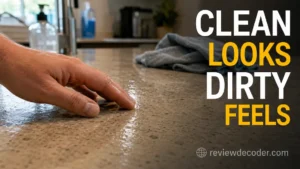
A home can look clean and still have plenty of areas that have been quietly collecting dust, residue, moisture, or grime. In fact, some of the places that need the most attention are often the ones you don’t notice when you walk into a room. A countertop may be polished while the underside of a cabinet handle is sticky. Floors may look spotless while dust has accumulated along baseboards and underneath furniture.
That is why visual appearance is not always a reliable measure of cleanliness. Everyday use leaves traces in places people tend to overlook, particularly around objects that are touched frequently, areas with poor airflow, and surfaces that are cleaned only when something becomes visibly dirty.
The reassuring news is that you do not need to deep-clean the entire house every time you notice one of these signs. The more useful approach is to recognize what the sign is telling you, identify its likely source, and clean the specific area before the buildup becomes harder to remove.
1. Dust Appears Again Shortly After Cleaning
One of the clearest clues is dust that seems to return almost immediately after you have cleaned a surface.
A thin layer appearing after several days is normal, but unusually fast buildup can point to several different sources. Fabric furniture, rugs, bedding, open shelves, curtains, and poorly maintained air vents can all contribute to airborne particles settling around the room.
Pay attention to where the dust appears first. If one particular area becomes dusty much faster than the rest of the room, there may be a local source rather than a general housekeeping problem. Dust collecting around a vent, for example, deserves a different response from dust appearing primarily on a bookshelf beside a fabric sofa.
Instead of repeatedly wiping the same surface, follow the dust back to where it may be coming from.
2. Baseboards Look Fine Until You Wipe Them
Baseboards are easy to forget because they sit below eye level. They can look perfectly acceptable from across the room while holding a noticeable layer of dust along their upper edge.
Run a clean, slightly damp microfiber cloth across a short section. If the cloth comes away gray or visibly dirty, the baseboard has accumulated more than the room’s overall appearance suggests.
The buildup can be especially noticeable behind furniture and in corners where a vacuum cleaner does not reach effectively.
You do not necessarily need to clean every baseboard every few days. The useful lesson is simply that low, horizontal surfaces should be included occasionally rather than treated as decorative trim that never needs attention.
3. Light Switches and Door Handles Feel Slightly Sticky
Frequently touched surfaces can become dirty long before anyone notices visible marks.
People repeatedly touch door handles, cabinet pulls, light switches, drawer handles, refrigerator handles, and similar surfaces throughout the day. Natural skin oils, dust, food residue, and cleaning-product residue can gradually build up.
A surface does not have to look dirty to need cleaning. A slightly tacky or unusually smooth feeling when you run your fingers over it can be a better clue than appearance.
Walk through the home and test a few frequently used handles. You may find that the surfaces people touch most often have received less attention than the large, obvious surfaces around them.
Use a cleaning method appropriate for the material and manufacturer’s guidance, particularly around electrical switches and finished hardware.
4. The Edges of Floors Look Dirtier Than the Center
A floor can look freshly cleaned while dirt accumulates around its perimeter.
Vacuum cleaners and mops tend to perform best across open floor areas. Edges, corners, areas behind furniture, and the narrow spaces beneath cabinets can receive less attention.
Look particularly closely where flooring meets baseboards. Fine dust can collect along this boundary and become more noticeable when viewed from a low angle or under strong natural light.
If the center of a floor looks clean but the perimeter does not, you may not need to clean more often. You may simply need to change the route or tool used during cleaning so the edges receive deliberate attention.
5. The Top of Your Refrigerator Has a Dusty Film
The refrigerator is one of those appliances that can look clean from a normal eye level while accumulating a surprising amount of dust above it.
If you position the refrigerator below cabinets, you may find it difficult to see the top and therefore easy to forget. Kitchen grease can also mix with airborne dust, creating a film that feels different from ordinary dry dust.
Run a cloth across the top rather than relying on what you can see.
If the area has not been cleaned for some time, avoid aggressively scrubbing without first checking the appliance’s cleaning instructions. The goal is to remove the buildup without allowing moisture to reach areas where it could cause a problem.
6. Cabinet Tops Feel Greasy
Upper cabinet surfaces can collect a combination of cooking residue and dust.
This is particularly common in kitchens where steam and airborne grease travel upward during cooking. Even if cabinet doors are wiped regularly, the horizontal surfaces above them may receive far less attention.
The hidden clue is often texture. A surface that should feel smooth but instead feels slightly tacky or leaves residue on a cloth is telling you that ordinary dust is not the only issue.
This is also a good example of why cleaning frequency should reflect the environment. A kitchen used heavily every day will generally need different attention from a kitchen that is rarely used.
7. Cleaning Cloths Start Smelling Before the Surface Does
Sometimes the warning sign is not the surface at all. It is the cleaning equipment.
If a reusable cloth or mop head develops an unpleasant smell shortly after washing, it may not be drying properly or may be retaining residue. Continuing to use it can spread that unpleasant odor back onto surfaces.
The same principle applies to sponges, brushes, and other reusable cleaning tools.
Clean tools need somewhere to dry properly. A damp cloth left in a closed container or crumpled in a laundry area can stay wet long enough to develop an odor.
If your cleaning equipment smells questionable, deal with it rather than simply adding more cleaning product during the next cleaning session.
8. There Is Dust Around Air Vents
Air vents deserve attention because they interact directly with moving air.
A small amount of dust around a vent does not automatically indicate a serious problem, but visible buildup on the grille is a useful reminder that the area needs cleaning.
Look at both supply vents and return-air grilles where applicable. Return grilles can accumulate noticeable dust because air is being drawn through them.
Use the cleaning method recommended for your HVAC system and avoid disturbing components that are not meant to be handled by homeowners.
If you repeatedly notice unusually heavy dust accumulation, especially alongside other household issues, cleaning the vent itself may not be the whole solution. It can be worth investigating filters, airflow, and the surrounding environment.
9. Your Curtains or Blinds Look Fine but Smell Slightly Stale
Window coverings are large surfaces that can quietly collect dust.
Curtains can hold airborne particles within their fabric, while blinds and shades can collect dust along horizontal surfaces. Because these items are usually cleaned less frequently than floors or countertops, buildup can continue without becoming visually obvious.
Move close enough to notice whether there is a stale smell or visible dust along the folds and edges.
Cleaning requirements vary significantly by material. Some curtains can be machine-washed, others require different treatment, and certain blinds should be cleaned with minimal moisture.
The important point is not to assume that something is clean simply because it still looks presentable from across the room.
10. The Area Behind Frequently Used Furniture Is Dusty
Furniture creates natural collection points for dust.
Sofas, beds, dressers, and cabinets can block airflow and make certain areas difficult to reach. Over time, dust and small debris can accumulate behind or underneath them even while the visible parts of the room remain clean.
You do not have to constantly move heavy furniture. But occasionally checking the accessible spaces behind and underneath commonly used pieces can reveal where routine cleaning is missing.
If moving a piece of furniture is unsafe or likely to damage the floor, use an appropriate extension attachment rather than forcing it across the surface.
11. The Bathroom Has a Slightly Damp or Musty Smell
A bathroom does not need visible mold or obvious grime to deserve attention.
A persistent damp or musty smell can indicate that moisture is lingering somewhere. Check areas such as bath mats, shower curtains, corners, under-sink spaces, and around fixtures.
Ventilation matters too. A bathroom that remains humid long after bathing provides a different cleaning challenge from one that dries quickly.
Cleaning visible surfaces is only part of the process. If moisture continues to accumulate, the underlying ventilation or water source may need attention.
A recurring smell that does not improve after normal cleaning should not simply be covered with fragrance.
12. The Top of Ceiling Fans Has a Visible Dust Ring
Ceiling fans hide dust particularly well because people usually see the blades from below.
When the fan is off and safe to access, inspect the upper surface of the blades. You may find a layer that is not visible during normal use.
The top of the blade can become dusty enough that turning the fan on later sends some of that accumulated material back into the room.
Always follow appropriate safety precautions when cleaning a ceiling fan. Turn it off, make sure it cannot accidentally start, and use a stable method of reaching it rather than balancing on furniture.
13. Corners Collect Small Amounts of Debris
Corners often become miniature collection points.
Dust, hair, crumbs, and small pieces of debris can settle where two surfaces meet, particularly behind furniture and in rooms with limited airflow.
A room can therefore look clean while its corners tell a different story.
When vacuuming or sweeping, deliberately change direction and approach corners rather than relying on the main pass of the cleaning tool. Attachments designed for narrow areas can make the task much easier.
This technique is a small adjustment, but it can make the overall result noticeably better without requiring more frequent whole-room cleaning.
14. The Area Around Your Bed Is Dustier Than Expected
Bedrooms can accumulate more dust than people realize because they contain bedding, mattresses, pillows, upholstered furniture, and clothing.
Look around the bed frame, under the bed, along nearby baseboards, and around bedside furniture. If dust is noticeably heavier in these areas, the room may benefit from more attention to the surfaces and fabrics that contribute to the buildup.
Bedding should also be cared for according to its material and washing instructions.
Do not assume that vacuuming the visible floor is enough. A bedroom contains many fabric surfaces that interact with dust throughout the day.
15. You Keep Cleaning the Same Spot but the Problem Returns
This symptom may be the most useful sign of all.
If you repeatedly clean one area and the same dirt, odor, residue, or dust comes back unusually quickly, the surface may not be the real source of the problem.
For example, wiping a smelly drain area without investigating the drain itself may only provide temporary improvement. Cleaning dust from a vent without checking the surrounding airflow may produce the same result. Wiping condensation from a bathroom surface without addressing persistent humidity treats the symptom rather than the cause.
Repeated recurrence should change the question from “How do I clean this?” to “Why does it keep getting dirty?”
That shift can save considerable time.
A Quick Hidden-Cleanliness Check Around the House
You do not need to perform a full deep clean to identify overlooked areas. A quick look can show where your regular cleaning is missing.
| Area | What to check | Possible clue |
|---|---|---|
| Kitchen cabinets | Tops and handles | Greasy or dusty residue |
| Refrigerator | Top and door seals | Dust or buildup |
| Living room | Behind furniture | Dust accumulation |
| Bedroom | Under and around bed | Dust and hair |
| Bathroom | Corners and ventilation areas | Damp or musty smell |
| Entryway | Baseboards and corners | Dirt tracked into edges |
| Ceiling fans | Upper blade surfaces | Visible dust |
| Air vents | Grilles and surrounding wall | Dust buildup |
| Doors | Handles and edges | Sticky or grimy feel |
| Floors | Perimeters and corners | Fine debris |
The purpose of this inspection is not to create another demanding cleaning schedule. It is to identify the areas that your normal routine consistently misses.
How Often Should These Hidden Areas Be Cleaned?
There is no useful universal rule saying every hidden surface must be cleaned on the same schedule.
A better approach is to consider how quickly each area becomes dirty.
High-use surfaces such as handles and switches may need frequent attention. Kitchen surfaces exposed to grease may need more regular cleaning than bedroom baseboards. Ceiling fans, curtains, and areas behind furniture can generally be checked less often, depending on dust levels and household conditions.
Your home itself provides the feedback.
If an area still looks and feels clean after several weeks, there may be no reason to clean it more frequently. If it repeatedly develops noticeable buildup, shorten the interval or investigate why the buildup is occurring so quickly.
The goal is to create a routine based on actual conditions rather than an unnecessarily rigid calendar.
Frequently Asked Questions
Does a spotless-looking home mean it is clean?
Not necessarily. Visible cleanliness mainly shows what you can see from normal viewing angles. Dust, residue, and buildup can remain on handles, baseboards, vents, cabinet tops, underneath furniture, and other less noticeable surfaces.
What areas do people forget to clean most often?
Commonly overlooked areas include the tops of cabinets and refrigerators, ceiling fan blades, baseboards, door handles, light switches, air vents, areas underneath furniture, and the edges of floors.
Why does my house become dusty so quickly?
Dust can come from several sources, including fabrics, bedding, rugs, outdoor particles, household activity, and airflow. If dust returns unusually quickly, look for where it accumulates first instead of repeatedly cleaning the same surface without investigating the source.
Should I deep-clean my entire house if I find hidden dirt?
Usually not. Finding dust behind a piece of furniture or residue on a cabinet does not automatically mean the entire home needs a deep clean. Address the specific area and adjust your routine if the same issue continues to recur.
How can I tell whether an odor needs more than cleaning?
If an odor repeatedly returns after the affected area has been cleaned and dried properly, seek an underlying source such as moisture, a drain issue, trapped debris, or inadequate ventilation. Covering a persistent odor with fragrance rarely addresses the cause.
Clean Enough Is Different From Perfectly Clean
A home does not need to pass an inspection every time someone walks through the door. Normal living creates dust, fingerprints, crumbs, and occasional clutter, and trying to eliminate every trace can turn cleaning into an exhausting routine.
What matters more is recognizing the difference between ordinary buildup and signs that someone consistently overlooks a particular area.
A dusty fan blade, greasy cabinet top, sticky handle, musty bathroom corner, or dirty floor edge may not make a room look obviously dirty, but each one shows where the current cleaning routine is lacking. Those clues are more useful than simply adding another hour to the weekly cleaning schedule.
The smartest approach is to clean based on where dirt actually accumulates, how quickly it returns, and what causes it in the first place. Once you start noticing those patterns, cleaning becomes less about repeatedly making everything look perfect and more about keeping the parts of the home that quietly collect buildup under control.
That is usually a much more sustainable way to keep a home genuinely clean.

Hamza Farooq is a home improvement and organization writer who shares practical advice on cleaning, simple DIY fixes, and smart home organization. He focuses on creating easy-to-follow guides that help readers solve everyday household problems with realistic, affordable solutions. His goal is to make home maintenance simpler, more efficient, and accessible for anyone looking to improve their living space.