When homeowners think about renovations, they often focus on appearance, resale value, or energy savings. Those are all worthwhile goals, but there’s another benefit that receives far less attention: reducing the amount of maintenance a home will need over the next decade or more.
Some improvements continue demanding regular repairs, repainting, adjustments, or cleaning despite their attractive appearance. Others quietly reduce future work year after year by preventing moisture damage, resisting wear, or eliminating recurring maintenance tasks. Although these upgrades may cost more initially, they often save both time and money throughout their lifespan.
The key isn’t choosing the most expensive products or following renovation trends. It involves understanding which improvements address recurring maintenance problems rather than simply changing the home’s appearance.
Think About the Next Ten Years, Not Just Today
A renovation should ideally make life easier long after the installation is complete.
Imagine replacing a surface that needs repainting every few years with one that remains durable with only routine cleaning. The initial investment may be higher, but the reduction in ongoing maintenance often changes the overall value of the project.
Looking at improvements through a long-term perspective encourages better decisions than focusing only on purchase price.
Better Drainage Protects More Than Landscaping
Many costly home repairs begin with uncontrolled water.
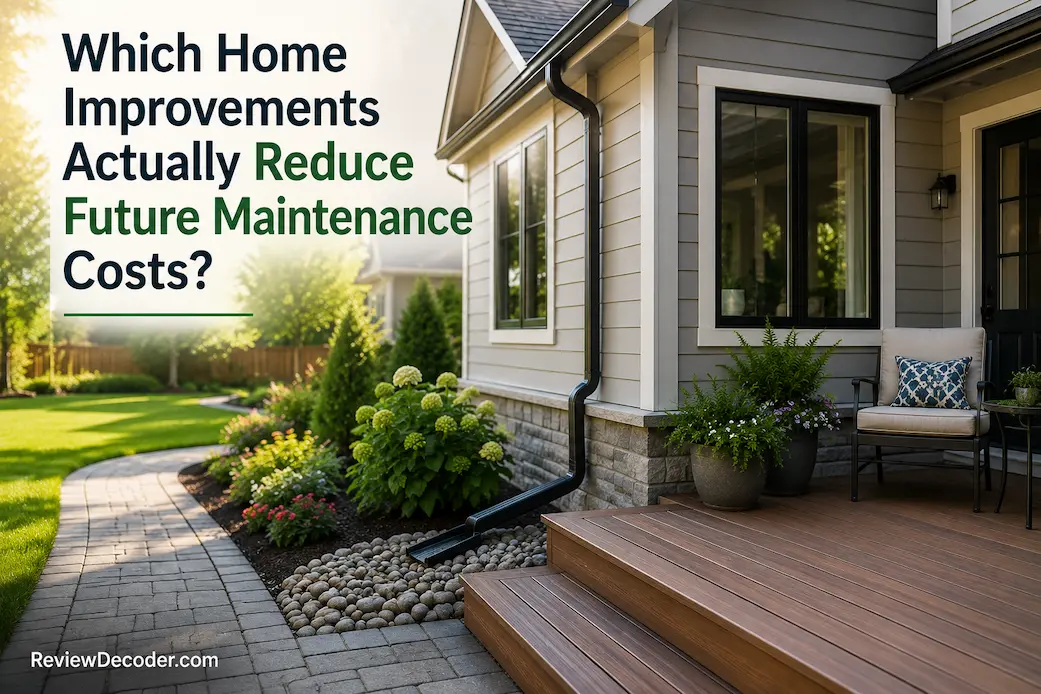
Rainwater that collects near foundations, flows toward exterior walls, or repeatedly saturates the same areas can gradually affect concrete, siding, paint, and landscaping. Improving drainage may not be the most noticeable renovation, but it often prevents years of moisture-related maintenance.
Grading that directs water away from the home, properly functioning gutters, and effective downspout placement all reduce the likelihood of recurring repair work.
Preventing water problems is usually less expensive than repairing the damage after it appears.
Durable Exterior Finishes Reduce Repainting
Exterior walls face continuous exposure to sunlight, rain, temperature changes, and seasonal weather.
Choosing higher-quality exterior finishes or more durable cladding materials can significantly reduce the frequency of repainting and surface repairs. While no finish lasts forever, materials designed to resist fading, peeling, and moisture generally require less attention throughout their service life.
The savings come not only from buying less paint but also from reducing preparation work, labor, and repeated maintenance over many years.
Composite Decking Changes the Maintenance Routine
Traditional wood decks offer natural beauty, but they also require periodic staining, sealing, and inspection to remain in excellent condition.
Composite decking changes that maintenance pattern. Instead of scheduling regular refinishing, homeowners usually focus on routine cleaning and occasional inspections.
Although the initial installation cost is often higher than pressure-treated lumber, many homeowners choose composite materials because they reduce the ongoing work associated with weather exposure.
The decision isn’t simply about appearance—it’s about how much maintenance you’re willing to perform over the life of the deck.
Home Improvements That Can Reduce Future Maintenance
| Improvement | Maintenance: It Helps Reduce | Long-Term Benefit |
|---|---|---|
| Improved drainage | Moisture-related repairs | Better protection for foundations and landscaping |
| Durable exterior finishes | Frequent repainting | Longer-lasting exterior appearance |
| Composite decking | Staining and sealing | Less routine maintenance |
| Quality windows | Draft-related adjustments and seal repairs | Improved durability and comfort |
| Moisture-resistant bathroom materials | Water damage and mold-related repairs | Easier long-term maintenance |
Each improvement addresses a recurring maintenance issue rather than simply improving appearance.
Modern Windows Can Reduce Ongoing Upkeep
Older windows often require repainting, weather-seal repairs, hardware adjustments, or repeated maintenance as they age.
Modern window designs typically incorporate materials and finishes that require less routine attention while maintaining smooth operation over time. Better weather sealing can also reduce moisture intrusion that might otherwise affect nearby trim or wall surfaces.
When evaluating replacement windows, considering maintenance requirements alongside energy efficiency provides a more complete picture of their long-term value.
Moisture-Resistant Materials Help Bathrooms Age Better
Bathrooms experience constant humidity, changing temperatures, and regular water exposure.
Selecting materials designed for these conditions can reduce future maintenance significantly. Water-resistant wall panels, properly sealed surfaces, and moisture-tolerant flooring often require fewer repairs than materials that deteriorate when repeatedly exposed to damp conditions.
This doesn’t eliminate cleaning or maintenance, but it helps prevent many of the problems that gradually develop in moisture-prone spaces.
Quality Hardware Usually Lasts Longer
Cabinet hinges, drawer slides, faucets, door handles, and locks receive thousands of cycles of use every year.
Higher-quality hardware often operates more smoothly for longer periods because it’s built to tolerate repeated daily use. Cheaper components may function well initially but require earlier adjustment or replacement as wear accumulates.
Although hardware represents only a small part of many renovation budgets, choosing durable components can noticeably reduce future maintenance.
Easy-to-Clean Surfaces Save Time for Years
Some improvements don’t reduce repairs—they reduce routine upkeep.
Smooth countertops, durable flooring, washable wall finishes, and stain-resistant materials often require less effort to keep clean than highly textured or delicate surfaces.
Over several years, even saving a few minutes during routine cleaning adds up to a meaningful reduction in household work.
When selecting materials, you should consider how they will be maintained after installation, as this is just as important as how they look on the day they’re installed.
Invest in Improvements That Solve Repeated Problems
Every home develops patterns.
Perhaps one area repeatedly collects moisture, another requires frequent repainting, or a particular material continues wearing out faster than expected.
Instead of making improvements based solely on trends, identify which maintenance issues keep returning. Projects that permanently reduce recurring problems often provide greater long-term value than cosmetic upgrades alone.
The best renovation isn’t always the most visible one—it’s often the one you hardly think about afterward because it quietly saves you years of future work.
Better Ventilation Prevents More Than Discomfort
Ventilation is often discussed in terms of comfort, but its long-term effect on home maintenance is just as important.
Areas that regularly trap moisture—such as bathrooms, kitchens, laundry rooms, and attics—are more likely to experience peeling finishes, swollen materials, mildew, or condensation-related problems over time. Improving airflow helps these spaces dry more efficiently after daily use, reducing the conditions that lead to repeated maintenance.
While ventilation isn’t as noticeable as a remodeled kitchen or new flooring, it quietly protects many of the materials surrounding it.
Low-Maintenance Landscaping Can Reduce Outdoor Work
Not every home improvement happens inside the house.
Choosing plants that suit the local climate, improving drainage around garden beds, and reducing unnecessary lawn areas can significantly decrease watering, trimming, fertilizing, and seasonal replacement work.
Well-planned landscaping also helps reduce soil erosion, limits mud near entrances, and keeps vegetation from growing against siding or roofing materials where moisture may become trapped.
The goal isn’t creating a maintenance-free yard but one that remains healthy with less ongoing effort.
Leak Detection Can Prevent Expensive Repairs
Water damage often develops silently.
A slow leak beneath a sink, behind a washing machine, or near a water heater may continue for weeks before becoming visible. By the time staining or flooring damage appears, repairs often involve much more than fixing the original leak.
Modern leak detection devices and automatic shutoff systems help identify unusual water activity early, allowing homeowners to respond before a minor plumbing issue turns into structural damage.
Preventing one major leak can easily offset the cost of installing this type of protection.
Improvements That Continue Paying Off
| Home Improvement | Ongoing Maintenance Reduced | Why It Helps Long Term |
|---|---|---|
| Improved ventilation | Moisture-related upkeep | Helps protect surrounding materials |
| Low-maintenance landscaping | Yard maintenance | Reduces routine outdoor work |
| Leak detection system | Water damage repairs | Identifies problems early |
| Durable flooring | Frequent refinishing or replacement | Better resistance to everyday wear |
| LED lighting | Bulb replacement | Longer operating life than traditional bulbs |
These improvements reduce recurring maintenance rather than simply improving appearance.
Durable Flooring Can Delay Replacement for Years
Flooring experiences more daily contact than almost any other part of the home.
Selecting materials suited to the amount of foot traffic they will receive often reduces scratches, dents, staining, and premature wear. Entryways, kitchens, hallways, and family rooms generally benefit from more durable flooring than rooms used only occasionally.
A material that remains attractive with routine care usually requires fewer repairs and less frequent replacement throughout its lifespan.
Small Improvements Often Work Better Together
Homeowners sometimes search for one renovation that solves every maintenance problem. In reality, several modest improvements often provide a greater combined benefit.
For example, homeowners can collectively prevent far more maintenance by improving drainage, replacing aging sealants, increasing ventilation, and upgrading to longer-lasting exterior finishes than by investing the same budget in one large cosmetic renovation.
Looking at the home as a connected system rather than a collection of individual projects often leads to better long-term results.
Prioritize the Areas That Cost the Most to Ignore
Not every improvement delivers the same value.
Projects that protect the structure of the home generally deserve attention before purely decorative upgrades. Water intrusion, poor drainage, inadequate ventilation, and aging exterior materials often become increasingly expensive if postponed for too long.
Once the home is well protected, cosmetic improvements become easier to enjoy because they’re less likely to be interrupted by unexpected repair work.
Thinking in terms of prevention instead of reaction usually results in more predictable maintenance expenses over time.
Questions to Ask Before Starting Any Upgrade
| Question | Why It Matters |
|---|---|
| Does this reduce future maintenance or simply change appearance? | Helps identify long-term value |
| Will this material require regular refinishing or repairs? | Reveals future upkeep needs |
| Is the upgrade suitable for local weather conditions? | Improves durability |
| Can it help prevent common household problems? | Reduces future repair costs |
| Will maintenance become easier after installation? | Saves time throughout the life of the improvement |
Answering these questions before beginning a project often leads to smarter investment decisions.
Long-Term Value Comes From Prevention
Many successful home improvements share one characteristic: they prevent problems before those problems become expensive.
Keeping water away from the structure, selecting durable materials, improving airflow, and installing products designed for long service life all reduce the number of repairs required in the future.
Although these upgrades may not always attract immediate attention, they often provide value every year by reducing maintenance, lowering the number of unexpected repairs, and improving peace of mind.
Final Thoughts
The most valuable home improvements aren’t always the ones that transform how a house looks. Often, they’re the upgrades that quietly reduce the need for repairs, protect materials from everyday wear, and make routine maintenance simpler for years to come. Improvements that manage water, improve ventilation, increase durability, or eliminate recurring maintenance tasks continue providing benefits long after the installation is complete.
When planning future projects, it helps to think beyond the initial cost and consider how the improvement will affect the home over the next decade or longer. Choosing materials and systems that require less attention, resist common problems, and support easier maintenance can reduce both expenses and household work while helping the home remain comfortable, reliable, and well cared for over time.

Hamza Farooq is a home improvement and organization writer who shares practical advice on cleaning, simple DIY fixes, and smart home organization. He focuses on creating easy-to-follow guides that help readers solve everyday household problems with realistic, affordable solutions. His goal is to make home maintenance simpler, more efficient, and accessible for anyone looking to improve their living space.