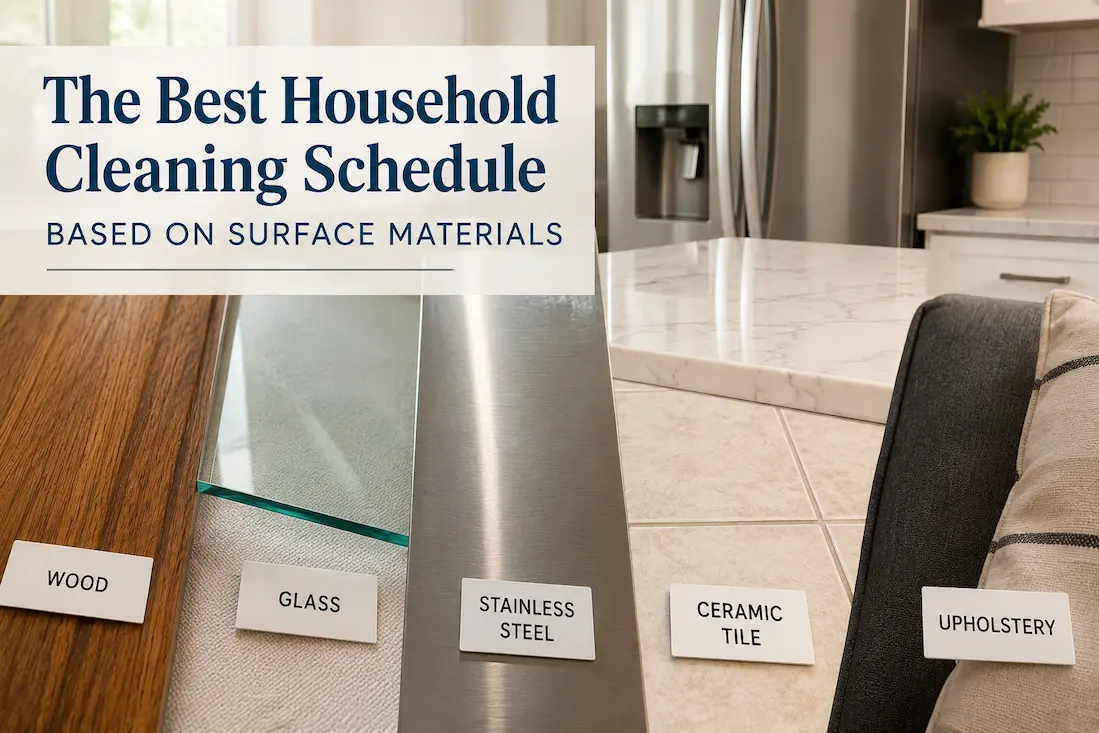
Most household cleaning routines are built around rooms. Monday is for the kitchen, the weekend is for the bathroom, and every few months the entire house gets a deeper clean. While this approach is simple to follow, it overlooks something more important than location—the material you’re actually cleaning.
A wooden dining table and a glass coffee table may sit in the same room, yet they don’t collect dirt in the same way or respond equally well to the same cleaning routine. Stainless steel appliances show fingerprints quickly, natural stone can react poorly to certain products, and upholstered furniture quietly traps dust even when it looks perfectly clean. Treating every surface the same often leads to unnecessary wear or ineffective cleaning.
A more practical approach is to build a cleaning schedule around the materials found throughout your home. Once you understand how different surfaces behave during everyday use, it becomes much easier to know what deserves frequent attention, what only needs occasional care, and how to keep everything looking its best without spending more time cleaning than necessary.
Every Surface Ages Differently
Walk through any home and you’ll notice that no two surfaces experience the same type of daily use. Kitchen countertops come into contact with food, moisture, and heat, while bedroom furniture may simply collect dust. Bathroom tiles are constantly exposed to humidity, whereas a bookshelf in the living room often needs little more than regular dust removal.
These differences explain why cleaning schedules shouldn’t be identical across the house. A material that frequently encounters water or cooking residue naturally requires more attention than one exposed only to light household dust.
considering the material instead of the room also prevents unnecessary cleaning. Some surfaces benefit from frequent maintenance, while others remain in excellent condition with much less effort.
Wood Rewards Gentle, Consistent Care
Wood continues to be one of the most common materials found inside homes, appearing in furniture, flooring, shelving, doors, and decorative finishes. Its natural appearance makes it popular, but it also means the surface responds to changes in moisture, temperature, and daily handling.
Rather than waiting until wooden furniture looks noticeably dirty, regular light dusting usually produces better long-term results. Dust particles may seem harmless, yet they can gradually dull the finish if they’re allowed to build up over time.
Wood also benefits from moderation. Excessive moisture, harsh scrubbing, or overly aggressive cleaning products often cause more damage than ordinary household dust. Gentle maintenance performed consistently is usually the most effective way to preserve both the appearance and condition of wooden surfaces.
Glass Reveals Dirt Faster Than It Collects It
Glass creates the impression that it becomes dirty rapidly, but in reality it simply makes fingerprints, dust, and water spots easier to see than many other materials.
Coffee tables, mirrors, shower doors, and glass cabinet panels often look untidy long before they’re actually unhygienic. Because of these factors, light cleaning performed when marks first become noticeable usually keeps glass looking clear without requiring lengthy cleaning sessions.
Environmental factors also make a difference. Homes with young children or pets often experience more fingerprints, while bathrooms with mineral-rich water may develop visible spotting more rapidly than glass elsewhere in the house.
Cleaning according to what the surface is exposed to generally works better than following a strict calendar.
Suggested Cleaning Frequency by Material
| Surface Material | Light Cleaning | Deeper Cleaning |
|---|---|---|
| Natural wood | Weekly dust removal | Every 2–3 months or as needed |
| Glass | When fingerprints or dust appear | Monthly or as needed |
| Stainless steel | Several times each week in busy kitchens | Monthly |
| Ceramic tile | Weekly | Every 1–2 months |
| Upholstered furniture | Weekly vacuuming | Every 6–12 months depending on use |
These intervals are general guidelines. Homes with children, pets, or heavy daily use may benefit from more frequent attention.
Stainless Steel Shows Everyday Living
Modern kitchens often include stainless steel refrigerators, ovens, dishwashers, sinks, and small appliances. Although this material is durable, it tends to highlight fingerprints, cooking residue, and water marks much more readily than painted or textured surfaces.
Fortunately, stainless steel rarely requires intensive cleaning if small marks are removed regularly. Wiping away fingerprints before they build into larger areas of residue helps preserve the clean appearance that makes the material so popular.
It’s also helpful to remember that appearance and cleanliness aren’t always the same thing. A few fingerprints don’t necessarily indicate poor hygiene, but allowing grease and food residue to remain for extended periods can make later cleaning much more difficult.
Stone Surfaces Benefit From Prevention
Natural stone adds character to kitchens, bathrooms, and entryways, but it’s often less forgiving than manufactured materials. Marble, granite, limestone, and similar surfaces can respond differently to spills, moisture, or unsuitable cleaning products.
Because of these differences, preventing stains is usually more effective than trying to remove them later. Cleaning spills promptly and avoiding prolonged contact with substances that may affect the surface helps preserve both appearance and durability.
Routine care doesn’t have to be complicated. Gentle, consistent cleaning is often enough to keep natural stone looking attractive and reduce the need for more intensive maintenance in the future.
Upholstered Furniture Collects More Than Dust
A fabric sofa may appear perfectly clean while quietly holding dust, crumbs, pet hair, and tiny fibers beneath the surface. Unlike hard materials, upholstered furniture traps particles rather than leaving them visible.
Regular vacuuming helps remove loose debris before it settles deeper into the fabric. This simple habit not only improves appearance but may also reduce wear caused by fine particles rubbing against the material over time.
Spills deserve immediate attention, even when they seem small. Fresh stains are generally easier to manage than those left to dry, making prompt action one of the simplest ways to extend the life of upholstered furniture.
Painted Walls Need Less Cleaning Than Many People Think
Walls are often overlooked during household cleaning because they don’t appear to become dirty as quickly as floors or countertops. In most rooms, that’s perfectly true.
However, certain areas naturally experience more contact than others. Hallways, staircases, light switches, children’s rooms, and spaces around door frames often develop marks from everyday use long before the rest of the wall requires attention.
Instead of washing every wall regularly, focus on the areas that experience frequent handling. Spot cleaning when marks first appear is usually more practical than treating entire walls on a fixed schedule.
Cleaning Schedules Should Match Everyday Living
No household follows exactly the same routine. A family with young children will naturally create different cleaning demands than someone living alone. Pets, cooking habits, local weather, and even the materials used throughout the home all influence how often different surfaces require attention.
For that reason, the most effective cleaning schedule isn’t the one that demands the most work. It’s the one that reflects how your home is actually used.
When cleaning is guided by the needs of each material instead of following the same timetable for everything, maintenance becomes more efficient, surfaces stay in better condition, and household chores often feel much more manageable.
Laminate Surfaces Appreciate Consistency More Than Intensity
Laminate is widely used for countertops, shelving, cabinets, desks, and many types of furniture because it is durable, affordable, and easy to maintain. Even so, it performs best when cleaned regularly rather than aggressively. Dirt and light spills are usually simple to remove if they are dealt with early, while dried residue often encourages people to scrub harder than necessary.
Another advantage of laminate is that it doesn’t usually require specialized care. A gentle cleaning routine and prompt attention to spills are often enough to preserve its appearance for many years. The biggest risk isn’t everyday use but allowing moisture to remain around seams or edges for extended periods, where it may eventually affect the material beneath the surface.
Ceramic and Porcelain Are Tough but Not Maintenance-Free
Ceramic and porcelain are common choices for kitchens, bathrooms, laundry rooms, and entryways because they tolerate heavy daily use. Although these materials are resistant to many types of wear, they still benefit from regular maintenance that prevents dirt from becoming firmly attached to the surface.
Grout deserves just as much attention as the tiles themselves. Even when tiles remain clean, grout lines can gradually collect dust, soap residue, and moisture. Cleaning them periodically keeps the entire surface looking fresh and may reduce the need for more demanding cleaning later.
Rather than waiting until tiles appear dull, light routine care helps preserve their original finish while making future cleaning much easier.
Household Materials at a Glance
| Material | Common Areas | Main Cleaning Priority |
|---|---|---|
| Laminate | Cabinets, desks, countertops | Remove spills promptly and avoid prolonged moisture |
| Ceramic tile | Floors, backsplashes, bathrooms | Regular cleaning with occasional grout care |
| Porcelain | Bathrooms, kitchens, flooring | Routine maintenance and quick spill removal |
| Leather | Sofas, chairs, office furniture | Gentle cleaning and protection from drying out |
| Plastic | Storage containers, switches, household accessories | Remove dust and fingerprints before buildup occurs |
Looking after the material itself often extends its appearance more effectively than simply cleaning more often.
Leather Benefits From Balanced Care
Leather furniture has a different character from fabric upholstery. Instead of trapping dust deep within fibers, it responds more noticeably to changes in temperature, sunlight, and everyday contact.
Routine dust removal and occasional gentle cleaning help maintain the surface without removing its natural appearance. It’s also wise to avoid placing leather furniture directly beside strong heat sources or in prolonged direct sunlight, as these conditions may gradually affect its texture over time.
Daily care is usually basic. Wiping away dust and addressing spills promptly often contributes more to long-term appearance than infrequent intensive treatments.
Plastic Surfaces Often Receive Less Attention Than They Need
Plastic appears throughout almost every home, yet it rarely becomes part of a planned cleaning routine. People touch storage containers, remote controls, light switches, appliance handles, and many household accessories regularly, but they clean them inconsistently.
Because people handle these items frequently, they often collect fingerprints, dust, and everyday residue even when they don’t appear particularly dirty. Including them in normal household cleaning helps maintain a fresher living environment while preventing gradual buildup.
These quick tasks require very little time but contribute noticeably to the overall cleanliness of the home.
Everyday Habits Matter More Than the Calendar
Many people search for the perfect weekly or monthly cleaning schedule, believing there is one timetable suitable for every household. In reality, lifestyle shapes cleaning frequency far more than the calendar does.
A busy kitchen where you prepare several meals each day naturally requires different attention than a guest room that you use only occasionally. Homes with pets may experience more hair on upholstered furniture, while families with young children often notice fingerprints on walls, glass, and cabinet doors much sooner.
Observing how you use your home provides better guidance than following a schedule designed for someone else’s routine.
Small Actions Prevent Larger Cleaning Projects
One of the most significant differences between homes that always seem clean and those that require frequent deep cleaning is not the amount of effort invested. It is the timing of that effort.
Wiping a spill as soon as it happens, removing dust before it becomes noticeable, or cleaning fingerprints from glass while they are still fresh usually takes only a few moments. Delaying these small jobs often allows residue to become more difficult to remove, turning simple maintenance into a much larger task.
Building these habits into everyday life reduces the need for lengthy cleaning sessions while helping household surfaces remain in better condition.
A Flexible Schedule Works Better Than a Rigid One
Life rarely follows exactly the same routine every week. Holidays, guests, seasonal weather, school schedules, and changes in work all influence how we use different parts of the home.
Instead of treating a cleaning schedule as a fixed rule, consider it a guide that can adapt as needed. Surfaces experiencing heavier use may require extra attention, while quieter areas of the home can comfortably wait until their next routine cleaning.
This flexible approach helps maintain a consistently clean home without creating unnecessary work.
Frequently Asked Questions
Should every household follow the same cleaning schedule?
No. The best schedule depends on the materials in your home, how frequently each area is used, and factors such as children, pets, cooking habits, and local conditions.
Which surfaces usually need the most frequent attention?
Kitchen worktops, sinks, dining tables, frequently touched handles, stainless steel appliances, and bathroom fixtures often benefit from regular cleaning because they experience daily use.
How often should upholstered furniture be cleaned?
Light vacuuming every week helps remove dust and debris. A more thorough cleaning may be appropriate every six to twelve months, depending on usage and the manufacturer’s care recommendations.
Is it better to deep clean less often or perform regular light cleaning?
Regular light maintenance is generally more effective. It prevents dirt from building up and often reduces the need for time-consuming deep cleaning sessions.
Why should cleaning methods change with different materials?
Each material reacts differently to moisture, wear, and cleaning products. Matching the cleaning routine to the surface helps maintain its appearance while reducing unnecessary damage over time.
Conclusion
An effective household cleaning routine begins with understanding the surfaces around you rather than simply dividing chores by room. Wood, glass, stainless steel, upholstery, ceramic, laminate, leather, and natural stone each experience daily life in different ways, so expecting one schedule to suit them all often creates unnecessary work or overlooks areas that need more attention.
The most practical cleaning habits are usually the simplest ones. Responding quickly to spills, removing dust before it accumulates, and adjusting your routine according to how each surface is actually used helps maintain a cleaner home without making cleaning feel overwhelming.
Instead of aiming for a perfectly timed schedule, focus on caring for each material according to its needs. Over time, this approach keeps your home looking well maintained and helps preserve furniture, flooring, countertops, and household finishes for years to come.

Hamza Farooq is a home improvement and organization writer who shares practical advice on cleaning, simple DIY fixes, and smart home organization. He focuses on creating easy-to-follow guides that help readers solve everyday household problems with realistic, affordable solutions. His goal is to make home maintenance simpler, more efficient, and accessible for anyone looking to improve their living space.