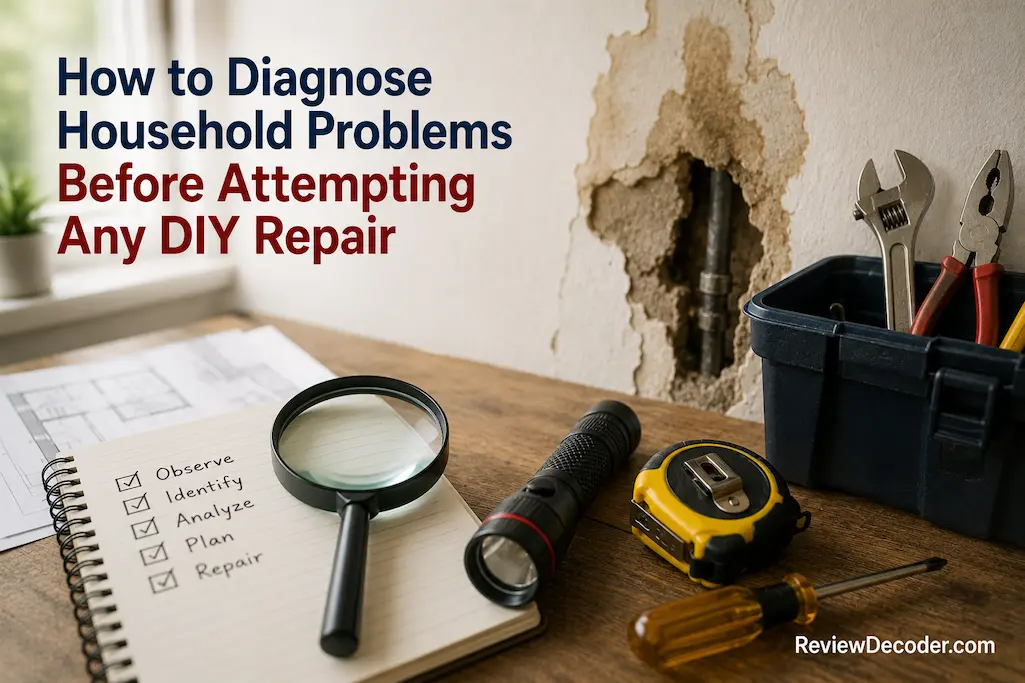
It’s satisfying to solve a problem around the house yourself. A loose cabinet hinge, a dripping tap, or a door that no longer closes properly can often be repaired with basic tools and a little patience. The difficulty begins when people rush straight to the repair without first understanding what actually caused the problem. Often, fixing the visible symptom only delays the issue because the real cause remains untouched.
Experienced homeowners and professional tradespeople rarely begin by picking up a screwdriver or opening a toolbox. Their first step is usually much quieter. They observe, ask questions, and gather information before deciding whether a repair is even necessary. That careful approach often saves time, prevents unnecessary expenses, and reduces the chance of making the original problem worse.
Learning to diagnose household problems isn’t about becoming an expert in every trade. It’s about developing a practical way of thinking that helps you separate symptoms from causes and make better decisions before attempting any DIY repair.
Every Problem Has a Story Before It Has a Solution
Household problems usually show signs before they become serious. Long before something finally stops working, small changes often begin to develop. A window becomes slightly harder to open, a floorboard starts making occasional noise, or a patch of paint slowly changes color. Because these changes happen gradually, they’re easy to dismiss as ordinary wear.
Instead of asking only “What’s broken?” try asking “What changed first?” The answer often provides valuable clues. Perhaps the problem started after heavy rainfall, a recent furniture move, unusually cold weather, or another repair elsewhere in the house.
Understanding the sequence of events creates a timeline that can be just as useful as the visible damage itself. Many household issues become much easier to understand once you know how they developed.
Look Beyond the Most Obvious Symptom
Visible damage naturally attracts attention, but the most noticeable sign isn’t always where the real problem begins.
A stain appearing on a ceiling, for example, doesn’t automatically mean the roof is directly above the leak. Water can travel along beams, pipes, or other hidden surfaces before finally becoming visible somewhere entirely different. Likewise, a cracked wall doesn’t always indicate structural movement. In many homes, small cosmetic cracks simply develop as building materials expand and contract over time.
Approaching every symptom with curiosity rather than assumptions helps prevent unnecessary repairs. The first thing you notice is often only part of a much larger picture.
Pay Attention to Patterns Instead of Isolated Events
One unusual event may not reveal very much, but repeated patterns often provide important information.
Perhaps a door sticks only during humid weather. A bathroom odor appears after several showers rather than throughout the day. A window develops condensation every cold morning but remains clear during warmer periods. These recurring patterns suggest that environmental conditions may be influencing the issue rather than indicating a sudden failure.
Recording when a problem appears, how often it happens, and whether weather or daily routines affect it creates valuable evidence before any repair begins.
Observations That Can Help Identify the Cause
| What You Notice | Possible Direction to Investigate |
|---|---|
| Water stain growing slowly | Moisture source above or nearby |
| Door sticks during humid weather | Seasonal expansion of materials |
| The floor squeaks only in certain spots | Movement beneath flooring or loose fasteners |
| Window condensation every morning | Ventilation or indoor humidity |
| Paint bubbling or peeling | Moisture behind the surface |
These observations don’t confirm the cause, but they provide useful starting points for further investigation.
Listen as Carefully as You Look
Some household problems announce themselves through sound long before visible damage appears.
A faint tapping inside pipes, a gradual increase in floor squeaks, vibrating air vents, or an appliance producing unfamiliar noises can all signal that something has changed. The important detail isn’t simply that a sound exists but whether it is new, becoming louder, or happening more frequently than before.
Taking a moment to listen carefully can often narrow the search. Knowing whether a noise comes from one room, follows a regular pattern, or appears only when a particular appliance is running helps build a clearer understanding of what might be happening.
The Area Around the Problem Matters Too
Focusing only on the damaged spot sometimes causes people to overlook useful clues nearby.
Imagine a cabinet door that suddenly becomes difficult to close. The problem may not be the hinges themselves. The cabinet could have shifted slightly, the floor beneath has become uneven, or nearby hardware has gradually loosened. Looking only at the door might lead to replacing perfectly functional hinges without solving the actual issue.
Expanding your inspection beyond the obvious area often reveals details that explain why the problem appeared in the first place.
Ask Whether the Problem Is Getting Worse
Not every household issue requires immediate repair. Some cosmetic imperfections remain unchanged for years, while others develop surprisingly quickly.
A small crack that hasn’t changed in size over several years is very different from one that becomes noticeably larger within a few weeks. Similarly, occasional condensation may simply reflect changing weather conditions, whereas increasing moisture accompanied by discoloration deserves much closer attention.
Observing whether the situation is stable, improving, or gradually deteriorating helps determine both the urgency of the repair and the level of investigation it deserves.
Recent Changes Can Provide Valuable Clues
When diagnosing household problems, think back to anything that has changed recently.
Perhaps new flooring was installed, heavy furniture was moved, shelving was added to a wall, or an appliance was replaced. Even changes that seem unrelated may influence how other parts of the home behave.
For example, improving insulation or replacing windows can alter ventilation patterns inside a house. Rearranging furniture may reduce airflow around an exterior wall, making condensation more noticeable. Looking at recent changes often explains problems that initially seem to appear without any obvious reason.
Good Diagnosis Often Means Doing Less at First
One of the hardest parts of DIY repair is resisting the urge to act immediately. Many problems benefit from a period of careful observation before you use any tools.
Taking photographs, noting when the issue appears, measuring whether a crack changes over time, or simply watching how the problem develops often provides information that a rushed repair would completely hide.
In many situations, the most useful tool isn’t a hammer or screwdriver. It’s patience. Understanding the problem first usually leads to a more successful repair later.
Avoid Fixing the First Thing That Looks Wrong
One of the most common mistakes in DIY repair is assuming the first visible defect is the actual problem. A loose screw, a stained ceiling, or a cracked tile naturally draws attention, but these may simply be the final result of something happening elsewhere.
Taking a little extra time to investigate before making repairs can prevent wasted effort. Replacing damaged materials without identifying the underlying cause sometimes means the same issue returns weeks or months later. Successful repairs usually begin with understanding why the damage occurred, not just where it appears.
A careful inspection may feel slower at the beginning, but it often saves considerable time compared with repeating the same repair multiple times.
Separate Cosmetic Problems From Functional Ones
Not every imperfection means something is failing. Homes naturally develop signs of age through everyday use, changing temperatures, and seasonal movement. Small paint cracks, minor scratches, or tiny gaps around trim can often be part of normal wear rather than evidence of a serious defect.
Functional problems are different because they affect how something works. A door that no longer locks properly, a leaking pipe, or an electrical outlet that behaves unexpectedly deserves closer attention because the issue extends beyond appearance.
Learning to distinguish cosmetic concerns from functional problems helps homeowners prioritize repairs based on importance instead of visibility.
Before Repairing, Ask These Questions
| Question | Why It Matters |
|---|---|
| When did the problem first appear? | Helps establish a timeline. |
| Has it changed over time? | Indicates whether the issue is stable or worsening. |
| Does it happen under certain conditions? | Weather, humidity, or daily use may provide clues. |
| Is the damage limited to one area? | Helps determine whether the cause is local or more widespread. |
| Can the issue be observed safely without dismantling anything? | Encourages careful diagnosis before repair. |
Simple questions like these often reveal information that isn’t immediately obvious during a quick inspection.
Take Notes Before You Start Taking Things Apart
Many DIY enthusiasts begin removing panels, unscrewing fittings, or disassembling furniture as soon as they spot a problem. While this can sometimes be necessary, documenting the situation first is often a smarter approach.
A few photographs, basic measurements, or written observations create a useful record of the original condition. If the repair becomes more complicated than expected, these notes make it easier to retrace your steps or explain the situation to a professional if additional help becomes necessary.
Documentation also helps identify gradual changes that might otherwise be forgotten after several weeks.
Start With the Simplest Explanation
It’s natural to worry that every household problem has an expensive cause, but many issues have surprisingly straightforward explanations.
A rattling window may simply need minor adjustment. Reduced water pressure could be caused by a clogged aerator rather than a plumbing failure. A cabinet door that no longer lines up might only require a hinge adjustment instead of complete replacement.
Beginning with the simplest possibilities doesn’t mean ignoring more serious causes. It simply encourages a logical process that avoids unnecessary repairs before the obvious explanations have been considered.
Know Where DIY Should End
Learning basic home maintenance is valuable, but good judgment is just as important as practical skills. Some repairs involve risks that go beyond ordinary household maintenance.
Electrical systems, gas appliances, structural components, and major plumbing work often require specialized knowledge, tools, or legal compliance depending on local regulations. If diagnosing the problem reveals that safety could be affected, seeking qualified assistance is often the most responsible decision.
Recognizing the limits of your experience isn’t a weakness. It’s part of becoming a careful and capable homeowner.
DIY or Professional Assessment?
| Situation | DIY Assessment | Professional Help Recommended |
|---|---|---|
| Loose cabinet hinge | ✔ Yes | Usually unnecessary |
| Minor door adjustment | ✔ Yes | Rarely needed |
| Hairline paint crack | ✔ Observe first | Only if changes significantly |
| Electrical burning smell | ✘ No | ✔ Yes |
| Gas odor | ✘ No | ✔ Immediately |
| Persistent water leak inside walls | Limited visual inspection only | ✔ Yes |
| Large structural cracks | Observation only | ✔ Yes |
When safety is uncertain, it’s always better to pause the repair than to continue without enough information.
Patience Is Often the Best Diagnostic Tool
Many household problems reveal more information over time than they do during the first inspection. Monitoring a small crack, observing moisture after rainfall, or checking whether a noise follows a consistent pattern often provides valuable clues that aren’t available immediately.
This doesn’t mean delaying urgent repairs. Rather, it means allowing non-emergency situations enough time to reveal their behavior before deciding on the most appropriate solution.
A patient approach often leads to a more accurate diagnosis and a longer-lasting repair.
Build Confidence Through Observation, Not Guesswork
The goal of diagnosing household problems isn’t to know every answer immediately. It’s to develop the habit of asking better questions before taking action.
Every careful observation improves your understanding of how your home behaves throughout the seasons, how materials respond to daily use, and how small issues develop over time. That knowledge makes future maintenance decisions easier and often prevents unnecessary repairs.
Good DIY skills begin long before the first tool is picked up. They begin with careful observation and thoughtful decision-making.
Final Thoughts
Successful DIY repairs begin long before the toolbox is opened. By observing patterns, considering recent changes, documenting what you see, and distinguishing symptoms from underlying causes, you make better decisions about both the repair itself and whether it’s appropriate to tackle on your own.
Not every household issue requires immediate action, and not every problem can be solved with basic tools. Developing a habit of careful diagnosis helps reduce unnecessary repairs, protects your home from avoidable damage, and builds confidence every time you face a new maintenance challenge. Over the long term, learning how to investigate a problem is just as valuable as learning how to repair it.
Frequently Asked Questions
Why shouldn’t I repair a problem as soon as I notice it?
Because the visible damage isn’t always the original cause. Spending a little time investigating first often prevents repeated repairs and unnecessary expense.
How long should I observe a household problem?
It depends on the situation. Non-urgent cosmetic issues can often be monitored for a period to see whether they change, while anything involving safety, active leaks, electrical faults, or gas should be addressed immediately.
Is every wall crack a structural concern?
No. Many small cracks develop naturally as buildings settle or materials expand and contract. However, larger cracks, rapidly changing cracks, or cracks accompanied by other symptoms deserve professional assessment.
Should I photograph household problems?
Yes. Photographs provide a useful record, especially when monitoring gradual changes or discussing the issue with a qualified professional.
What’s the biggest mistake beginners make with DIY repairs?
Many people focus on fixing the symptom instead of identifying the underlying cause. Understanding the problem first usually leads to a more effective and lasting repair.

Hamza Farooq is a home improvement and organization writer who shares practical advice on cleaning, simple DIY fixes, and smart home organization. He focuses on creating easy-to-follow guides that help readers solve everyday household problems with realistic, affordable solutions. His goal is to make home maintenance simpler, more efficient, and accessible for anyone looking to improve their living space.