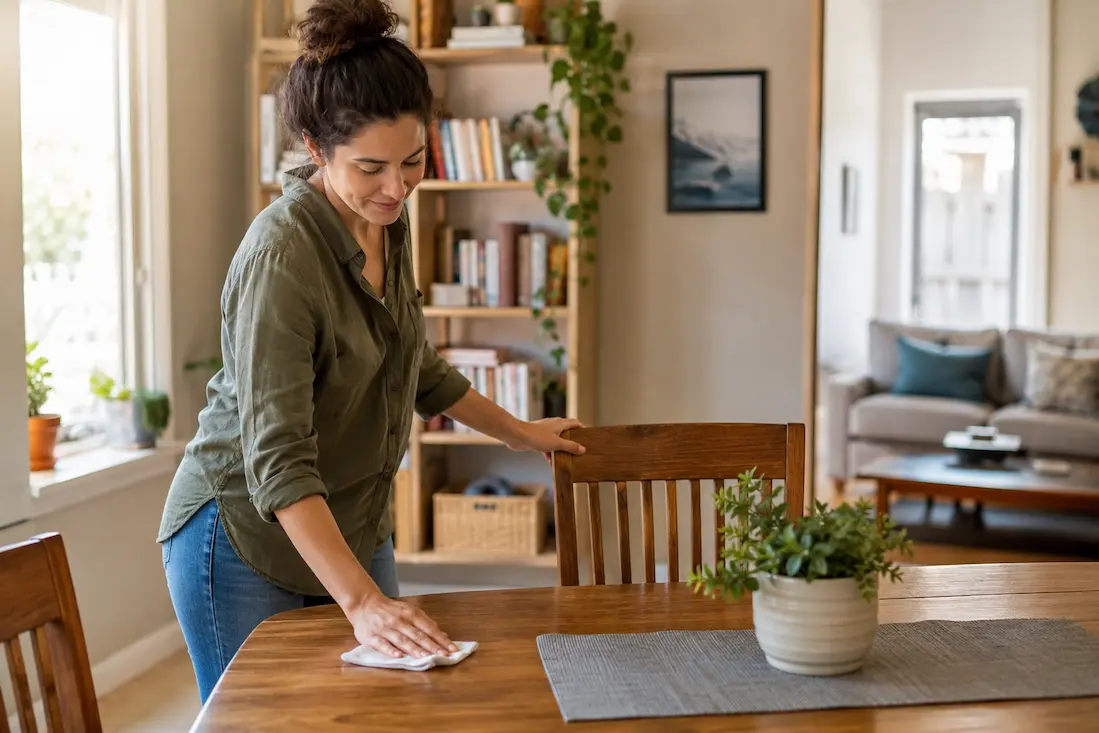
There is a common belief that making housework easier requires buying better storage containers, new cleaning tools, or the latest time-saving gadgets. While some products can certainly be helpful, they rarely solve the real problem. In many homes, chores feel overwhelming not because people lack equipment, but because small tasks quietly build up until they demand hours of attention.
Consider the difference between wiping a kitchen counter immediately after preparing dinner and leaving it until the next morning. The first takes less than a minute. The second often involves dried spills, extra scrubbing, and cleaning several other surfaces that became messy in the meantime. The amount of work increased, even though the original task never changed.
Reducing household chores is often less about working harder and more about preventing unnecessary work from being created. A few thoughtful changes in everyday habits can significantly reduce the time spent cleaning, organizing, and maintaining a home—without purchasing a single new product.
Stop Thinking in Terms of Cleaning Days
Many households treat cleaning as an event. They allow dishes, laundry, paperwork, and general clutter to accumulate throughout the week before setting aside several hours to deal with everything at once.
While this approach may seem efficient, it often creates larger, more tiring jobs. Dust has more time to settle, stains become harder to remove, and clutter spreads into multiple rooms instead of remaining in one place.
Viewing household care as a series of small, ordinary actions rather than one major weekly task usually makes the workload feel lighter. The goal isn’t to clean constantly—it’s to stop chores from growing faster than necessary.
Finish Small Tasks Before They Multiply
Many of the longest cleaning sessions begin with tasks that originally required only a few minutes.
A damp towel left on the floor may eventually create extra laundry or require additional floor cleaning. Shoes left near the entrance gradually become several pairs scattered across the hallway. A few unopened letters can quickly become a pile that feels overwhelming to sort.
Completing simple tasks while they’re still small often prevents several related chores from developing later. This habit doesn’t eliminate housework, but it keeps individual jobs from becoming unnecessarily time-consuming.
Let Your Routine Do the Hard Work
The easiest household habits are the ones that happen naturally because you already do them every day.
For example, putting dishes directly into the dishwasher after meals usually requires less effort than collecting them from different rooms later. Returning a jacket to its usual place when arriving home is often easier than organizing an entire hallway at the end of the week.
Rather than adding more responsibilities to your schedule, search for opportunities to connect simple household tasks with routines that already exist.
Everyday Habits That Prevent Larger Chores
| Small Habit | What It Prevents |
|---|---|
| Wiping kitchen surfaces after cooking | Dried food buildup and deep scrubbing |
| Hanging towels to dry properly | Damp odors and unnecessary laundry |
| Sorting mail immediately | Paper clutter accumulating on tables |
| Returning items after use | General household clutter |
| Emptying small trash bins regularly | Overflow and unpleasant odors |
These actions may seem minor individually, but together they significantly reduce the amount of work required later.
Make Messes Harder to Create
One of the simplest ways to reduce household chores is to remove situations that repeatedly generate unnecessary work.
For instance, if everyone naturally places shoes near the front door, providing a designated area there keeps dirt from being tracked throughout the home. If you always leave reusable shopping bags in different places, keeping them in one permanent location makes them easier to find and reduces daily searching.
Instead of repeatedly cleaning the same mess, ask what causes it to happen so often. Small adjustments to the environment frequently eliminate recurring chores altogether.
Fewer Possessions Usually Mean Less Maintenance
Every object inside a home requires some level of attention. It collects dust, occupies storage space, needs cleaning, or eventually has to be moved.
This doesn’t mean every household should aim for minimalism. It simply means that keeping items with a clear purpose often reduces the amount of maintenance required over time.
Kitchen gadgets used once a year, decorative items spread across every surface, or clothing that is rarely worn all contribute to ongoing household work, even when they’re not actively being used.
Reducing unnecessary belongings can make cleaning noticeably easier without changing the size of the home.
Don’t Create Extra Work for Your Future Self
Many chores become more difficult simply because they were postponed.
Allowing laundry to accumulate until every basket is full often turns a manageable task into several hours of washing, drying, folding, and putting clothes away. Waiting until every bathroom surface needs attention creates more work than occasional light maintenance.
Thinking a few hours—or even one day—ahead often speeds up how quickly you complete a task. A small amount of effort today frequently saves much more effort tomorrow.
Keep Everyday Tools Easy to Reach
People naturally avoid tasks that require unnecessary preparation.
If a cloth for wiping kitchen counters is difficult to locate or the vacuum cleaner is buried behind storage boxes, small jobs are more likely to be postponed. By contrast, when commonly used household tools are easy to access, brief cleaning is much easier to fit into your normal routine.
The goal isn’t to encourage constant cleaning. It’s to remove unnecessary obstacles that make simple maintenance feel like a larger project than it really is.
Household Work Should Follow Daily Life, Not Interrupt It
Some cleaning routines fail because they demand long periods of uninterrupted time, something many households simply don’t have.
Instead of waiting for the “perfect” opportunity to complete every task, it often helps to spread small responsibilities naturally throughout the day. Straightening the living room before leaving it, clearing the dining table immediately after meals, or putting away clean laundry while talking on the phone are all examples of work fitting around life rather than replacing it.
When chores become part of existing routines, they usually require less motivation and feel far less overwhelming.
Perfect Isn’t the Goal—Manageable Is
Many people spend unnecessary time trying to maintain a home that looks untouched every hour of the day. In reality, homes are meant to be lived in. A chair that has been used, a few dishes waiting until after dinner, or children’s books on the coffee table don’t necessarily indicate poor housekeeping.
The problem begins when normal daily activity turns into accumulated work. Focusing on keeping tasks manageable rather than making every room look perfect often reduces both physical effort and mental stress.
A home that receives consistent care usually requires less work than one that alternates between complete neglect and intensive cleaning sessions.
Timing Often Matters More Than Effort
The amount of work involved in a household task is frequently determined by when it’s done rather than how difficult it is.
Food spills are much easier to remove before they dry. Soap residue is simpler to clean before it hardens. Wet shoes are less likely to leave dirt throughout the house if they’re taken off immediately after coming indoors.
This doesn’t mean every task requires instant attention. It simply means recognizing which jobs become significantly harder when postponed. Learning that difference helps reduce the total amount of work over time.
Small Timing Changes That Save Bigger Jobs
| Everyday Action | What It Helps Avoid |
|---|---|
| Washing cooking utensils while preparing meals | Large piles of dishes afterward |
| Hanging damp clothing immediately | Extra ironing and musty odors |
| Cleaning small spills as they happen | Deep scrubbing later |
| Folding laundry soon after drying | Wrinkled clothes and overflowing baskets |
| Clearing surfaces before bedtime | Starting the next day with unnecessary clutter |
Many of these habits take less than two minutes but prevent much longer chores later.
Make Household Tasks Easier to Finish
Sometimes a chore feels difficult not because of the work itself, but because it has too many steps.
For example, if returning an item means opening several storage containers, moving other belongings, or walking across the house, people naturally postpone it. The same is true for putting away laundry, sorting paperwork, or storing seasonal items.
Whenever possible, simplify the process. The fewer decisions and movements you have to make, the more likely you are to complete everyday tasks immediately instead of letting them become tomorrow’s problem.
Share Responsibility Through Routine, Not Reminders
In homes with multiple people, one person often ends up carrying most of the household workload simply because routines aren’t clearly established.
Instead of relying on repeated reminders, encourage simple habits that everyone can follow naturally. Returning dishes after meals, placing dirty clothes directly into the laundry basket, or putting shoes in the same place each day are small actions that prevent one person from constantly tidying after everyone else.
Consistency across the household reduces repetitive chores far more effectively than occasional large cleaning sessions.
Accept That Some Chores Don’t Need Constant Attention
Not every household task has the same level of urgency.
Some activities, such as handling food spills or managing moisture, benefit from prompt attention because waiting creates more work. Others, such as reorganizing a bookshelf or washing windows, can often be scheduled less frequently without affecting daily comfort.
Learning to distinguish between maintenance that prevents bigger problems and tasks that are mainly cosmetic helps households spend their time more efficiently.
Habits That Reduce Work Over Time
| Habit | Long-Term Benefit |
|---|---|
| Completing small tasks immediately | Prevents chores from accumulating |
| Keeping frequently used items accessible | Makes daily maintenance quicker |
| Reducing unnecessary possessions | Lowers cleaning and organizing time |
| Following simple family routines | Shares responsibility naturally |
| Addressing small messes early | Avoids larger cleaning sessions |
Over time, these habits reduce the total amount of work rather than simply helping you work faster.
The Best Household Routine Is One You’ll Actually Keep
A cleaning schedule that looks impressive on paper isn’t always practical in everyday life. Work hours change, children become busy with school activities, visitors arrive unexpectedly, and personal energy naturally varies from day to day.
Flexible routines tend to last longer because they adapt to real life. Instead of expecting every task to happen at an exact time, focus on maintaining simple habits that fit naturally into your normal schedule.
A sustainable routine doesn’t require perfection. It simply keeps household work from growing beyond a manageable level.
Frequently Asked Questions
Can household chores really be reduced without buying new products?
Yes. Often, changing routines, simplifying storage, reducing unnecessary possessions, and completing small tasks earlier have a greater impact than purchasing additional cleaning tools or organizers.
Why do chores seem to increase so quickly?
Many household tasks grow over time. Dirt accumulates, clutter spreads, and delayed maintenance often requires more effort than addressing the original issue promptly.
Is it better to clean every day or once a week?
Small daily maintenance usually prevents large weekly cleaning sessions from becoming overwhelming. The exact routine depends on the household, but consistency generally reduces the total workload.
Does owning fewer things really reduce housework?
Often, yes. Every possession requires storage, cleaning, or occasional maintenance. Keeping items that serve a clear purpose usually makes household care simpler.
What is the biggest mistake that leads to extra chores?
Allowing small tasks to accumulate is the biggest mistake that creates extra chores. Jobs that originally take only a minute or two often become much larger after several days of delay.
Final Thoughts
Reducing household chores doesn’t always require new equipment, expensive storage systems, or complicated schedules. More often, it comes from understanding how work accumulates and making small adjustments to prevent unnecessary tasks from developing. Completing simple jobs while they’re still manageable, keeping routines practical, and removing obstacles that encourage clutter can dramatically reduce the amount of maintenance a home requires.
The goal isn’t to eliminate housework entirely—that isn’t realistic for any home. Instead, it’s to create habits that keep everyday responsibilities small, predictable, and easy to manage. When daily routines support the way your household naturally functions, chores become less of an interruption and more of a normal part of everyday life, leaving more time and energy for the things that matter most.

Hamza Farooq is a home improvement and organization writer who shares practical advice on cleaning, simple DIY fixes, and smart home organization. He focuses on creating easy-to-follow guides that help readers solve everyday household problems with realistic, affordable solutions. His goal is to make home maintenance simpler, more efficient, and accessible for anyone looking to improve their living space.