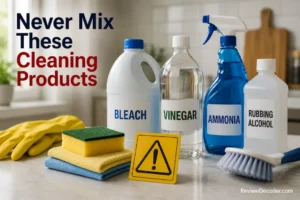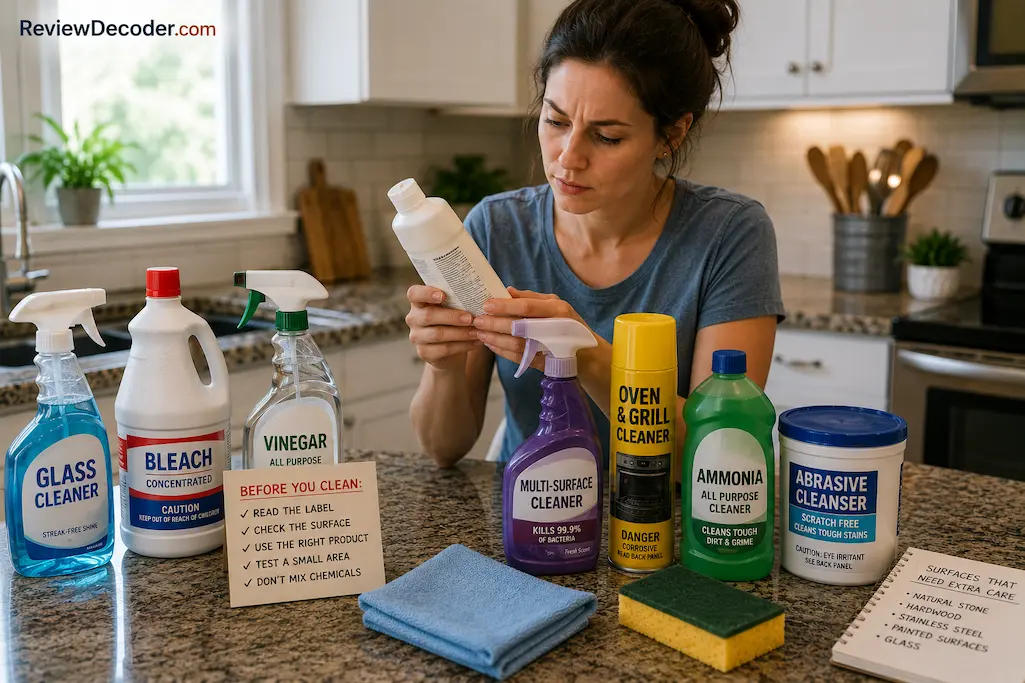
Cleaning products are designed to remove dirt, grease, stains, and bacteria, but that doesn’t mean every cleaner is safe for every surface. In fact, many household materials suffer damage not because they’re old or poorly made, but because someone repeatedly used the wrong product over time.
A countertop may gradually lose its shine after months of using an unsuitable spray. A wooden table can develop dull patches if you leave too much moisture behind. Even glass, stainless steel, and painted walls can show permanent marks when you apply powerful cleaners without considering the material underneath.
The good news is that avoiding this kind of damage usually doesn’t require buying expensive specialty products. It begins with understanding how different cleaning chemicals interact with different household surfaces and using them in the way they were intended.
Cleaning Power Should Match the Job
One of the most common misconceptions is that stronger cleaning products always produce better results.
In reality, a cleaner formulated for removing baked-on grease from an oven is far more aggressive than what’s needed for everyday kitchen cabinets. Using a heavy-duty product on a lightly soiled surface may remove the dirt, but it can also weaken protective finishes or discolor delicate materials over time.
Choosing a product that matches the level of cleaning required is often safer than automatically reaching for the strongest option available.
Surfaces Are Not All Built the Same
Homes contain a surprising variety of materials. Natural stone, sealed wood, laminate, painted drywall, ceramic tile, stainless steel, glass, vinyl, and engineered countertops all respond differently to moisture and cleaning chemicals.
A product that performs perfectly on ceramic tile may damage natural marble. Likewise, a cleaner suitable for stainless steel might leave streaks or discoloration on painted surfaces.
Understanding the material you’re cleaning is often just as important as understanding the cleaner itself.
Bleach Is Effective but Easy to Misuse
Bleach is widely used because it disinfects and removes certain types of stains. However, its effectiveness sometimes leads people to use it far more often than necessary.
Repeated use on unsuitable materials may cause fading, discoloration, or deterioration of some finishes. It can also weaken fabrics and affect colored grout if used incorrectly or too frequently.
Another common mistake is assuming that more bleach produces better cleaning. In reality, following the manufacturer’s instructions for dilution and application is usually both safer and more effective.
Bleach works best when used for situations that specifically require it rather than as a general-purpose cleaner for every room.
Cleaning Products That Require Extra Care
| Cleaning Product | Surfaces That Need Caution | Common Mistake |
|---|---|---|
| Bleach | Colored fabrics, natural stone, painted finishes | Using excessive amounts or applying too frequently |
| Acidic cleaners | Marble, limestone, travertine | Assuming all stone surfaces react the same way |
| Abrasive powders | Stainless steel, glossy finishes | Scrubbing harder than necessary |
| Strong degreasers | Finished wood, painted cabinets | Leaving the product on too long |
| Alcohol-based cleaners | Certain coated surfaces and finishes | Repeated use without checking manufacturer guidance |
The product itself isn’t necessarily harmful—the problem usually comes from using it on the wrong material or in the wrong way.
Acidic Cleaners Are Not Suitable for Every Surface
Products designed to dissolve mineral deposits and hard water stains often contain acidic ingredients that work extremely well on certain surfaces.
However, natural stone materials such as marble, limestone, and travertine react differently. Acids can gradually dull polished finishes, leave etched marks, or permanently change the appearance of these surfaces.
Because many homeowners assume all countertops and tiles require the same care, natural stone sometimes experiences unnecessary damage simply through routine cleaning.
Checking what material you’re working with before selecting a cleaner can prevent expensive cosmetic repairs later.
Abrasive Cleaners Can Remove More Than Dirt
Scouring powders, rough scrubbing pads, and highly abrasive cleaning products are useful for certain heavy-duty jobs, but they should not become the default choice for everyday cleaning.
Many modern household surfaces rely on protective coatings or polished finishes. Aggressive scrubbing can gradually wear away these layers, leaving scratches that trap even more dirt over time.
The damage often develops so slowly that homeowners don’t notice it until the surface permanently loses its original appearance.
When stubborn stains appear, increasing cleaning time is often safer than immediately increasing abrasion.
Degreasers Shouldn’t Stay on Surfaces Longer Than Necessary
Kitchen degreasers are designed to break down cooking oils quickly. Because they’re formulated to work on stubborn grease, they’re generally more powerful than everyday cleaning sprays.
Allowing a degreaser to remain on finished wood, painted cabinetry, or certain decorative surfaces longer than recommended may affect protective coatings or alter the appearance of the finish.
Following the recommended contact time and removing the product promptly helps reduce unnecessary exposure while still allowing it to perform effectively.
Water Can Become a Cleaning Problem Too
Water may seem completely harmless compared with chemical cleaners, but excessive moisture causes its own type of damage.
Wood flooring, furniture, cabinets, and some laminate products are particularly sensitive to prolonged exposure. Water that remains trapped around joints, seams, or unfinished edges can gradually lead to swelling, warping, or separation.
This is why many manufacturers recommend using a damp cloth rather than soaking surfaces during routine cleaning.
Sometimes the amount of water used matters just as much as the cleaning product itself.
Labels Contain More Useful Information Than Most People Realize
Product labels are often treated as legal formalities, yet they contain practical guidance developed specifically for safe and effective use.
Information about dilution, compatible surfaces, ventilation, contact time, and storage is included because these details directly affect how well the product performs and how safely it can be used.
Taking a few moments to read those instructions before using an unfamiliar cleaner can help prevent accidental damage that might otherwise go unnoticed until it’s too late.
Disinfectants Work Best When Used Correctly
Disinfectants have become common in many households, but they’re sometimes treated as ordinary surface cleaners. While they can be highly effective when used as directed, applying them incorrectly may reduce their effectiveness or leave unnecessary residue on certain surfaces.
One common misunderstanding is wiping the product away immediately after spraying it. Many disinfectants require a specific amount of contact time to work as intended. On the other hand, allowing residue to remain on surfaces longer than recommended may leave streaks or affect some finishes over repeated use.
Using disinfectants for the situations they were designed for—and according to the instructions—helps protect both the surface and the product’s performance.
Glass Cleaners Aren’t Meant for Every Shiny Surface
It’s easy to assume that anything reflective can be cleaned with glass cleaner, but many glossy materials have protective coatings that respond differently.
Some electronic displays, specialty mirrors, decorative finishes, and coated surfaces may require gentler care than ordinary window glass. Repeated use of unsuitable products can gradually reduce clarity, affect coatings, or leave difficult-to-remove streaks.
Whenever you’re cleaning a surface with a manufacturer-applied finish, it’s worth checking whether standard glass cleaner is actually recommended.
Steam Isn’t Safe for Every Material
Steam cleaners have become popular because they use high temperatures instead of harsh chemicals. However, heat and moisture are not appropriate for every household surface.
Certain wood floors, laminate products, adhesives, painted finishes, and delicate materials may react poorly to repeated exposure to hot steam. In some situations, moisture can penetrate seams or weaken bonded layers beneath the surface.
Steam cleaning is an excellent option for many materials, but assuming it’s universally safe can lead to unnecessary damage.
Matching the Cleaner to the Material
| Surface | Usually Suitable Cleaning Approach | What to Avoid |
|---|---|---|
| Natural stone | pH-neutral stone cleaner | Acidic products |
| Finished wood | Damp microfiber cloth and wood-safe cleaner | Excess water and strong degreasers |
| Stainless steel | Soft cloth with appropriate cleaner | Abrasive powders and steel wool |
| Glass | Standard glass cleaner where recommended | Abrasive scrubbing |
| Painted walls | Mild cleaner with minimal moisture | Harsh chemicals and aggressive scrubbing |
Choosing the right method for the material often extends the life of the surface while reducing the need for future repairs.
More Product Doesn’t Mean Better Results
When a stain refuses to disappear, it’s tempting to use extra cleaner in the hope that stronger treatment will solve the problem faster.
In reality, applying excessive amounts may simply leave residue behind, require additional rinsing, or expose the surface to more chemicals than necessary. Some finishes gradually lose their appearance after repeated overuse of cleaning products rather than because of the dirt itself.
Using the recommended amount allows the product to perform as intended while reducing unnecessary wear on household materials.
Always Test an Unfamiliar Cleaner First
Even products marketed as safe for certain materials may react differently depending on age, finish, previous treatments, or manufacturer specifications.
Testing a small, hidden area before cleaning the entire surface takes only a few minutes but can prevent widespread cosmetic damage if the material reacts unexpectedly.
This simple habit is particularly useful when caring for antique furniture, natural stone, specialty flooring, decorative finishes, or expensive countertops.
Repeated Small Mistakes Cause Most Surface Damage
Major cleaning accidents certainly happen, but gradual damage is far more common.
Using slightly too much water every week, scrubbing just a little too aggressively, or repeatedly choosing the wrong cleaner may not produce immediate visible changes. Over months and years, however, finishes become dull, protective coatings wear away, and surfaces begin showing signs of unnecessary aging.
Gentle, consistent care usually preserves household materials much better than aggressive cleaning performed occasionally.
Habits That Help Protect Household Surfaces
| Good Habit | Long-Term Benefit |
|---|---|
| Read product instructions before first use | Reduces the risk of misuse |
| Match cleaners to the material being cleaned | Protects finishes and coatings |
| Use only the recommended amount | Prevents residue and unnecessary exposure |
| Test unfamiliar products in a hidden area | Identifies potential reactions safely |
| Remove cleaning products after the recommended contact time | Helps preserve surface appearance |
These habits require very little extra effort but can significantly extend the life of household finishes.
Cleaning Should Preserve Your Home, Not Wear It Out
The purpose of cleaning is to maintain the condition of your home, not accidentally shorten the lifespan of its surfaces.
When you choose products thoughtfully and use them according to their intended purpose, most household materials remain attractive for many years. Problems usually arise when convenience replaces compatibility or when stronger products become the default solution for every cleaning task.
Understanding the needs of different materials often matters more than owning a large collection of specialized cleaners.
Frequently Asked Questions
Can household cleaning products really damage surfaces?
Yes. When the wrong cleaner is used on an incompatible material, or when products are applied incorrectly, finishes may become dull, scratched, faded, or otherwise damaged over time.
Is using more cleaner more effective?
Usually not. Most cleaning products are formulated to work with specific amounts. Using more than recommended rarely improves results and may leave residue or increase the risk of damaging the surface.
Why should I test a cleaner first?
Materials vary in age, finish, and composition. Testing a hidden area helps confirm that the cleaner won’t cause discoloration, dullness, or other unwanted changes.
Are natural surfaces more sensitive than manufactured ones?
Some natural materials, such as marble and limestone, require greater care because they react differently to certain cleaning ingredients, particularly acidic products.
What’s the best way to protect household finishes?
Identify the material first, choose an appropriate cleaner, follow the manufacturer’s directions, avoid excessive moisture or abrasion, and clean gently rather than aggressively.
Final Thoughts
Cleaning products are valuable tools, but they work best when you match them to the right surface and use them according to their instructions. Many cases of fading, scratching, dullness, or premature wear don’t result from poor-quality materials—they happen because otherwise effective cleaners are used on finishes they weren’t designed to treat. Understanding how different products interact with wood, stone, glass, metal, painted surfaces, and other household materials helps prevent unnecessary damage while maintaining a clean home.
A thoughtful cleaning routine isn’t about using the strongest product available. It’s about choosing the right one, applying it correctly, and recognizing that every surface has different care requirements. With a little attention to product labels, material compatibility, and gentle cleaning techniques, you can protect your home’s appearance while avoiding costly repairs or replacements caused by preventable cleaning mistakes.

Hamza Farooq is a home improvement and organization writer who shares practical advice on cleaning, simple DIY fixes, and smart home organization. He focuses on creating easy-to-follow guides that help readers solve everyday household problems with realistic, affordable solutions. His goal is to make home maintenance simpler, more efficient, and accessible for anyone looking to improve their living space.