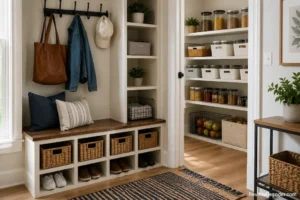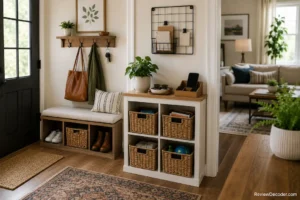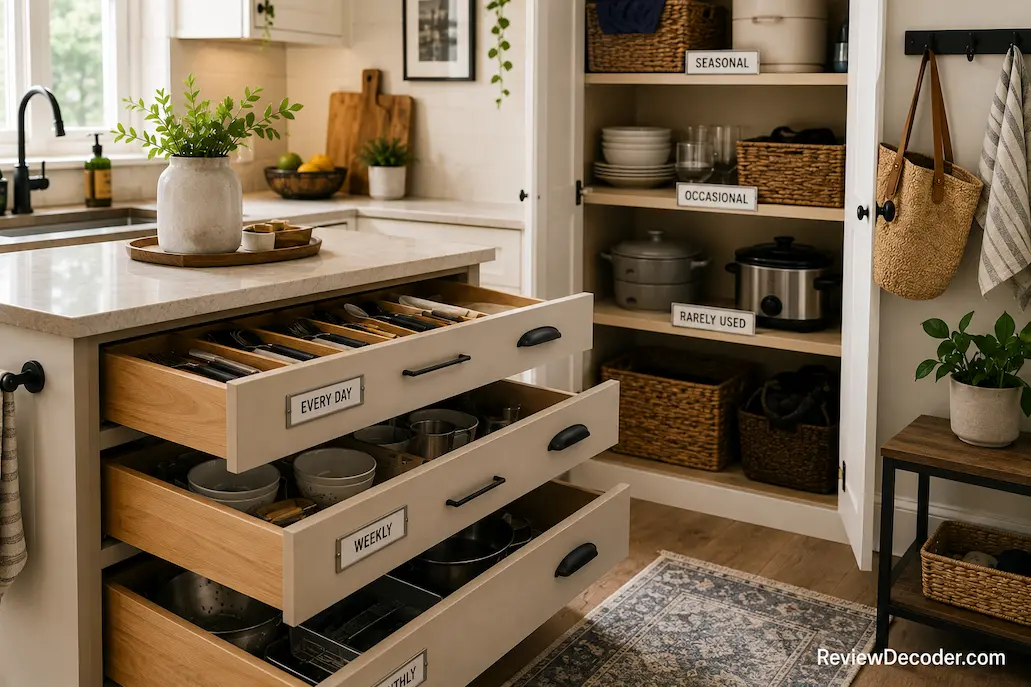
Most organization advice starts by asking you to sort items into categories. While that can certainly help, it doesn’t always solve the biggest everyday problem: constantly reaching for things that you store in inconvenient places. If your coffee mugs are on the highest shelf, your vacuum is hidden behind several boxes, or your most-used cooking utensils are buried in a crowded drawer, the issue isn’t a lack of storage—it’s where that storage is located.
Professional organizers often consider homes differently. Instead of beginning with containers or labels, they first look at how often each item is actually used. This simple change in perspective can make a home feel more organized without adding new furniture, buying expensive organizers, or spending an entire weekend decluttering.
The Frequency of Use Method is based on one practical idea: the easier an item is to reach, the more often it should be used. Likewise, belongings that are only needed occasionally shouldn’t occupy the most convenient spaces. When storage reflects real daily habits, everyday tasks become faster, clutter decreases naturally, and maintaining organization requires far less effort.
Not Everything Deserves Front-Row Storage
One of the most common organization mistakes is treating every belonging as equally important. In reality, household items have entirely unique roles in daily life.
Think about your routine. You probably use certain objects every single day without considering them—your toothbrush, coffee mug, phone charger, keys, or favorite kitchen knife. Others may only come out once a month or during holidays. Giving both groups the same level of accessibility wastes valuable storage space.
The most convenient shelves, drawers, and cabinets should be reserved for the items that support your everyday routine. Less frequently used belongings can comfortably occupy higher shelves, deeper cupboards, or longer-term storage areas.
Your Home Already Reveals What You Use Most
Before moving anything, spend a few days paying attention to your habits rather than your storage.
Notice which drawers you open repeatedly, which shelves you reach for first, and which items seem to remain on countertops because they never make it back to a cabinet. These patterns provide valuable clues about how your home actually functions.
Many homeowners discover that clutter isn’t random at all. Objects tend to gather in places where they’re most convenient to use. Instead of fighting those patterns, it’s often more effective to understand why they exist and adjust storage accordingly.
Observation usually leads to better organization than guessing.
Create Three Levels of Accessibility
Rather than thinking only in terms of “stored” or “not stored,” it helps to divide your home into different accessibility zones.
The first zone contains everyday essentials. These are the items you use so often that reaching them should require almost no effort. Eye-level shelves, frequently opened drawers, and easily accessible hooks work well for these belongings.
The second zone is for items used weekly or occasionally. They should still be simple to access but don’t need the most convenient locations.
The third zone is reserved for seasonal decorations, travel equipment, spare supplies, and items that spend long periods in storage. These can be placed on higher shelves, under beds, or in storage rooms without affecting everyday convenience.
Organizing by Frequency Instead of Category
| How Often You Use It | Best Storage Location | Examples |
|---|---|---|
| Every day | Eye-level shelves, top drawers, countertop (when appropriate) | Coffee mugs, daily medications, keys, cooking utensils |
| Several times a week | Standard cabinets and accessible shelves | Mixing bowls, office supplies, cleaning products |
| Once a month | Higher shelves or deeper cabinets | Specialty cookware, serving dishes, hobby equipment |
| Seasonally | Storage bins, attic, under-bed storage | Holiday decorations, winter blankets, travel accessories |
| Rarely | Long-term storage areas | Keepsakes, archived documents, spare household items |
This approach makes storage feel more intuitive because it mirrors real-life routines.
Reduce Unnecessary Movement Throughout the Day
Small inconveniences often go unnoticed because they become part of everyday life. Walking across the kitchen to find commonly used utensils, climbing onto a stool to reach everyday dishes, or searching several drawers for charging cables may only take a few extra seconds each time.
However, these small interruptions happen repeatedly. Over weeks and months, these small interruptions create unnecessary frustration and make it less likely that you will return items to their proper places.
When you keep frequently used belongings close to where you need them, you reduce these repeated interruptions and help everyday routines flow more smoothly.
Storage Should Adapt as Your Routine Changes
The way a household operates is not fixed. Children grow older, work schedules change, hobbies develop, and seasonal activities come and go. An organization system that worked perfectly last year may no longer suit today’s lifestyle.
For example, someone working from home may need office supplies in a more accessible location than before. During winter, heavier blankets naturally become everyday items, while outdoor equipment might take priority during warmer months.
Reviewing storage occasionally ensures that frequently used items remain easy to reach instead of becoming buried behind things that are rarely needed.
Don’t Let Rarely Used Items Occupy Valuable Space
Many homes unintentionally give premium storage locations to belongings that are seldom touched. A cabinet near the stove may hold serving platters used twice a year, while everyday cookware is squeezed into a less convenient cupboard across the kitchen.
This arrangement usually develops gradually rather than intentionally. Fortunately, it’s also one of the easiest problems to correct.
Whenever storage feels crowded, ask one simple question: “When did I last use this item?” The answer often reveals whether the item deserves its current location.
Convenience Encourages Good Habits
People naturally choose the easiest option available. If putting something away takes several unnecessary steps, it’s more likely to remain on a nearby surface until later.
By contrast, when storage is convenient, returning items becomes almost effortless. A charging station near the place where devices are used, a basket for incoming mail by the entrance, or a drawer for everyday stationery beside the desk all support habits that happen naturally.
Effective organization doesn’t rely on constant reminders. It works because the simplest action is also the correct one.
Every room has its own daily pattern.
One reason the Frequency of Use Method works so well is that it adapts to each room’s purpose instead of applying one rule to the entire house. A kitchen operates differently from a bedroom, and a home office has completely unique storage needs compared to a laundry room.
In the kitchen, the cookware used almost every day deserves the easiest access, while specialty baking equipment can be stored elsewhere until it’s needed. In a bedroom, everyday clothing naturally belongs within comfortable reach, whereas luggage or seasonal blankets can be placed on higher shelves or under the bed.
Thinking about each room independently makes storage decisions more practical because every space supports a different part of daily life.
Don’t Organize Around the Busiest Day of the Year
Many homeowners unintentionally arrange their storage based on occasional events rather than normal routines. Holiday serving dishes receive prime cabinet space, camping equipment occupies convenient shelves, and large entertaining supplies remain easily accessible despite being used only a few times each year.
A better approach is to organize around an average week rather than special occasions.
When storage reflects ordinary life instead of exceptional events, everyday tasks become faster and the home feels easier to maintain. Seasonal or event-specific items can always be moved into more accessible locations when needed.
Matching Storage to Everyday Use
| Type of Item | Recommended Accessibility | Reason |
|---|---|---|
| Everyday essentials | Immediate reach | Used multiple times each day |
| Weekly household items | Easy-to-reach cabinets or shelves | Needed regularly but not constantly |
| Monthly-use belongings | Higher shelves or secondary storage | Accessible without taking premium space |
| Seasonal items | Under-bed storage, attic, or storage room | Rarely needed throughout the year |
| Keepsakes and archives | Long-term storage | Protected without affecting daily routines |
This approach creates a home where convenience naturally follows frequency.
Avoid Creating “Just in Case” Storage
Almost every household has areas filled with items that people keep for uncertain future situations. Extra containers, duplicate tools, old cables, unused kitchen gadgets, or decorative items often remain because they might become useful someday.
While keeping a reasonable number of backup items makes sense, allowing “just in case” storage to expand without limits gradually reduces the space available for things you actually use.
Reviewing these areas honestly every few months helps you keep valuable storage available for belongings that support your current lifestyle.
Accessibility Should Be Comfortable, Not Just Possible
An item isn’t truly accessible simply because you can eventually reach it. If retrieving it requires moving several boxes, climbing onto a chair, or emptying part of a cabinet first, that storage location probably isn’t appropriate for something used frequently.
Comfort also matters. Frequently bending to reach heavy cookware or stretching repeatedly for everyday supplies can make routine tasks unnecessarily inconvenient.
The easiest storage locations should be reserved for the items that receive the most regular use, especially if they are heavy or used several times a day.
Small Adjustments Often Produce Big Improvements
Many people assume better organization requires replacing furniture or buying storage products. In reality, meaningful improvements often come from rearranging what you already have.
Moving frequently used dishes to a lower shelf, relocating office supplies closer to your workspace, or keeping everyday cleaning products near the rooms where they’re used can noticeably improve daily routines without spending any money.
These small adjustments accumulate over time, making the entire home feel more efficient even though very little has actually changed.
Common Habits That Support the Frequency of Use Method
| Habit | Long-Term Benefit |
|---|---|
| Review storage every season | Keeps accessibility aligned with changing routines |
| Move everyday items closer to where they’re used | Saves time throughout the day |
| Relocate rarely used belongings | Frees premium storage space |
| Avoid overcrowding shelves and drawers | Makes returning items easier |
| Adjust storage when routines change | Prevents the system from becoming outdated |
These habits help maintain organization without requiring major reorganizing sessions.
The Method Works Because It Reflects Real Life
Some organization techniques fail because they expect people to change their habits completely. The frequency of Use Method takes the opposite approach. It accepts that daily routines already exist and uses them as the foundation for better storage.
Instead of asking people to remember complicated systems, it places the most useful items exactly where they’re naturally needed. As a result, everyday tasks involve fewer unnecessary steps, less searching, and fewer opportunities for clutter to build up.
A home arranged around real habits almost always feels easier to live in than one arranged only for appearance.
Frequently Asked Questions
What is the frequency of Use Method?
It’s an organization approach that stores items according to how often they’re used, giving everyday belongings the most convenient locations while moving occasional items to secondary storage.
How often should I reorganize using this method?
Most households benefit from reviewing storage every few months or whenever routines change significantly, such as after moving, changing jobs, or entering a new season.
Does this method require buying new storage products?
No. Often, simply rearranging existing storage is enough to make the home more efficient.
Can this method work in small homes?
Yes. It’s especially useful in smaller spaces because it helps ensure that the most valuable storage locations are reserved for the items used most often.
What if several family members use the same space differently?
Choose storage locations based on shared daily routines whenever possible. For personal belongings, individual storage areas can be arranged according to each person’s habits while still following the same overall principle.

Hamza Farooq is a home improvement and organization writer who shares practical advice on cleaning, simple DIY fixes, and smart home organization. He focuses on creating easy-to-follow guides that help readers solve everyday household problems with realistic, affordable solutions. His goal is to make home maintenance simpler, more efficient, and accessible for anyone looking to improve their living space.