Walk through your home for a single day and you’ll probably notice something interesting. You use some rooms more than others, and you move through them differently. Some spaces become part of your routine from morning until night, while others remain untouched for days. Yet many organization systems are designed around the size of each room rather than the way people actually live inside the home.
This is one reason beautifully organized houses sometimes become cluttered so quickly. Storage may look logical on paper, but if it doesn’t support everyday habits, people naturally begin leaving items wherever they’re most convenient. Over time, those small decisions create piles of clutter that seem to appear without warning.
A home often becomes easier to manage when storage follows your daily routines instead of the architectural layout. Instead of asking where something “should” be stored, ask where you naturally reach for it in a typical day.
Watch Your Routine Before Rearranging Anything
Many organization projects begin by moving furniture or buying storage containers. A more useful first step is simply paying attention.
Notice where you place your keys when you come home. Observe where your mail lands, where you charge your phone, where you leave your shoes, or where you usually fold laundry. These everyday actions reveal habits that already exist.
Instead of trying to force entirely new routines, successful organization often builds around the habits that are already happening naturally.
Your home quietly shows you where storage should be—you simply have to notice the patterns.
The Best Storage Location Is Often the Most Convenient One
People frequently store items according to traditional expectations.
Cleaning supplies belong in one closet. Office supplies stay in another room. Chargers go into a drawer somewhere else.
In reality, convenience often matters more than tradition.
If you regularly clean both bathrooms, keeping appropriate supplies close to those spaces may be more practical than walking across the house every time. Likewise, everyday paperwork stays organized more easily when you keep a storage location near the place where you usually handle it.
The shorter the distance between using an item and putting it away, the more likely the habit becomes automatic.
Clutter Usually Follows Predictable Paths
Clutter doesn’t appear randomly.
It often develops in the same locations because those places naturally fit daily routines. Kitchen counters collect shopping bags because groceries are unpacked there. Dining tables attract paperwork because people sort mail while sitting nearby. Bedroom chairs become temporary clothing storage because people get dressed in that space every day.
Instead of repeatedly clearing these areas, ask why items continue collecting there.
Very often, the clutter is revealing that the home lacks convenient storage exactly where it’s needed most.
Daily Habits Can Suggest Better Storage
| Everyday Activity | Storage That Often Works Better | Why It Feels More Natural |
|---|---|---|
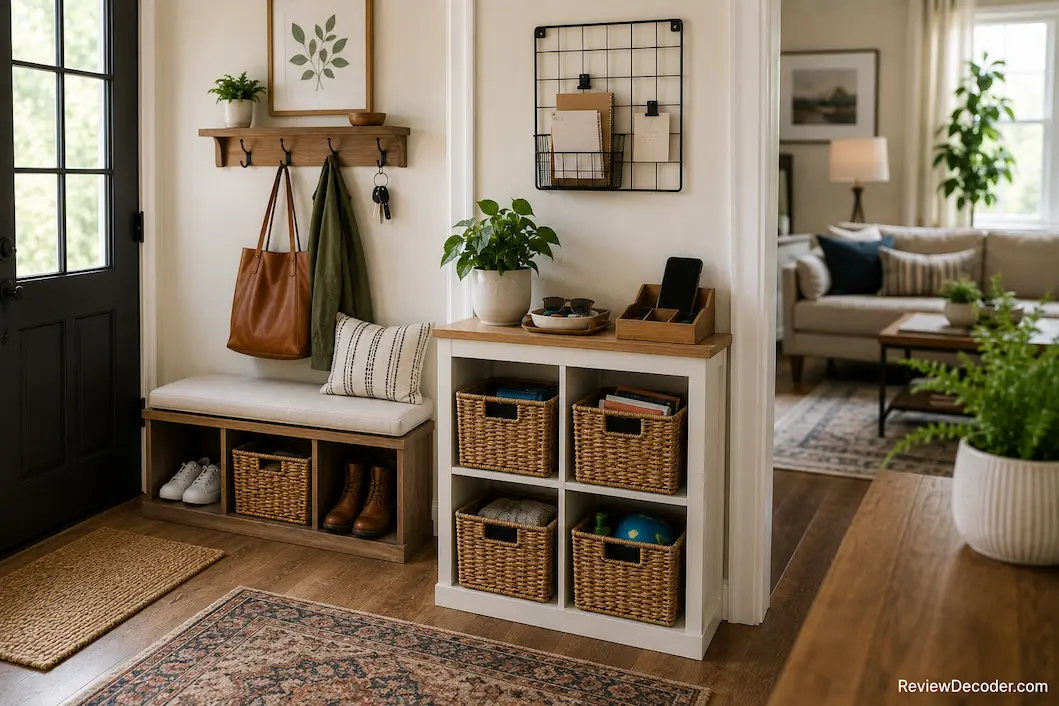
| Arriving home | Keys, bags, and shoes stored near the entrance | Reduces the chance of items being left elsewhere |
| Paying bills or sorting mail | Simple document storage where paperwork is usually handled | Prevents papers from spreading across multiple rooms |
| Charging devices | Dedicated charging area near everyday seating | Keeps cables and electronics organized |
| Cleaning bathrooms | Frequently used supplies stored nearby | Saves repeated trips across the house |
| Folding laundry | Storage baskets close to where clothes are sorted | Makes completing the task easier |
When storage follows routine, organization requires much less effort.
Morning Activities Deserve Special Attention
The first hour of the day often determines how smoothly the rest of the day begins.
People usually repeat the same sequence each morning: getting dressed, preparing breakfast, gathering personal belongings, checking schedules, and leaving the house.
If these activities require searching through multiple rooms for everyday essentials, even small delays can accumulate.
Organizing items according to the order they’re actually used often creates a smoother routine than simply arranging them according to furniture or room layout.
Sometimes changing where a commonly used item is stored can remove several unnecessary steps from every morning.
Frequently Used Items Should Be the Easiest to Reach
Every home contains belongings that people use every day and others that they may need only a few times each year.
Yet many storage systems give both categories similar treatment.
Items that are used constantly should generally require the least effort to access and return. Seasonal decorations, rarely used appliances, and special-occasion items can comfortably occupy less convenient locations because you don’t need them very often.
Matching accessibility with frequency of use creates a home that feels naturally organized instead of constantly requiring extra effort.
One Routine Often Passes Through Several Rooms
Daily activities rarely stay inside a single room.
Preparing lunch may involve the pantry, refrigerator, countertop, and dining table. Working from home might include the office, printer, kitchen, and living room. Laundry travels through bedrooms, bathrooms, washing areas, and closets before it’s finished.
Thinking only in terms of individual rooms can overlook these natural connections.
Looking at the entire path of an activity often reveals opportunities to simplify storage and reduce unnecessary movement.
Temporary Storage Areas Can Prevent Permanent Clutter
Not every item needs to be put away immediately.
Packages waiting to be opened, library books ready to be returned, outgoing mail, or items that belong upstairs often need a temporary place before reaching their final destination.
Without designated holding areas, these belongings usually end up scattered across tables, countertops, or chairs.
A small, intentional transition space can help everyday routines continue smoothly without allowing temporary clutter to spread throughout the house.
Organization Works Better When It Matches Real Life
Many homeowners try to copy storage ideas from magazines or social media without considering whether those systems fit their routines.
A beautiful pantry, perfectly arranged closet, or carefully labeled drawer isn’t automatically successful if it doesn’t support the way the household actually functions.
The strongest organization systems aren’t necessarily the most impressive to look at. They’re the ones people continue using naturally without having to think about them every day.
Evening Routines Deserve Just as Much Attention
Most people spend time planning their mornings, but the final hour before bed also shapes how organized a home remains.
Think about what usually happens during the evening. Shoes are removed, bags are emptied, devices are plugged in, tomorrow’s clothes may be prepared, and dishes are put away. If these everyday activities don’t have convenient places built into the home, items begin collecting on nearby furniture simply because there’s nowhere practical to leave them.
A well-organized evening routine often makes the next morning feel calmer without requiring any extra effort.
Shared Spaces Need Shared Logic
Living rooms, dining areas, and family rooms host multiple people throughout the day, so they naturally collect a wide variety of belongings.
People may use remote controls, books, blankets, chargers, children’s toys, and reading glasses in the same area for completely different reasons. Instead of expecting these spaces to remain empty, it’s often more realistic to create storage that reflects the activities happening there.
When everyone in the household understands where commonly used items belong, shared rooms become much easier to maintain without constant reminders.
Storage Should Adapt as Life Changes
No daily routine stays exactly the same forever.
A child starting school, a new work schedule, a hobby that becomes more important, or working from home several days each week can entirely change how different areas of the house are used.
An organization system that worked perfectly a year ago may no longer support today’s lifestyle—not because it was poorly designed, but because daily habits have changed.
Reviewing storage occasionally helps ensure it continues matching the way the home is actually being used instead of the way it was used in the past.
Habit-Based Organization Examples
| Daily Habit | A Practical Storage Adjustment | Why It Works |
|---|---|---|
| Preparing breakfast every morning | Keep frequently used dishes and utensils close to the preparation area | Reduces unnecessary movement |
| Working from home | Store office essentials near the primary workspace | Keeps work materials from spreading into other rooms |
| Walking the dog | Keep leash, waste bags, and outdoor items near the exit | Makes leaving the house quicker |
| Reading before bed | Store books and reading glasses beside the bed | Encourages items to return to the same place |
| Bringing groceries home | Leave reusable shopping bags near the main entrance or vehicle | Makes them easier to remember |
These adjustments may seem small, but they simplify routines that happen hundreds of times each year.
Don’t Organize for Your Busiest Day Alone
Every household experiences busy periods, but those aren’t the only days that matter.
An organization system should work during ordinary weekdays, relaxed weekends, holidays, and unexpected schedule changes. If storage only functions when everything goes exactly as planned, it will eventually become frustrating.
Flexible systems make it simple to put things away whether you’re rushing out the door or enjoying a quiet afternoon at home.
The easier a system is to use under different circumstances, the longer it tends to remain effective.
Reduce Unnecessary Movement Around the House
Many homes unintentionally create extra work because everyday items are stored far from where they’re needed.
Walking across multiple rooms to find batteries, scissors, notebooks, or cleaning supplies may seem insignificant once, but repeating those trips every day gradually adds inconvenience.
When commonly used belongings are stored close to where they naturally support daily activities, routines become smoother and clutter is less likely to develop in unexpected places.
Good organization isn’t measured by how far something can be stored away—it’s measured by how naturally it fits into everyday life.
Signs Your Storage Matches Your Routine
| What You Notice | What It Suggests |
|---|---|
| Frequently used items are easy to return | Storage supports daily habits |
| Counters remain clearer with little effort | Everyday activities have practical storage nearby |
| Family members know where things belong | The system feels intuitive |
| You spend less time searching for essentials | Items are stored where they’re actually used |
| Organizing feels easier than before | The home is working with your routine instead of against it |
These are often stronger indicators of success than perfectly arranged shelves.
Small Changes Can Have a Lasting Effect
Creating a home that supports everyday habits doesn’t usually require a complete redesign.
Moving a basket closer to the laundry area, relocating chargers to where devices are actually used, keeping reusable bags near the door, or storing frequently used cooking tools beside the preparation area are all relatively minor adjustments.
Yet because these activities happen every single day, even small improvements continue saving time and reducing frustration over the long term.
The greatest benefit often comes from making ordinary tasks just a little easier.
Frequently Asked Questions
Why organize based on habits instead of room size?
Daily habits determine where items are actually used. Organizing around those routines usually creates storage that’s easier to maintain than systems based only on the layout of the home.
Will this approach work in a small home?
Yes. In smaller homes, making storage match everyday routines can be especially helpful because available space is limited and every storage location needs to work efficiently.
How often should I review my organization system?
A quick review every few months is usually enough to adjust storage as routines, schedules, or household needs change.
What if several people use the same space differently?
Focus on the activities that happen most often. Shared spaces work best when frequently used items are stored conveniently for everyone rather than perfectly for one person.
Do I need to buy new storage products?
Not necessarily. Many habit-based improvements simply involve relocating existing storage so it better supports everyday activities.

Hamza Farooq is a home improvement and organization writer who shares practical advice on cleaning, simple DIY fixes, and smart home organization. He focuses on creating easy-to-follow guides that help readers solve everyday household problems with realistic, affordable solutions. His goal is to make home maintenance simpler, more efficient, and accessible for anyone looking to improve their living space.