Choosing materials for a home isn’t only about appearance. Color, texture, and style may influence the first impression, but durability often determines whether that choice still feels worthwhile ten or twenty years later. A material that performs well under everyday use can reduce maintenance, postpone replacement costs, and continue looking good long after trends have changed.
The challenge is that no single material is perfect for every situation. Some excel in areas exposed to moisture, while others perform better under heavy foot traffic or constant sunlight. A material that works exceptionally well in one room may not be the best option elsewhere in the house. Understanding these differences helps homeowners make decisions based on long-term performance rather than short-term appearance.
This guide compares common home materials from a practical perspective. Instead of focusing on brand names or luxury products, it explains how different materials age, what affects their lifespan, and where each option is most likely to deliver lasting value.
Durability Depends on More Than Strength
People often describe a material as “strong,” but strength alone doesn’t determine how long it will last. A durable material must also cope with daily wear, changing temperatures, moisture, cleaning products, sunlight, and repeated use without losing its performance.
For example, some flooring materials resist scratches extremely well but may react poorly to standing water. Others remain unaffected by moisture but show signs of wear more quickly in busy households. Looking at durability from several angles provides a much clearer picture than considering hardness alone.
The best material is usually the one that matches the conditions it will face every day.
Every Room Creates Different Challenges
Homes expose materials to very different environments depending on where they are installed. Bathrooms experience high humidity, kitchens deal with heat and spills, and hallways receive constant foot traffic, while living rooms often experience less physical wear.
Because of these differences, selecting materials based only on appearance can lead to disappointment later. A flooring option that performs beautifully in a bedroom may require much more maintenance if installed near an entrance where dirt and moisture are tracked inside every day.
Matching the material to the room is often just as important as choosing a high-quality product.
Flooring Materials: Looking Beyond Appearance
Flooring covers one of the largest surfaces in any home, making durability especially important. Since replacing flooring can involve significant cost and disruption, choosing a material with good long-term performance is often worthwhile.
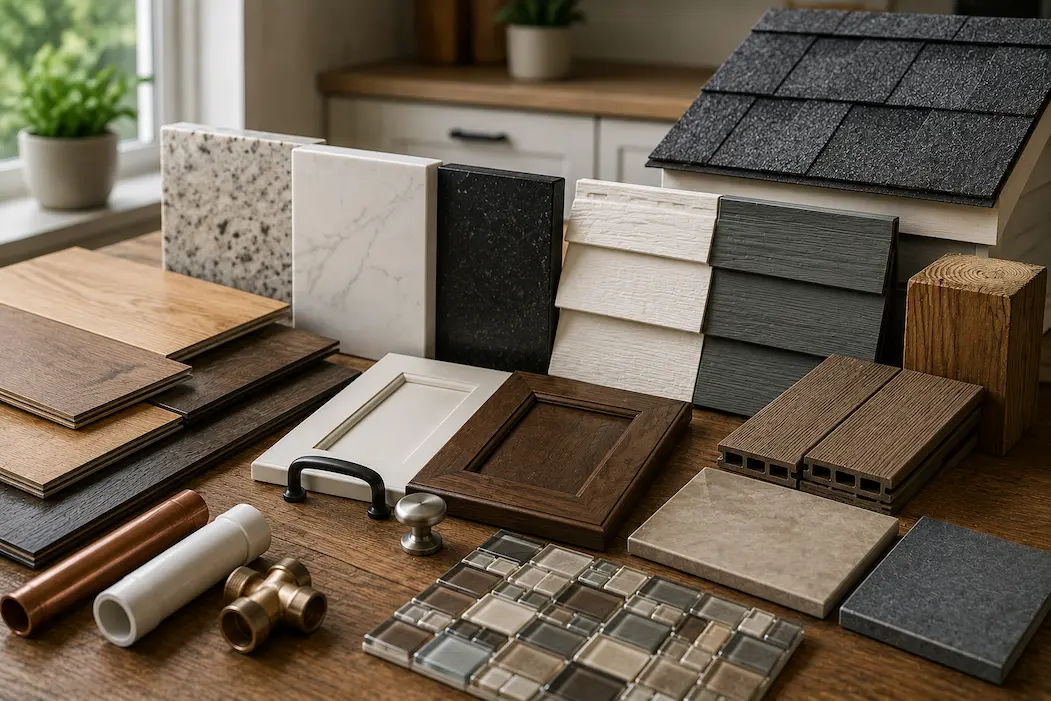
Solid hardwood has remained popular for generations because it can often be refinished when surface wear develops. With proper care, it may continue serving a home for decades. Engineered wood provides a similar appearance while offering improved stability in environments where humidity changes throughout the year.
Luxury vinyl flooring has become increasingly popular because it handles moisture well and requires relatively little maintenance. Laminate flooring also performs well in many homes but generally requires greater protection from prolonged water exposure than vinyl.
Flooring Material Comparison
| Material | Expected Lifespan* | Moisture Resistance | Maintenance Level | Best Suited For |
|---|---|---|---|---|
| Solid Hardwood | 30–100+ years | Moderate | Medium | Living rooms, bedrooms |
| Engineered Wood | 20–40 years | Moderate to Good | Medium | Most living areas |
| Luxury Vinyl | 15–30 years | Excellent | Low | Kitchens, bathrooms, family rooms |
| Laminate | 15–25 years | Moderate | Low | Bedrooms, offices, living spaces |
| Ceramic Tile | 30–50+ years | Excellent | Low | Kitchens, bathrooms |
*Actual lifespan depends on installation quality, maintenance, usage, and environmental conditions.
Countertop Materials Age in Different Ways
Kitchen countertops experience daily contact with heat, water, food preparation, and cleaning products. Their durability depends not only on hardness but also on how well they resist staining, scratching, and long-term wear.
Quartz has become a popular option because it combines consistent appearance with excellent resistance to everyday household use. Since it is non-porous, it generally requires less ongoing maintenance than some natural stone surfaces.
Granite continues to perform extremely well when properly maintained, offering excellent durability and heat resistance. However, it may require periodic sealing depending on the specific stone and how frequently the surface is used.
Wall Finishes Should Match Everyday Living
Walls receive less attention than flooring or countertops, yet the materials covering them influence maintenance for many years.
High-quality washable makes it easier to clean everyday marks easily than standard finishes, making it practical for busy households. In areas exposed to moisture, selecting finishes designed for kitchens or bathrooms can help improve long-term performance.
Decorative wall coverings may provide distinctive visual appeal, but homeowners should also consider how easily they can be repaired or replaced if damaged.
Cabinets: Surface Finish Matters as Much as Construction
Cabinet durability depends on more than the material used for the doors. Construction quality, hardware, hinges, and protective finishes all influence how well cabinets perform over time.
Solid wood remains one of the longest-lasting options when properly maintained, especially because you can often repair minor damage rather than requiring complete replacement. Engineered wood products can also perform very well, particularly when manufactured to high standards and protected from excessive moisture.
The surface finish deserves equal attention. A durable finish helps resist everyday scratches, stains, and cleaning, extending the overall appearance of the cabinetry.
Material Performance at a Glance
| Material | Major Strength | Potential Limitation |
|---|---|---|
| Solid Hardwood | Long lifespan and repairability | Sensitive to moisture changes |
| Luxury Vinyl | Excellent water resistance | Cannot always be refinished |
| Quartz | Low maintenance | Higher initial cost |
| Granite | Excellent durability | May require occasional sealing |
| Solid Wood Cabinets | Repairable and durable | Requires appropriate humidity control |
Understanding both strengths and limitations leads to more balanced decisions than focusing only on advantages.
Durability Is Also About Maintenance
Even the highest-quality material can wear prematurely if neglected. Regular cleaning, prompt attention to spills, proper ventilation, and following manufacturer care recommendations often extend the life of household surfaces significantly.
Likewise, modestly priced materials sometimes outperform expensive alternatives simply because they are better suited to the environment in which they are installed. Long-term durability depends on the relationship between the material, its surroundings, and the care it receives over time.
Outdoor Materials Face the Toughest Conditions
Materials used outside the home experience an entirely different set of challenges than those installed indoors. Rain, sunlight, freezing temperatures, humidity, and seasonal expansion all contribute to gradual wear. Choosing materials that can tolerate these conditions often reduces maintenance while extending the life of the home.
Outdoor durability isn’t simply about surviving harsh weather. It’s also about maintaining structural integrity and appearance despite years of exposure. Some materials naturally resist moisture and insects, while others depend on regular maintenance to remain in optimal condition.
Understanding these differences helps homeowners invest in materials that match both their climate and the amount of maintenance they’re willing to perform.
Roofing Materials: Comparing Long-Term Performance
A roof protects every part of the home beneath it, making material selection one of the most important long-term decisions. While installation quality has a major influence on performance, the roofing material itself also affects durability and maintenance requirements.
Asphalt shingles remain one of the most widely used roofing materials because they offer a practical balance between affordability and lifespan. Metal roofing generally lasts much longer and requires relatively little maintenance, although the initial investment is usually higher.
Neither option is universally better. The right choice depends on climate, budget, expected ownership period, and the condition of the existing roof structure.
Exterior Cladding Needs More Than Good Looks
The outside of a home constantly faces wind, moisture, sunlight, and temperature changes. A durable exterior material should protect the building while requiring reasonable levels of maintenance throughout its life.
Fiber cement siding is known for its strength and resistance to many environmental conditions when properly installed and maintained. Vinyl siding offers another practical option because it doesn’t require regular painting and generally performs well with routine cleaning. Traditional wood siding provides timeless character but usually demands more frequent maintenance to preserve its appearance and protect it from moisture.
Selecting exterior materials involves balancing durability, appearance, maintenance expectations, and local climate conditions.
Long-Term Comparison of Common Exterior Materials
| Material | Typical Lifespan* | Maintenance Level | Performs Well Against |
|---|---|---|---|
| Asphalt Shingles | 20–30 years | Moderate | General weather exposure |
| Metal Roofing | 40–70+ years | Low | Rain, snow, sunlight |
| Fiber Cement Siding | 30–50+ years | Low to Moderate | Moisture, insects, weather |
| Vinyl Siding | 20–40 years | Low | Moisture and everyday exposure |
| Natural Wood Siding | Varies greatly with maintenance | High | Can last decades with proper care |
*Actual lifespan varies depending on installation quality, climate, maintenance, and product specifications.
Composite Materials Have Changed Outdoor Living
Decks, fences, and other outdoor features have traditionally been built from natural timber. While wood remains popular, composite materials have become increasingly common because they require less routine maintenance.
Composite decking doesn’t normally require regular staining or sealing in the same way that many natural wood products do. It also resists many of the issues associated with prolonged moisture exposure. Natural timber, however, offers a classic appearance and can remain durable for many years when maintained properly.
The choice usually depends on whether a homeowner prefers lower maintenance or the look and repairability of real wood.
Plumbing Materials Are Hidden but Important
Most plumbing materials remain out of sight, yet they influence a home’s reliability for decades. Modern plumbing systems are designed to provide long service life when correctly installed and maintained.
Different pipe materials offer different advantages depending on water quality, installation methods, and local building practices. Rather than focusing only on expected lifespan, homeowners should consider compatibility with existing systems and any applicable local building requirements when planning upgrades.
Since plumbing systems are largely concealed, choosing durable materials can help reduce future disruption and maintenance.
Hardware Often Determines How Long Fixtures Feel New
Over the years, people use cabinets, doors, drawers, and furniture thousands of times. While the main structure may remain in excellent condition, lower-quality hinges, handles, runners, and fasteners can wear out much sooner.
Choosing durable hardware made from quality materials can significantly extend the useful life of household fixtures. In many situations, replacing worn hardware restores smooth operation without requiring complete replacement of the surrounding furniture or cabinetry.
Small components often have a surprisingly large influence on long-term satisfaction.
Durability Is About More Than Lifespan
| Material | Can It Be Repaired? | Maintenance Needed | Best Choice When… |
|---|---|---|---|
| Solid Hardwood | Excellent | Moderate | Long-term repairability matters |
| Luxury Vinyl | Limited | Low | Moisture resistance is important |
| Quartz | Limited | Very Low | Easy everyday maintenance is preferred |
| Natural Wood | Excellent | Moderate to High | Character and repairability are priorities |
| Composite Decking | Limited | Low | Minimal outdoor maintenance is desired |
The longest-lasting material isn’t always the best choice. Durability should be considered alongside maintenance requirements, repair options, and how the material will actually be used.
The Environment Often Determines Lifespan More Than the Material
Even premium materials have limits. A high-quality floor exposed to standing water, a countertop used improperly, or exterior cladding installed incorrectly may wear far sooner than expected.
Likewise, many modestly priced materials continue performing exceptionally well when matched to suitable conditions and cared for consistently. Proper installation, routine maintenance, and realistic expectations usually have just as much influence on lifespan as the material itself.
Choosing wisely means considering the environment as carefully as the product.
Frequently Asked Questions
Which flooring material generally lasts the longest?
Solid hardwood and ceramic or porcelain tile are among the longest-lasting residential flooring options when properly installed and maintained. The best choice depends on moisture levels, daily use, and maintenance preferences.
Is quartz more durable than granite?
Both are highly durable materials. Quartz generally requires less routine maintenance because it is non-porous, while granite offers excellent longevity and heat resistance when cared for appropriately.
Do more expensive materials always last longer?
Not necessarily. Installation quality, environmental conditions, and regular maintenance often influence lifespan as much as the purchase price.
Which outdoor materials usually require the least maintenance?
Materials such as metal roofing, composite decking, vinyl siding, and fiber cement siding are commonly chosen because they generally require less routine maintenance than many traditional alternatives.
How can I make home materials last longer?
Following manufacturer care recommendations, cleaning surfaces regularly, addressing small problems promptly, protecting materials from unnecessary moisture, and performing routine maintenance all help extend the useful life of household materials.
Final Thoughts
The most durable home material isn’t just the one with the longest advertised lifespan—it’s the one that performs reliably in the environment where it will actually be used. Moisture, sunlight, daily wear, maintenance habits, and installation quality all influence how well a material holds up over time. Looking beyond appearance and considering these practical factors helps homeowners make decisions that continue paying off for many years.
Whether you’re replacing flooring, choosing countertops, updating exterior cladding, or selecting hardware for a renovation, you should consider durability alongside maintenance, repairability, and long-term value. A thoughtful choice today can reduce future repairs, lower maintenance demands, and help your home remain functional and attractive well into the future.

Hamza Farooq is a home improvement and organization writer who shares practical advice on cleaning, simple DIY fixes, and smart home organization. He focuses on creating easy-to-follow guides that help readers solve everyday household problems with realistic, affordable solutions. His goal is to make home maintenance simpler, more efficient, and accessible for anyone looking to improve their living space.