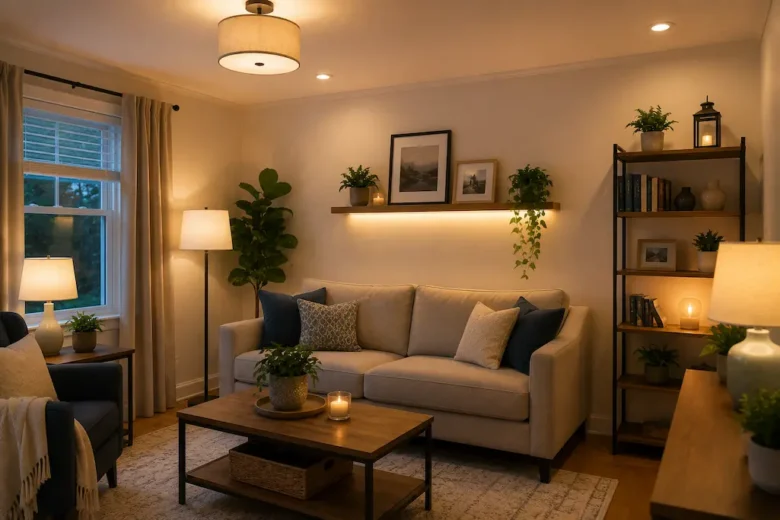
Walk into a room just after sunset and pay attention to what happens. You switch on the main ceiling light, yet one corner still feels gloomy. Reading becomes uncomfortable, food preparation casts shadows across the countertop, and the room somehow feels smaller than it did during the day. Many homeowners assume the answer is a costly renovation or new electrical wiring, but that’s rarely the case.
Good lighting isn’t determined by how many bulbs you install. It’s determined by how well light is distributed, how it supports the activities that happen in each room, and how naturally it blends with the space. A house with fewer light fixtures can often feel brighter than one with twice as many simply because the existing lighting has been planned more thoughtfully.
The encouraging part is that most lighting problems don’t require knocking down walls or hiring contractors. Small adjustments—some costing nothing at all—can make rooms brighter, more comfortable, and easier to use throughout the day. Before thinking about expensive upgrades, it’s worth understanding why certain rooms feel dark in the first place.
Light Doesn’t Need to Be Brighter—It Needs to Be Smarter
One of the biggest misconceptions about home lighting is that a higher-wattage bulb automatically creates a better room. In reality, brightness alone rarely solves the problem.
Imagine a dining room with a single bright ceiling fixture. The table may be well lit, but the walls remain dark, corners disappear into shadows, and the room feels smaller than it actually is. Compare that with a room where light comes from several directions—a ceiling light, a floor lamp, and soft lighting near a cabinet. The second room usually feels warmer and more balanced even if the total brightness is similar.
The goal isn’t to flood every corner with intense light. It’s to spread light evenly so your eyes don’t constantly adjust between bright and dark areas.
Start With the Sun Before Buying Anything
Natural daylight is still the most effective light source available, yet it’s often blocked without anyone realizing it.
Heavy curtains that stay closed all day, tall bookshelves beside windows, large indoor plants placed directly in front of glass, or even dusty windows can reduce the amount of daylight entering a room.
Spend one morning walking through your home and simply observe where sunlight reaches. You may notice that a chair blocks part of the window or that decorative items on the windowsill cast unnecessary shadows.
Small adjustments like moving furniture a short distance, cleaning the glass thoroughly, or tying curtains fully open can noticeably brighten a room without spending a single dollar.
Natural light also changes throughout the day, so it’s worth checking rooms in both the morning and afternoon before deciding they need additional lighting.
Every Room Has Different Lighting Needs
A common mistake is expecting one type of lighting to work everywhere.
Think about how each room is actually used.
A kitchen is a workspace where chopping vegetables, reading recipes, and preparing meals require clear visibility.
A bedroom benefits from softer lighting that encourages relaxation in the evening.
A home office needs focused illumination that reduces eye strain during long periods of reading or computer work.
Trying to satisfy all of these needs with identical ceiling fixtures rarely produces good results.
Instead, allow the purpose of each room to guide your lighting decisions. Once you focus on activities rather than decoration, it becomes much easier to identify where improvements are needed.
Lighting Priorities Around the Home
| Room | What Good Lighting Should Support |
|---|---|
| Kitchen | Food preparation, cooking, cleaning |
| Living room | Conversation, reading, relaxing |
| Bedroom | Dressing, reading, restful atmosphere |
| Bathroom | Grooming, shaving, applying makeup |
| Home office | Comfortable work with minimal eye strain |
| Hallway | Safe movement throughout the home |
Lighting becomes much more effective when it’s designed around everyday activities instead of treating every room the same.
Shadows Often Reveal the Real Problem
Sometimes the issue isn’t a lack of light at all—it’s where the shadows fall.
Stand at your kitchen counter while preparing food. If your body blocks the ceiling light, your hands may cast shadows directly onto the workspace. The same thing happens in bathrooms when overhead lighting creates shadows across your face, making shaving or applying makeup more difficult.
These situations don’t necessarily require brighter bulbs. They usually improve when light is introduced from another angle.
A small task lamp near a desk, under-cabinet lighting in the kitchen, or wall-mounted bathroom lighting can eliminate shadows that a ceiling fixture alone cannot.
Thinking about shadows rather than brightness often leads to more effective improvements.
Wall Colors Quietly Influence Brightness
Many homeowners replace bulbs without considering how much light their walls absorb.
Dark paint colors naturally absorb more light, while lighter finishes reflect it around the room. The same principle applies to large furniture, curtains, rugs, and even flooring.
This doesn’t mean every room should be painted white. Rich colors can create beautiful interiors when they’re balanced with appropriate lighting. However, if a room already receives very little daylight, combining dark walls with limited artificial lighting may make the space feel noticeably smaller.
Even small changes, such as using lighter curtains or replacing a dark rug with a softer tone, can subtly improve how light moves through the room.
The Position of Furniture Matters More Than Many People Expect
Lighting isn’t only about fixtures and bulbs. Furniture plays an important role as well.
Large wardrobes placed beside windows can block daylight before it spreads through the room. Tall bookcases positioned directly beneath wall lights may create unwanted shadows, while oversized sofas can interrupt the way light reaches nearby seating areas.
Take a slow walk around each room and notice whether any large items are preventing light from traveling naturally.
Sometimes moving a single piece of furniture by a few feet creates a brighter room without changing the lighting itself.
Layering Light Creates a More Comfortable Home
Professional designers rarely depend on one light source.
Instead, they combine different layers of lighting that serve different purposes.
General lighting provides overall brightness.
Task lighting supports specific activities like reading or cooking.
Accent lighting highlights artwork, shelving, or architectural details.
You don’t need to redesign your electrical system to benefit from this approach. Simply adding a reading lamp beside a favorite chair or placing a table lamp on a side cabinet can make a room feel more balanced because light comes from multiple directions instead of one overhead fixture.
The result is usually a home that feels warmer, more inviting, and easier on the eyes.
Before Buying New Fixtures, Ask These Questions
Many lighting problems can be solved without replacing anything.
Before spending money, consider the following:
- Is natural light being blocked?
- Are windows clean enough to let daylight in?
- Does furniture interrupt the flow of light?
- Are dark corners caused by shadows rather than insufficient brightness?
- Is the room trying to rely on one ceiling light for every activity?
- Would moving a lamp improve the room more than buying another one?
Answering these questions first often saves both time and money while leading to better long-term results.
Choosing the Right Bulb Is About More Than Brightness
Walk into a lighting aisle and you’ll find shelves filled with bulbs that all promise to brighten your home. It’s easy to assume they’re interchangeable, but the color of the light can change how an entire room feels.
Warm white light usually creates a relaxed atmosphere that’s well suited to bedrooms and living rooms where comfort is the priority. Cooler white light often works better in kitchens, laundry rooms, or home offices because it improves visibility during tasks that require attention to detail.
Instead of using exactly the same bulb throughout the house, think about what each room is expected to do. A comfortable evening in the living room calls for a different kind of light than preparing dinner or organizing paperwork. Matching the light to the purpose of the space usually produces better results than simply choosing the brightest option available.
Don’t Ignore the Ceiling
When people want to brighten a room, their attention naturally goes to lamps, windows, and furniture. The ceiling is rarely part of the conversation, yet it plays an important role in how light spreads.
A clean, light-colored ceiling reflects illumination back into the room, helping reduce harsh contrasts between bright and dark areas. On the other hand, stains, darker finishes, or neglected surfaces absorb light and make a room feel heavier.
If your ceilings haven’t been cleaned in years or have become discolored with age, refreshing them may improve the overall brightness more than adding another lamp.
Reflective Surfaces Can Work in Your Favor
Not every improvement involves adding another light source. Sometimes the goal is simply to help existing light travel farther.
Glass-top tables, mirrors positioned thoughtfully, glossy tiles, polished metal fixtures, and even framed artwork with glass can all reflect light around a room. Used carefully, these elements brighten darker corners without making the space feel overly shiny.
The key is balance. Too many reflective surfaces can create glare, especially in rooms that receive strong afternoon sunlight. A few well-placed reflective elements are generally more effective than covering an entire room with glossy finishes.
Practical Ways to Brighten Different Areas of the Home
| Area | A Practical Improvement |
|---|---|
| Entryway | Use brighter overhead lighting and keep the area free from bulky furniture. |
| Kitchen | Add lighting beneath wall cabinets to reduce shadows on worktops. |
| Living room | Combine ceiling lighting with floor or table lamps for a softer feel. |
| Bedroom | Use bedside lamps instead of relying only on a central ceiling light. |
| Bathroom | Improve lighting around the mirror instead of above it alone. |
| Hallways | Choose consistent lighting so every section feels equally welcoming. |
Small changes in the right location often make a bigger difference than replacing every light fixture in the house.
Older Homes Often Need Better Light Distribution, Not More Wiring
Many older homes were designed when families relied on fewer electrical devices and different living habits. A single ceiling fixture was often considered enough for an entire room.
Today’s homes are used differently. People read on sofas, work from dining tables, help children with homework, and use kitchens for much more than cooking. As a result, lighting that once seemed adequate may no longer support modern routines.
Before assuming additional wiring is necessary, experiment with movable lighting. Floor lamps, desk lamps, and rechargeable LED lights can improve visibility exactly where it’s needed while avoiding the expense of structural work.
A Bright Home Isn’t Always an Energy-Hungry Home
Improving lighting doesn’t have to mean increasing electricity use. In many cases, smarter choices reduce both energy consumption and household costs.
Replacing older bulbs with modern LED alternatives is one of the simplest upgrades because they typically consume less electricity while lasting much longer. Turning off lights in unused rooms, making better use of daylight, and choosing task lighting instead of illuminating an entire room also contribute to more efficient energy use.
Good lighting is about using light where it’s useful rather than producing unnecessary brightness everywhere.
Small Details That Quietly Make a Difference
Some lighting improvements are so simple that they’re easy to overlook.
Dust collecting inside light fixtures can reduce brightness more than many people realize. Lamp shades that have yellowed with age soften light in ways that aren’t always desirable. Even replacing a damaged switch plate or straightening a crooked light fixture can make a room feel more cared for.
Take time every few months to clean fixtures, wipe lampshades, and check whether bulbs are producing consistent light. These small maintenance tasks help preserve the quality of your lighting without requiring additional investment.
Common Lighting Mistakes That Are Easy to Avoid
Many homes feel darker than necessary because of a handful of repeated mistakes rather than poor design.
Using one powerful ceiling light as the only source of illumination often leaves corners in shadow. Positioning furniture in front of windows limits natural daylight, while choosing decorative fixtures without considering their actual light output can leave rooms looking attractive but impractical.
Another common mistake is overlooking how rooms change throughout the day. A living room that feels bright in the morning may become noticeably darker by late afternoon. Observing these changes before making improvements helps you solve the real problem instead of guessing.
Looking at Your Home With Fresh Eyes
One useful exercise is to spend an evening moving through your home without changing anything.
Notice where you naturally avoid sitting because it’s too dark.
Observe which rooms encourage you to stay longer and which feel less inviting.
Pay attention to areas where reading becomes uncomfortable or where shadows make simple tasks more difficult.
Instead of asking, “Do I need another light?” ask, “Why does this space feel less comfortable than the others?”
The answer often leads to practical improvements that cost very little yet make everyday life noticeably better.
Frequently Asked Questions
Can better lighting really change how a room feels?
Yes. Lighting influences comfort, visibility, mood, and the perception of space. Even without changing furniture or décor, improving how light is distributed can make a room feel brighter, larger, and more welcoming.
Should every room have the same type of light?
No. Different rooms serve different purposes. Kitchens and workspaces generally benefit from clearer, task-focused lighting, while bedrooms and living rooms often feel more comfortable with softer, layered illumination.
Is natural light always better than artificial light?
Natural daylight is an excellent source of illumination, but it isn’t available all the time. A combination of well-used daylight and thoughtfully placed artificial lighting usually produces the most practical and comfortable result.
How can I brighten a room without installing new fixtures?
Start by removing anything blocking windows, cleaning light fixtures, using lamps in darker areas, choosing appropriate bulbs, and rearranging furniture that interrupts the flow of light.
Do mirrors really make a room brighter?
When positioned to reflect natural light or a well-lit part of the room, mirrors can help spread existing light and create the impression of a brighter, more open space.
Conclusion
Improving home lighting isn’t about chasing the brightest bulb or filling every ceiling with additional fixtures. It’s about understanding how light moves through your home and making thoughtful adjustments that support the way each room is used. A brighter kitchen may come from reducing shadows over the worktop, while a more comfortable bedroom might simply need softer lighting beside the bed instead of another ceiling fixture.
The most successful improvements often begin with observation rather than shopping. Walk through your home at different times of day, notice where natural light fades, identify areas that feel uncomfortable to use, and look for obstacles that prevent light from reaching the rest of the room. These simple observations usually reveal solutions that are both practical and affordable.
Over time, a series of small improvements can transform how your home feels. Better lighting makes rooms easier to use, highlights the features you already enjoy, and creates an atmosphere that’s welcoming without requiring expensive renovation. In many cases, the difference isn’t created by adding more light—it’s created by helping the light you already have work more effectively.

Hamza Farooq is a home improvement and organization writer who shares practical advice on cleaning, simple DIY fixes, and smart home organization. He focuses on creating easy-to-follow guides that help readers solve everyday household problems with realistic, affordable solutions. His goal is to make home maintenance simpler, more efficient, and accessible for anyone looking to improve their living space.