I stared at my kitchen floor for six months before I did anything. Not because I am patient. Because I was convinced the tiles were permanently ruined. Stained grout. Dull surface. A sticky spot near the stove that collected every crumb within a five-foot radius. I named the sticky spot “The Zone.” I avoided The Zone.
The tiles are ceramic. Off-white. Installed by someone who did not care about my future. The grout was originally light gray. Now it was the color of old coffee. The tiles themselves had a film. Not dirt exactly. More like years of cleaning product residue building up like plaque. I mopped weekly. It did not help. The mop just moved the film around.
I considered replacing the floor. Got a quote. Laughed. Cried. Went home.
What I Tried First (And Why It Disappointed Me)
The internet said baking soda paste. Equal parts baking soda and water. Spread on grout. Scrub with toothbrush. Wait ten minutes. Rinse.
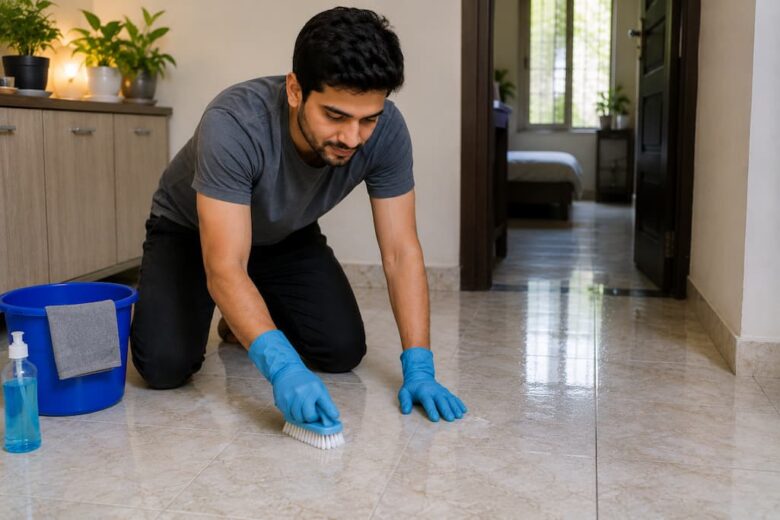
I did this. On my hands and knees. For forty-five minutes. The grout looked slightly better in patches. Not dramatically. Not “new again.” Just “slightly less offensive.” And my knees hurt. And I used three toothbrushes. The paste dried on the tiles before I could rinse it, leaving a white residue I had to scrub off separately.
Then I tried vinegar. Straight white vinegar in a spray bottle. Spray, wait, wipe. The tiles got cleaner. The grout did not. Also, my kitchen smelled like a pickle factory for two days. The cat refused to enter. I do not blame him.
I tried a commercial grout cleaner next. The kind with bleach. It worked. Too well. The grout got lighter, but the tiles around it got slightly discolored. A faint halo. Like a bad photo edit. I stopped before I made it worse. Grease removal is different from grout restoration. I confused the two. They are not the same problem.
The Method That Actually Worked
I found it by accident. Not in a guide. In a conversation. My neighbor mentioned her mother used oxygen bleach on her bathroom tiles. Not chlorine bleach. Oxygen bleach. Sodium percarbonate. Powder. Dissolves in water. Releases oxygen ions that lift stains without the harshness.
I bought a tub online. Two pounds. Eight dollars. Dissolved two scoops in a gallon of warm water. Poured it on the floor. Let it sit for fifteen minutes. Did not scrub. Just waited.
The water turned slightly yellow. The grout was releasing years of embedded dirt. I mopped up the solution with a clean microfiber mop. Rinsed with plain water. Once.
The grout was light gray again. Not perfect. Not factory-new. But clearly gray. Not coffee-colored. The tiles had a slight sheen. The film was gone. The Zone was no longer sticky. I checked with my hand. Clean. Dry. Normal.
I did the whole kitchen in an hour. Including the waiting. My knees did not hurt. I did not need a toothbrush. The cat came back.
What I Do Now for Maintenance
Oxygen bleach once every three months. Not more. Over-bleaching weakens grout over time. The rest of the time, I mop with plain hot water and a drop of dish soap. No vinegar. No all-purpose cleaner. No wax. Just hot water and soap.
The dish soap cuts grease from cooking. The hot water lifts it. I dry the floor with a towel afterward. Not because I am obsessive. Because wet grout attracts dirt. Drying prevents the film from returning.
My kitchen cleaning routine keeps the tiles from sliding back to ruin. The floor is part of the system, not a separate project.
I also bought a spray mop. The kind with a refillable bottle. I fill it with water only. Spray lightly. Mop. Done. No bucket. No wringing. No excuse to skip it.
The Grout Sealer I Almost Skipped
After the oxygen bleach worked, I read about sealing. Grout is porous. It absorbs everything. Spills. Dirt. Mop water. Sealing fills those pores. Creates a barrier.
I bought a small bottle of penetrating grout sealer. Applied it with a foam brush. Took twenty minutes. The grout darkened slightly for an hour, then returned to its clean gray. Now spills bead up instead of soaking in. I tested it with coffee. The coffee sat on the grout like a bubble. I wiped it away. No stain.
I should have done this years ago. The sealer cost twelve dollars. The protection it provides is worth ten times that. I sealed my bathroom grout too while I was at it. Same process. Same result.
💡 What I Learned the Hard Way
I used oxygen bleach on a small test patch first. Good instinct. But I tested it on the grout near the stove, which was the dirtiest. The difference was so dramatic that the rest of the floor looked worse by comparison. I had to do the whole floor immediately or live with a clean spot surrounded by filth. It was like getting one tooth whitened. Do not test on the dirtiest area. Test on an average area. Or just commit to doing the whole thing. There is no middle ground with floor restoration.
Quick Comparison: Methods I Tested
| Method | Effort Level | Grout Result | Tile Result |
|---|---|---|---|
| Baking soda paste | High (kneeling, scrubbing) | Slight improvement | White residue left behind |
| Vinegar spray | Medium | No visible change | Cleaner, but smell lingered |
| Chlorine bleach cleaner | Medium | Lightened grout too much | Slight discoloration (halo effect) |
| Oxygen bleach solution | Low (pour, wait, mop) | Restored to near-original gray | Film removed, slight sheen |
⚠️ When This Won’t Work
If your tiles are natural stone — marble, travertine, slate — oxygen bleach might etch the surface. Test a hidden corner first. Stone is porous and reacts differently than ceramic. If your grout is crumbling or missing chunks, cleaning will not fix it. You need re-grouting. A cosmetic clean on damaged grout is lipstick on a cracked tooth. Also, if your tiles are vinyl or laminate designed to look like tile, this method is irrelevant. Those are not tiles. They are sheets. Clean them with the manufacturer’s recommended method. Finally, if your floor has been waxed or sealed with a topical coating, oxygen bleach may strip it unevenly. You will need to strip the entire coating first, then clean, then re-coat. That is a weekend project, not an afternoon.
Frequently Asked Questions
Can I use hydrogen peroxide instead of oxygen bleach?
Hydrogen peroxide is the active ingredient in oxygen bleach, but weaker. Three percent peroxide from the pharmacy will work on light stains. It will not work on years of embedded grime. You would need to apply it multiple times and wait longer. Oxygen bleach is concentrated peroxide in powder form. It is the same chemistry, just stronger. If your grout is only slightly dingy, peroxide might be enough. If it is coffee-colored like mine was, go with the powder.
How long does the sealer last?
Penetrating sealer lasts one to three years depending on traffic. My kitchen is high-traffic. I reseal annually. It takes twenty minutes. The bottle lasts two applications. I set a phone reminder. Without the reminder, I would forget. With the reminder, I do it. Simple.
Will this work on colored grout?
Yes, but test first. Oxygen bleach lifts stains, not color. If your grout is supposed to be dark brown and it looks black from dirt, it will return to brown. If your grout is white and it turns yellow from age, it will return to white. But if the grout color itself has faded from UV exposure or chemical damage, no cleaner will restore it. You would need to re-grout or use a grout colorant.
Can I use a steam mop instead?
I tried one. Borrowed from a friend. It cleaned the tiles well. The grout? Not really. The steam penetrates but does not lift embedded dirt the way a chemical reaction does. It is good for maintenance after you have restored the grout. Not good for the initial rescue mission. Also, steam and unsealed grout can force moisture deeper. I did not love that risk.
What about the smell? Is oxygen bleach safe around pets?
No smell. That is why I chose it. It dissolves into water and oxygen. No fumes. No bleach smell. I let the cat walk through the kitchen while the solution sat. He was fine. He ignored me, which is his baseline. Rinse thoroughly afterward anyway. Wet paws on clean floor are not a crisis. But dry floor is better.
Closing Thought
My floor is not new. It is ten years old. It has chips. A crack near the refrigerator I fill with matching caulk every spring. But the grout is gray again. The tiles reflect light. The Zone is gone.
I did not renovate. I restored. There is a difference. Renovation is dramatic and expensive. Restoration is patient and cheap. I prefer cheap.
The kitchen feels different now. Not because I spent money. Because I stopped accepting the gradual decline. The slow filth. The “this is just how it is” resignation.
It is not how it is. It is how you let it become. Fix it. The floor will thank you. And so will your bare feet.
Sources and References
- Tile Council of North America (TCNA) — Official care and maintenance guidelines for ceramic tile and grout, including recommended cleaning agents and sealing practices.
- U.S. Environmental Protection Agency (EPA) Safer Choice Program — Information on safer cleaning product alternatives, including oxygen-based bleach formulations for residential use.
- U.S. Consumer Product Safety Commission (CPSC) — Safety guidelines for household chemical products, including proper ventilation and storage of cleaning agents.

Hamza Farooq is a home improvement and organization writer who shares practical advice on cleaning, simple DIY fixes, and smart home organization. He focuses on creating easy-to-follow guides that help readers solve everyday household problems with realistic, affordable solutions. His goal is to make home maintenance simpler, more efficient, and accessible for anyone looking to improve their living space.