
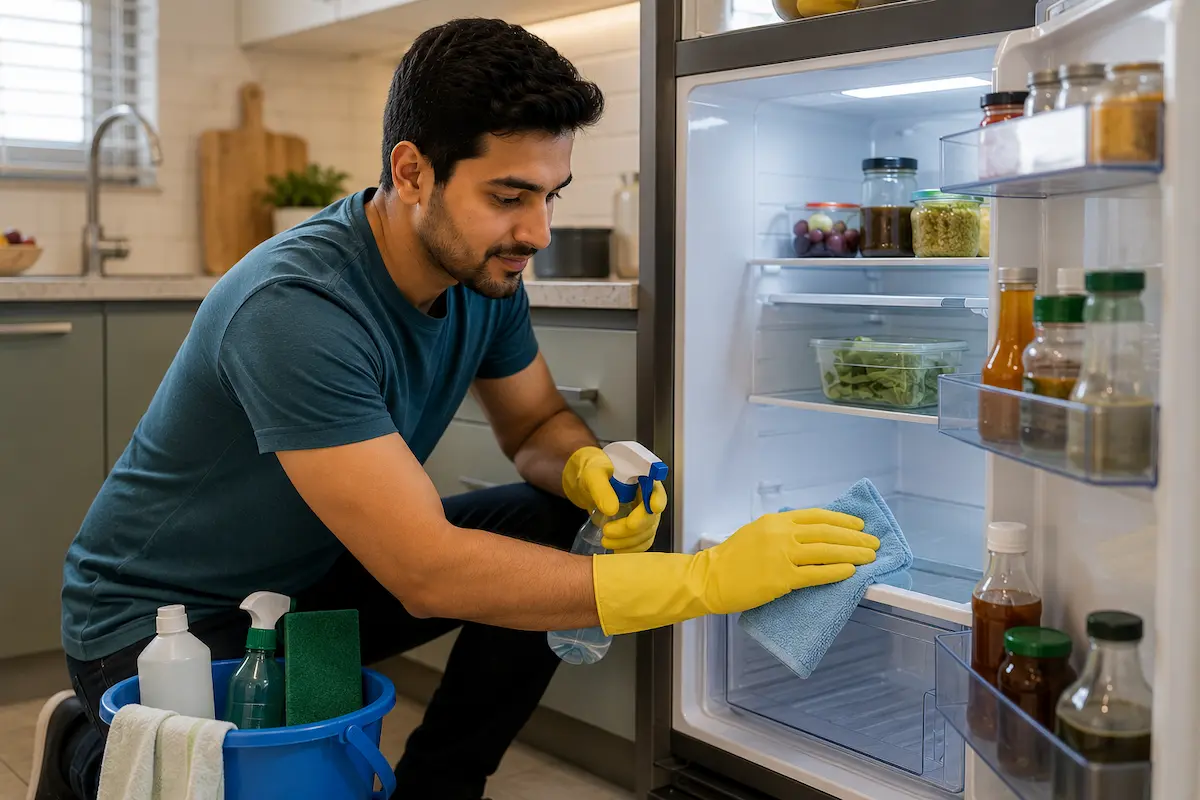
Last Thanksgiving, I opened my refrigerator to grab butter for mashed potatoes and smelled something I can only describe as “wet sock left in a gym bag.” The source was a container of leftover soup I had forgotten about. Three weeks prior. It had grown a fur coat. I gagged, closed the door, and considered moving apartments.
I did not move. I cleaned. But not the way I used to — a quick wipe with a paper towel and some hope. I mean really cleaned. I pulled out every shelf, every drawer, every jar of mustard I could not remember buying. I spent four hours that Saturday knee-deep in cold water and regret. When I finished, the refrigerator looked new. Smelled new. Felt new. And I swore I would never let it get that bad again.
That was eighteen months ago. I have kept the promise. Not because I am disciplined. Because I built a system that is easy enough to actually do. Here is what I learned from that disaster and the routine I have stuck to since.
What I Was Working With
My refrigerator is a standard top-freezer model, 30 inches wide, 66 inches tall, 32 inches deep. White exterior, wire shelves in the freezer, glass shelves in the fridge section. Three crisper drawers at the bottom. The manufacturer sticker says it was built in 2014, which means it is twelve years old and showing its age. The door seal is slightly cracked on the bottom right corner. The light bulb flickers sometimes. And the ice maker has not worked since 2022.
I live alone most of the week, but my partner stays over on weekends, and my nephew visits twice a month. The fridge gets moderate use. Not a family of five, but not a bachelor with a single ketchup bottle either. I cook three or four times a week, which means leftovers, which means containers, which means the potential for science experiments if I am not careful.
What I Tried First (And Why It Failed)
My old method was simple and useless. Every few months, when I noticed a smell or a spill, I would grab a Clorox wipe and swipe the obvious spots. The front of the shelves. The door handle. Maybe the bottom of the crisper if I was feeling ambitious. It took five minutes. It accomplished nothing.
The problem was that surface wiping does not reach the real grime. The sticky residue under the ketchup bottle. The crumbs that fall behind the crisper drawers. The drip tray under the vegetable bin that collects condensation and mold. I was cleaning what I could see and ignoring what I could not. The smell always came back.
I also tried a “deep clean” once that involved spraying the entire interior with an all-purpose cleaner and wiping it down. It left a chemical smell that absorbed into my butter and cheese. For three days, everything tasted like lemon disinfectant. I threw away a block of cheddar that cost $8. Never again.
What Actually Works: My Quarterly Deep Clean
I clean my refrigerator thoroughly four times a year. January, April, July, October. The first Sunday of each month. I mark it on my calendar. Not because I love cleaning refrigerators. Because if I do not schedule it, I will find an excuse.
Step 1: Empty Everything
I start by pulling every item out and placing it on the kitchen counter. Everything. The jar of pickles with one pickle left. The half-empty bottle of hot sauce. The yogurt I bought because I was going to “start eating healthier.” All of it. I check every expiration date. If I cannot remember when I opened it, it goes. If it is past the printed date, it goes. If it looks questionable, it goes. No mercy.
I keep a cooler bag on standby for anything that needs to stay cold during the process. In winter, I sometimes put things on the balcony if it is cold enough. In summer, the cooler bag with an ice pack is essential. The emptying takes about fifteen minutes. The sorting takes another ten.
Step 2: Remove Shelves and Drawers
This is the step I used to skip. I would wipe around the shelves instead of removing them. Big mistake. The glass shelves lift out easily. The crisper drawers slide out. The door shelves pop off with a gentle upward tug. I take every removable piece to the sink.
I fill the sink with warm water and two tablespoons of baking soda. Not dish soap. Baking soda. It cuts grease and neutralizes odors without leaving a chemical residue. I let the shelves and drawers soak while I clean the interior. This is also when I check the drip tray, if my model has an accessible one. Mine does — it slides out from behind the crisper area. I empty it, rinse it, and let it dry.
Step 3: Clean the Interior
With the shelves out, I can see the real refrigerator. The walls. The ceiling. The floor. The back panel where the cooling vents are. I use a spray bottle filled with:
- 2 cups warm water
- 2 tablespoons baking soda
- 1 tablespoon white vinegar
I spray this onto a microfiber cloth, not directly into the fridge. Direct spraying can get liquid into the vents or the light fixture. The cloth lets me control where the solution goes. I wipe every surface, including the rubber door gasket. The gasket is where mold loves to hide, especially in that cracked corner I mentioned. I use a cotton swab dipped in the same solution to get into the gasket folds.
For stubborn sticky spots — dried syrup, spilled juice, that mysterious red stain I stopped questioning — I make a paste of baking soda and water. I apply it with my finger, let it sit for five minutes, then scrub with a soft sponge. It works every time. No scratching. No harsh chemicals.
Step 4: Wash and Dry the Shelves
By now, the shelves and drawers have soaked for twenty minutes. I wash them with the same baking soda solution, rinse with clean water, and dry thoroughly with a towel. Water spots on glass shelves look terrible, so drying matters. I place them on a bath towel on the counter and let them air dry for ten minutes while I finish the interior.
Step 5: Reassemble and Restock
I put the shelves and drawers back in the reverse order I removed them. Then I restock the food. But not randomly. I organize by zone:
- Top shelf: Ready-to-eat foods, leftovers, drinks
- Middle shelves: Dairy, eggs, deli items
- Bottom shelf: Raw meat and fish (coldest spot, least risk of dripping on other foods)
- Crisper drawers: Vegetables in one, fruits in the other
- Door shelves: Condiments, juices, things that can handle temperature fluctuation
This zoning is not just neatness. It is food safety. The bottom shelf is the coldest and safest place for raw meat. The door is the warmest spot, so only stable items go there. I learned this after a food safety course I took online last year, and it changed how I think about refrigerator organization.
💡 What I Learned the Hard Way
Do not use hot water on cold glass shelves. I learned this the hard way during my first deep clean. I removed a glass shelf that had been sitting at 38 degrees for weeks and ran it under hot tap water. It cracked. Not shattered, but a long spiderweb crack across the middle. The shelf still held food, but it looked terrible and I worried it would break completely. A replacement shelf cost $47 plus shipping from the manufacturer. Now I only use warm water, not hot, and I let the shelves sit on the counter for five minutes before washing to reduce the temperature shock. That five minutes of patience saved me $47.
My Weekly Maintenance
The quarterly deep clean is the heavy lifting. But I do small maintenance every week to keep things from sliding backward.
Every Sunday evening, while my dinner cooks, I spend ten minutes on the fridge. I check the crisper drawers for anything going bad. I wipe the front of the shelves with a damp cloth. I toss anything that looks questionable. And I rotate — older items move to the front, newer items go to the back. This “first in, first out” rule prevents the buried-container-of-soup disaster from repeating.
I also keep an open box of baking soda on the middle shelf. I replace it every three months, when I do the deep clean. It absorbs odors without adding fragrance. I tried charcoal bags once. They worked but took up too much space. The baking soda box is small, cheap, and effective.
The Exterior Matters Too
The outside of the refrigerator collects grime faster than the inside. Fingerprints on the handle. Dust on top. Spills that drip down the front when you pour juice. I wipe the exterior once a week with a damp microfiber cloth. For the handle, which gets the most contact, I use the same vinegar-water solution I use for my kitchen counters. It cuts through the oils from hands without leaving streaks.
The top of the refrigerator is a dust magnet. I keep a small basket up there for items I rarely use — a cake carrier, a picnic cooler pack. But the surface itself gets dusted monthly. Dust on top of a refrigerator can actually reduce efficiency by blocking heat release, though the effect is minor for most home models. Still, it takes thirty seconds to wipe. Why not.
When This Won’t Work
⚠️ When This Won’t Work
This routine works for a standard top-freezer refrigerator in a typical apartment. If you have a commercial-grade fridge, a built-in Sub-Zero, or a smart refrigerator with touch screens and cameras, some of these steps need adjustment. Smart fridges have electronic components that should not get wet, and built-in models may have different shelf removal procedures. Always check your manufacturer’s manual before removing parts or using cleaning solutions. Also, if your refrigerator has a persistent odor that does not go away after a thorough cleaning, you may have mold in the insulation or a clogged drain line. That requires professional service, not more baking soda. I had a friend whose fridge smelled like fish for months despite constant cleaning. Turned out the drain pan under the unit had cracked and was harboring bacteria. A $150 repair fixed it. Sometimes cleaning is not enough.
What Others Told Me
I mentioned my refrigerator cleaning routine at a dinner party last year. The reactions were split.
One friend said she never cleans her fridge. “It stays cold,” she reasoned. “Bacteria can’t grow in the cold.” I did not correct her at the table, but I will correct that here: Listeria and some other bacteria can grow at refrigerator temperatures. Not as fast as room temperature, but they grow. That is why the FDA recommends keeping your fridge at or below 40 degrees Fahrenheit. And that is why cleaning matters, even in the cold.
Another friend said she uses bleach for everything. “Kills everything,” she said. True. But bleach leaves residue. And residue near your food is a bad idea. I use baking soda and vinegar because they clean effectively without creating a chemical environment where I store my dinner. The EPA lists vinegar as a safe cleaning alternative for food-contact surfaces when used properly.
The best tip came from my aunt, who has been cleaning refrigerators for fifty years. She said: “Clean it before you grocery shop, not after.” Why? Because when the fridge is empty, you see everything. You notice the sticky spot behind the milk. You find the jar of olives you forgot. And you do not have to work around a full load of groceries. I now schedule my quarterly cleans for the day before my big grocery run. It works perfectly.
My Cleaning Schedule at a Glance
| Task | Frequency | Time | What I Use |
|---|---|---|---|
| Deep clean interior | Quarterly | 2–3 hours | Baking soda, vinegar, warm water |
| Check crisper, toss old items | Weekly | 10 minutes | Nothing — just eyes and a trash bag |
| Wipe exterior and handle | Weekly | 5 minutes | Damp microfiber cloth |
| Replace baking soda box | Quarterly | 1 minute | New box of baking soda |
| Dust top of refrigerator | Monthly | 30 seconds | Damp cloth or duster |
| Check door gasket for mold | Monthly | 2 minutes | Cotton swab + vinegar solution |
How This Fits Into My Broader Kitchen System
A clean refrigerator is pointless if the rest of the kitchen is chaos. I organize my kitchen so that the fridge, the counters, and the pantry work together. I wrote about how I organized my small kitchen space — the layout that makes it easy to unload groceries directly into the right zones. I also wrote about how I clean my kitchen step by step, which includes the refrigerator as one component of a weekly kitchen routine. And my guide to keeping frequently touched areas clean covers the refrigerator handle, which gets touched more often than most people realize.
FAQ
How often should I deep clean my refrigerator?
At minimum, quarterly — every three months. If you cook frequently, have a large family, or notice odors or spills, monthly is better. I do quarterly because I live alone and cook moderately. My sister, who has three kids, deep cleans monthly. There is no universal rule. Let your nose and your eyes guide you.
Can I use commercial refrigerator cleaners?
You can, but I do not. Many contain fragrances and chemicals that can transfer to food. The FDA recommends using food-safe cleaning methods for surfaces that contact food. Baking soda and vinegar are cheap, effective, and leave no harmful residue. If you prefer a commercial product, look for ones labeled food-safe and rinse thoroughly after use.
What temperature should my refrigerator be?
The FDA recommends 40 degrees Fahrenheit or below for the refrigerator compartment, and 0 degrees for the freezer. I keep a small thermometer in my crisper drawer to check. My old fridge runs a little warm on the top shelf, so I store drinks there instead of dairy. The thermometer cost $4 and gave me peace of mind.
How do I clean the freezer?
I clean my freezer during the same quarterly deep clean. I remove all items and place them in a cooler. I turn off the freezer and let it defrost if there is ice buildup. Then I wipe the interior with the same baking soda solution. I do not use hot water — the same temperature-shock risk applies. I dry thoroughly before restocking. If your freezer has a lot of frost, a plastic scraper works better than metal, which can damage the lining.
What about the water and ice dispenser?
If your refrigerator has a water dispenser or ice maker, clean the dispenser tray weekly with warm soapy water. Replace the water filter according to the manufacturer’s schedule, usually every six months. A clogged filter affects water quality and ice taste. My ice maker broke in 2022, so I use ice trays now. Less convenient, but one less thing to maintain.
Related Articles
- How I Organized My Small Kitchen Space — The layout system that makes unloading groceries and maintaining the refrigerator zones actually possible
- How I Clean My Kitchen Step by Step — The broader weekly kitchen routine that includes the refrigerator as one component
- How I Keep Frequently Touched Areas Clean — Covers the refrigerator handle and other high-contact kitchen surfaces I wipe daily
Conclusion
I have not found a container of science-experiment soup in my refrigerator since that Thanksgiving. Not because I am perfect. Because I have a system. Quarterly deep cleans. Weekly maintenance. A baking soda box that gets replaced on schedule. And a rule: if I do not know when I opened it, it goes.
The refrigerator is the heart of the kitchen. When it is clean, the whole kitchen feels manageable. When it is a disaster, everything feels harder. Grocery shopping becomes stressful because you cannot see what you have. Cooking becomes annoying because you cannot find the ingredient you need. And that smell — that wet-gym-bag smell — becomes the background scent of your home.
It does not have to be that way. Start with one shelf. Empty it. Wipe it. Put back only what belongs. Then do the next shelf. You do not need four hours. You need twenty minutes and the willingness to throw away that jar of mustard you bought in 2023. Your nose will thank you. And so will everyone who opens your refrigerator door.
Sources and References
- FDA — Refrigerator Thermometers: Cold Facts About Food Safety — Guidelines on safe refrigerator temperatures and food storage practices. Informed my zoning system and temperature monitoring.
- EPA Safer Choice Program — Information on selecting safer cleaning products for household use. Validated my choice of baking soda and vinegar as food-safe alternatives to chemical cleaners.
- USDA Food Safety and Inspection Service — Food Safety Basics — Recommendations for safe food storage, including raw meat placement and cross-contamination prevention. Confirmed my bottom-shelf-for-meat rule.

Hamza Farooq is a home improvement and organization writer who shares practical advice on cleaning, simple DIY fixes, and smart home organization. He focuses on creating easy-to-follow guides that help readers solve everyday household problems with realistic, affordable solutions. His goal is to make home maintenance simpler, more efficient, and accessible for anyone looking to improve their living space.