
I killed a table with lemon pledge. Not immediately. Slowly. Over two years. I sprayed. I wiped. I admired the shine. The table looked wet. Looked new. Looked protected.
It was not protected. It was suffocating. The silicone in the polish built up like plaque. A greasy film that attracted dust. That repelled water instead of absorbing it. That turned the wood dull. Then sticky. Then dead. The grain disappeared under layers of synthetic shine. The table looked polished. It was actually embalmed.
I threw it out. Curbside. A neighbor took it. Probably polished it again. The cycle continues.
My current wooden furniture lives under different care. No polish. No spray. No shine that comes from a can. Just wood. Clean. Fed. Left alone to be what it is.
What I Was Working With
I own four wooden pieces. A dining table. Mid-century modern. Teak. Bought used. Scratches. Water rings. Character. A bookshelf. Pine. Painted white by the previous owner. Chipped in places. I like the chips. A nightstand. Oak. Dark stain. Solid. Heavy. Impossible to move alone. A coffee table. Walnut veneer. Thin. Delicate. The veneer is starting to lift at one corner. I am watching it. Monitoring. Like a doctor with a terminal patient.
The apartment is dry. Winter humidity drops to 25 percent. Summer peaks at 60. The wood moves. Expands. Contracts. Cracks. I cannot control the climate. I can control how I clean. How I respond to the movement. How I slow the damage.
The Method I Used to Destroy (And Now Avoid)
Before the pledge incident, I used vinegar. Straight. The internet said it was natural. Safe. Effective. I sprayed it on the teak table. Wiped. The surface looked clean. Felt rough. The acid had raised the grain. Tiny fibers standing up like stubble. The smooth surface became textured. Not intentionally. Permanently.
I used water. Hot. Soapy. On the pine bookshelf. The paint bubbled. Not immediately. Over months. Water seeped under the paint at the edges. Lifted it. Created new chips. I had accelerated the aging I found charming.
I used a magic eraser on the oak nightstand. It removed a mark. It also removed the finish. A dull patch where the sheen used to be. Like a bald spot. I tried to blend it with furniture marker. Made it worse. The nightstand now has a patch that catches light differently. I live with it. It reminds me.
I learned about surface damage the hard way in multiple rooms. Wood was just the most expensive lesson.
The Method That Actually Works
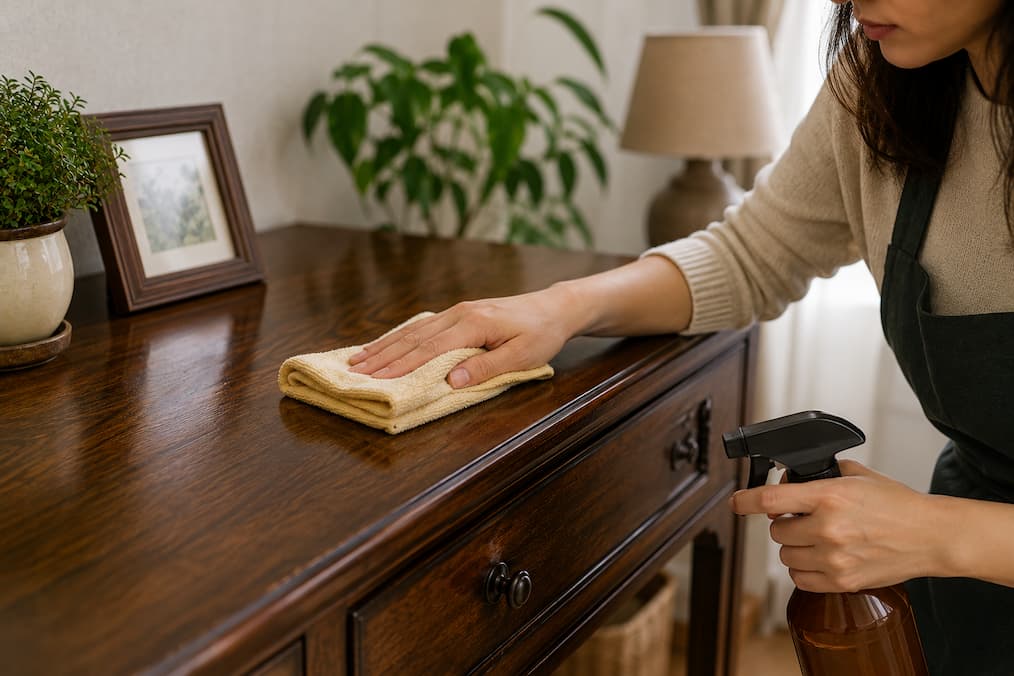
Dry dusting. Daily. A microfiber cloth. No spray. No moisture. Just cloth against wood. The dust lifts. Static holds it. The cloth goes in the wash. The wood stays dry. This is 80 percent of wood care. Maybe 90. Removing dust before it becomes grime. Before grime becomes abrasive. Before abrasion becomes scratch.
For sticky spots. Fingerprints. Jelly from breakfast. A damp cloth. Not wet. Damp. Wring it until it stops dripping. Wipe the spot. Immediately dry with a clean cloth. The moisture touches only the surface. It does not soak in. It does not dwell. Touch and release.
For deeper cleaning. Quarterly. Maybe twice a year. A solution of mild dish soap and water. A few drops in a bowl. Dampen the cloth. Wring thoroughly. Wipe with the grain. Not against. Not in circles. With the grain. The wood’s natural lines guide the motion. The cloth follows. The soap lifts oils. The dampness carries them away. Dry immediately. Two cloths. One damp. One dry. Working together.
Then oil. Not polish. Not wax. Oil. Mineral oil or tung oil. Food-safe. Clear. I apply a small amount to a clean cloth. Rub with the grain. Let it sit for ten minutes. Wipe off the excess. The wood absorbs what it needs. The rest is removed. The grain deepens. The color enriches. The surface feels alive. Not shiny. Alive.
I do this twice a year. The teak table. The oak nightstand. The walnut coffee table. Not the painted bookshelf. Painted wood does not need oil. The paint is the protection. Oil on paint is waste. It sits on top. Attracts dust. Creates a film. I learned this separately. Another mistake. Another lesson.
The same gentle approach works for food stains on wood. Damp cloth. Immediate dry. Patience. No scrubbing.
What Each Piece Actually Needs
| Piece | Wood/Finish | Daily | Quarterly | Never |
|---|---|---|---|---|
| Dining table | Teak, oiled finish | Dry microfiber dusting | Mild soap wipe, then mineral oil | Vinegar, pledge, water rings |
| Bookshelf | Pine, painted | Dry microfiber dusting | Damp cloth on sticky spots only | Oil, wax, water soaking |
| Nightstand | Oak, stained and sealed | Dry microfiber dusting | Mild soap wipe, then tung oil on top only | Magic eraser, abrasive pads, ammonia |
| Coffee table | Walnut veneer, lacquered | Dry microfiber dusting | Damp cloth only, no oil, immediate dry | Water, oil, wax, anything liquid sitting |
💡 What I Learned the Hard Way
I once left a damp cloth on the teak table. For ten minutes. Not long. I was distracted. A phone call. When I returned, the cloth had left a mark. A pale rectangle where the water had penetrated the oil finish. Raised the grain. Lightened the color. The mark dried. It remained. Not a stain. A ghost. A memory of moisture. I had to sand the area lightly. Re-oil. Blend the color. It took two weeks for the oil to darken the spot to match. The lesson: wood and water are enemies. Even damp cloths are weapons if left unattended. Dry immediately. Always. Without exception. The wood does not forgive carelessness.
The Enemies of Wood
Water. The primary enemy. Not just spills. Condensation. A cold glass on a hot day. A vase with a wet base. A plant saucer. Water penetrates. It swells fibers. It lifts finishes. It creates rings. Coasters are not decorative. They are defensive. I use them obsessively. Cork. Felt. Anything absorbent between liquid and wood.
Heat. The secondary enemy. Hot plates. Coffee mugs. Pizza boxes fresh from the oven. Heat discolors. It burns. It melts wax finishes. Trivets are not optional. They are mandatory. I have a stack. Metal. Cork. Wood. Whatever is between the heat and the table.
Sunlight. The slow enemy. UV fades. It dries. It cracks finishes over years. My coffee table sits near a window. The walnut veneer has lightened on one side. A gradient. Dark to light. I rotate it quarterly. Even exposure. Slow the fade. I cannot stop it. I can distribute it.
Air. The invisible enemy. Dry air shrinks wood. Cracks it. Humid air swells it. Warps it. My apartment swings between extremes. I use a humidifier in winter. A dehumidifier in summer. Not for comfort. For the wood. The wood is quieter when the air is stable. Less movement. Less stress. Humidity control also helps with smells. The wood benefits coincidentally.
⚠️ When This Won’t Work
If your wood is already damaged — deep scratches, water rings that have penetrated through the finish, veneer peeling, joints separating — cleaning will not fix it. Cleaning maintains. It does not restore. Restoration requires sanding. Refinishing. Re-veneering. Glue. Clamps. Skills I do not have. I have a loose joint on the nightstand. I clean around it. I do not attempt repair. I will hire someone. Or live with it. Also, if your furniture is antique, with original finish, shellac, or French polish, the methods above may be too aggressive. Antique finishes are delicate. They require specialized care. Consult a conservator. Not a blog. Not me. Finally, if your wood is engineered — MDF core with thin veneer — water is even more dangerous. The core swells. The veneer bubbles. There is no repair. Only replacement. Be extra cautious with cheap furniture dressed as wood. It is wood in appearance only. The core is cardboard. Treat it accordingly.
Frequently Asked Questions
Can I use olive oil instead of mineral oil?
No. Olive oil is organic. It oxidizes. Turns rancid. Smells. Attracts insects. It also stays sticky. Does not absorb properly. Mineral oil is inert. Food-safe. Stable. It does not spoil. It does not smell. It does the job and disappears. Use mineral oil. Or tung oil. Or walnut oil. Not cooking oils. Not from the kitchen.
How do I remove water rings?
White rings are moisture trapped in the finish. Not the wood. Try rubbing with a dry cloth. Sometimes friction releases the moisture. If that fails, a cloth dampened with mineral spirits. Gentle. With the grain. Then dry. Then oil. Dark rings are damage to the wood itself. The finish is compromised. The water reached the fiber. These require refinishing. Sanding. Staining. Not a cleaning issue. A repair issue. I have one dark ring on the nightstand. From the pledge era. I live with it. It is a scar. A reminder.
What about wax? Paste wax?
Wax is protective. But it builds up. Requires stripping and reapplication. It is a commitment. I do not commit. I oil twice a year. That is enough. Wax is for people who enjoy the ritual. Who have time. Who want a specific sheen. I want the wood to breathe. Oil breathes. Wax seals. Different philosophies. Neither is wrong. I choose breath.
Can I use a steam cleaner?
No. Steam is water plus heat. The two primary enemies combined. Steam penetrates finishes. Swells wood. Lifts veneer. Destroys glue joints. It is effective on tile. On grout. On hard surfaces. On wood, it is violence. Do not steam clean wood. Ever. Under any circumstance. The answer is no.
How do I dust carved or detailed wood?
A soft brush. Paintbrush. Natural bristle. Dry. Gently sweep dust from crevices. Followed by microfiber. The brush dislodges. The cloth captures. Do not use compressed air. It blows dust deeper. Into cracks. Under veneer edges. Where you cannot reach. The brush is controlled. Directed. Gentle. Treat carved wood like an archaeological site. Excavate carefully.
Closing Thought
My teak table has scratches. Water marks from before I learned. A ring from a hot mug. A dent from a dropped fork. It is not pristine. It is not new.
But it is clean. Fed. Oiled. The grain is visible. The surface is smooth. It smells like wood. Not lemon. Not silicone. Not pledge.
I sit at it daily. I eat. I work. I rest my arms. The wood holds me. Quietly. Without demand. Without complaint.
Wood is patient. It waits for you to learn. It accepts your mistakes. It records them. The scratches are memory. The rings are history. The faded patch near the window is time passing.
Clean it gently. Feed it sparingly. Protect it from water and heat and sun. Then let it be. Let it age. Let it become what it wants to become.
The table will outlast me if I care for it. That is the gift of wood. It is alive when treated like living things. Dead when treated like furniture.
I choose alive. I choose dry cloths and mineral oil and coasters and trivets. I choose patience over shine. Substance over spray.
The pledge is gone. The table remains. That is enough.
Sources and References
- Wood Magazine — Comprehensive guide to wood finishes, cleaning methods, and maintenance practices for residential furniture care.
- U.S. Environmental Protection Agency (EPA) Safer Choice Program — Recommendations for selecting safer cleaning products and avoiding harmful chemicals in home maintenance.
- U.S. Forest Service — Wood Handbook — Scientific reference on wood properties, moisture effects, and proper care for wood products in residential environments.

Hamza Farooq is a home improvement and organization writer who shares practical advice on cleaning, simple DIY fixes, and smart home organization. He focuses on creating easy-to-follow guides that help readers solve everyday household problems with realistic, affordable solutions. His goal is to make home maintenance simpler, more efficient, and accessible for anyone looking to improve their living space.