A tidy home isn’t created by spending an entire Saturday cleaning from morning until night. More often, it stays organized because small tasks are completed consistently before clutter has a chance to build up. A simple weekly routine is easier to maintain than occasional deep-cleaning sessions, and it usually leaves the house feeling cleaner with far less effort.
Many people struggle with organization because they try to tackle everything at once. Clothes pile up, paperwork accumulates, kitchen counters become crowded, and storage areas slowly fill with things that no longer have a purpose. After a few busy weeks, the amount of work feels overwhelming, making it even harder to get started.
The good news is that a practical weekly checklist doesn’t need to be complicated. It simply helps you notice small issues early, deal with them before they grow into larger problems, and keep every room functioning the way it’s supposed to. The routine below isn’t about perfection—it’s about creating habits that make everyday life easier.
Start With the Areas You Use Every Day
Before opening closets or reorganizing shelves, spend a few minutes looking around the rooms that see the most activity. These spaces usually reveal where your attention is needed first.
The kitchen counter covered with unopened mail, the shoes gathered by the front door, or the coffee table filled with remote controls and magazines are all signs of small tasks that have been postponed. Taking care of these visible areas first creates immediate progress and often motivates you to continue.
There’s another advantage to beginning with high-traffic spaces: every improvement is noticeable right away. Instead of organizing a storage cabinet that nobody opens very often, you’re improving the parts of the home you interact with multiple times each day.
Walk Through the House Before You Start
One habit I’ve found surprisingly helpful is taking a slow walk through the entire house before doing any organizing. Resist the temptation to begin fixing things immediately. Instead, simply observe.
Notice which surfaces have become cluttered, whether laundry has started collecting in unexpected places, and if certain rooms feel harder to move through than they did last week. This quick inspection acts like a roadmap, helping you prioritize what actually needs attention instead of jumping randomly from one task to another.
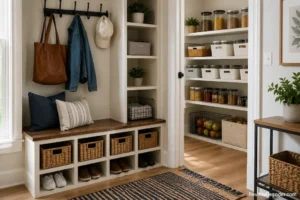
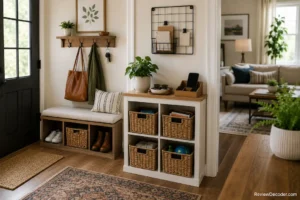
Often, you’ll discover that several small problems share the same cause. For example, if backpacks, jackets, and shoes are all scattered near the entrance, the issue may not be clutter at all—it may be that your entryway no longer supports your family’s daily routine.
Reset Shared Spaces First
Rooms used by everyone tend to become disorganized more quickly than private spaces. Living rooms, dining areas, kitchens, and entryways usually deserve attention before bedrooms or storage closets.
Start by returning misplaced items to the rooms where they belong. Fold blankets, straighten cushions, stack books neatly, and clear tables that have become temporary storage areas during the week.
Don’t worry about making everything look perfect. The goal is simply to restore each room so it’s ready for normal daily use again.
Weekly Living Space Reset
| Area | Quick Check |
|---|---|
| Living room | Return misplaced items, fold blankets, organize remotes |
| Dining area | Remove unnecessary papers and wipe the table |
| Entryway | Organize shoes, coats, bags, and keys |
| Hallways | Remove obstacles and clear walking paths |
Pay Attention to Small Clutter Before It Becomes Big Clutter
Clutter rarely appears all at once. It builds gradually through dozens of small decisions made throughout the week.
A receipt placed on the counter.
A charger left on the sofa.
A jacket draped over a chair.
A shopping bag sitting in the hallway.
Individually, none of these seem important. Together, they create a home that feels untidy even when it’s relatively clean.
One useful habit is carrying a small basket while walking through the house. Anything that belongs elsewhere goes into the basket. After completing one room, return each item to its proper place. This saves repeated trips back and forth while helping every space return to normal.
Check Storage Areas Instead of Ignoring Them
Organization isn’t only about what people can see. Cabinets, drawers, closets, and shelves gradually become less functional if they’re never reviewed.
You don’t need to empty every cupboard every week. Instead, choose one small storage area each time. Perhaps it’s the kitchen utensil drawer this week, the bathroom cabinet next week, and a bedroom drawer after that.
This rotating approach prevents clutter from building unnoticed and makes larger organizing projects much less intimidating.
Spend Time Where Clutter Always Returns
Every home has one or two “problem areas” that seem impossible to keep organized.
For some families, it’s the kitchen island.
For others, it’s the dining table, hallway bench, or bedroom chair where clothes mysteriously gather.
Instead of becoming frustrated, treat these areas as valuable clues. They often reveal that the current storage system doesn’t match everyday habits.
Ask yourself:
- Why do items keep ending up here?
- Would a storage basket solve the problem?
- Does something need to be relocated?
- Is this area trying to serve too many purposes?
Sometimes solving one recurring clutter hotspot improves the entire house.
Refresh One Room Instead of Every Room
Trying to perfect every room each week usually leads to burnout. A more practical approach is choosing one room for extra attention while giving the rest of the house a basic reset.
For example:
- Week one: bedroom
- Week two: bathroom
- Week three: kitchen
- Week four: home office
This rotation allows you to complete deeper organizing tasks without feeling overwhelmed while still keeping the rest of the house under control.
Review Items That No Longer Serve a Purpose
Not everything deserves permanent space in your home.
Once each week, make it a habit to identify a few things that are no longer useful. This might include expired products, duplicate kitchen tools, damaged containers, worn-out clothing, old paperwork, or packaging you’ve been meaning to throw away.
Removing even a handful of unnecessary items each week prevents clutter from quietly taking over your storage spaces.
A Practical Weekly Checklist
| Task | Completed |
|---|---|
| Clear kitchen and dining surfaces | ☐ |
| Return misplaced items | ☐ |
| Organize the entryway | ☐ |
| Reset the living room | ☐ |
| Review one drawer or cabinet | ☐ |
| Declutter one small area | ☐ |
| Empty household trash bins | ☐ |
| Check frequently used storage spaces | ☐ |
| Organize paperwork | ☐ |
| Prepare the home for the coming week | ☐ |
Build Habits Instead of Depending on Motivation
Motivation changes from week to week. Habits are much more reliable.
Instead of waiting until the house feels messy enough to deserve attention, choose a consistent day and time for your weekly reset. Some people prefer Friday evenings so they can enjoy a tidy weekend, while others like Sunday afternoons to prepare for the coming week.
The specific day matters less than the consistency. Once organizing becomes part of your normal routine, it requires much less mental effort to begin.
Common Mistakes That Make Organization Harder
Many organizing routines fail not because they’re ineffective but because they’re unrealistic.
Some people try to organize the entire house every weekend, eventually becoming exhausted and giving up altogether. Others buy storage products before deciding what actually needs to be stored.
Another common mistake is treating organization as a one-time project. Every home changes over time as routines, seasons, and family needs evolve. Reviewing your systems regularly keeps them practical rather than allowing them to become outdated.
Frequently Asked Questions
How long should a weekly home organization routine take?
For most households, between 45 and 90 minutes is enough to complete a practical weekly reset, especially if smaller organizing habits are maintained throughout the week.
Should I clean before organizing?
Generally, it’s easier to organize first by putting items where they belong. Once surfaces are clear, cleaning becomes quicker and more effective.
What if I don’t finish everything?
That’s perfectly fine. Focus on the areas that have the greatest impact on daily life and continue with the remaining tasks the following week. Progress is more valuable than perfection.
Is weekly organization enough?
For most homes, yes. A consistent weekly routine combined with small daily habits is usually enough to prevent clutter from becoming overwhelming.
How do I encourage everyone in the house to participate?
Assign simple responsibilities based on age and routine. When everyone returns their own belongings to their proper place, maintaining an organized home becomes much easier.
Conclusion
An organized home isn’t built through occasional marathon cleaning sessions. It’s created by noticing small problems early and dealing with them before they grow into bigger ones. A weekly checklist gives your home a regular reset while keeping everyday tasks manageable.
Rather than aiming for a perfectly organized house every weekend, focus on steady progress. Clear one surface, organize one drawer, tidy one room, and remove a few unnecessary items each week. Those simple actions may seem small on their own, but over time they create a home that’s easier to live in, easier to clean, and far less stressful to maintain.

Hamza Farooq is a home improvement and organization writer who shares practical advice on cleaning, simple DIY fixes, and smart home organization. He focuses on creating easy-to-follow guides that help readers solve everyday household problems with realistic, affordable solutions. His goal is to make home maintenance simpler, more efficient, and accessible for anyone looking to improve their living space.