Walk into two homes with similar layouts, and you may notice something particularly striking. One always seems tidy, even during a busy week, while the other requires constant cleaning just to keep clutter under control. The difference often isn’t the amount of storage or the size of the house. It’s the system behind how everyday items are managed.
Many people think organization is something you finish. They spend an entire weekend sorting, labeling, and buying containers, only to discover the mess slowly returning within a month. That’s because organization isn’t a one-time project. It’s a daily process, and if it requires too much effort, it usually doesn’t last.
The most effective homes don’t stay organized because someone spends hours cleaning every day. They stay organized because the systems are simple enough to work even on busy mornings, after long workdays, or during hectic family schedules. Good organization reduces effort instead of creating more tasks.
Start by Paying Attention to Daily Movement
Before buying storage products or rearranging furniture, spend a few days noticing how people actually move through your home. Where do shoes naturally come off? Where do keys end up? Which chair collects tomorrow’s clothes? These everyday patterns reveal far more than any organizing guide.
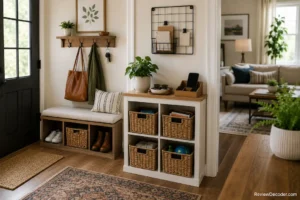
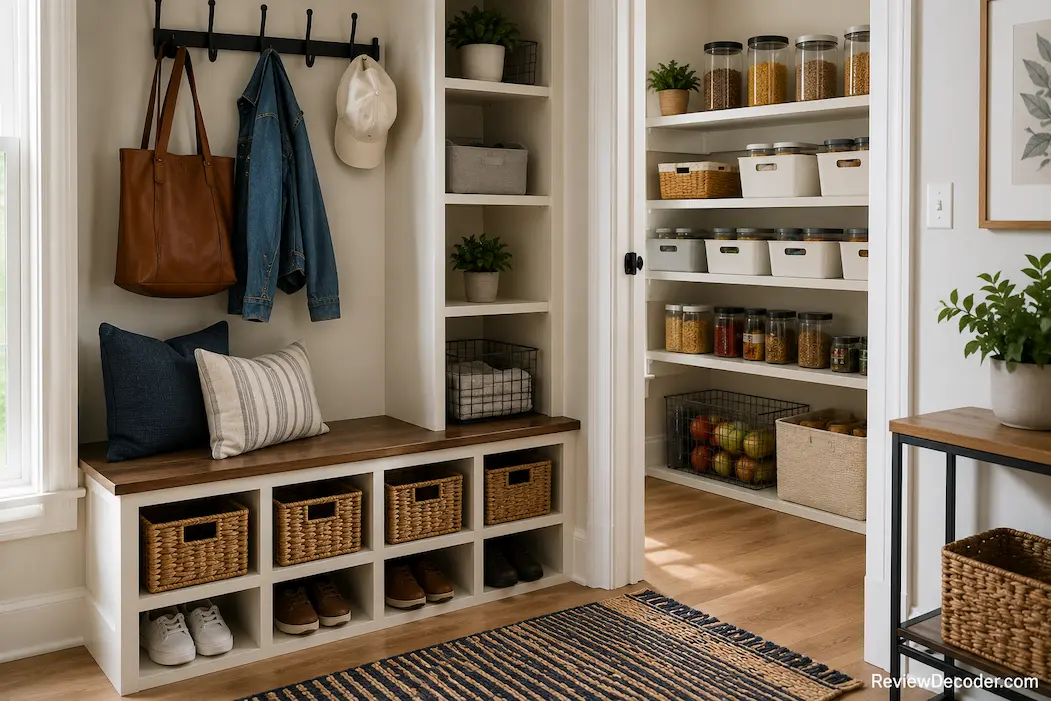
Trying to force new habits that entirely ignore existing routines usually leads to frustration. Instead, successful organization systems work with natural behavior. If everyone leaves their bags near the front door, creating an organized drop zone there will be much more effective than expecting everyone to carry their belongings into another room every day.
When storage matches the way people already live, staying organized becomes almost automatic.
Every Item Should Have an Obvious Destination
One of the most common reasons clutter builds up is uncertainty. When an item doesn’t have a clear place to belong, it ends up on a table, kitchen counter, or nearby shelf until someone eventually moves it somewhere else.
An effective organization system removes that uncertainty. Every frequently used item should have a location that’s easy to remember and easy to reach. Just as importantly, putting the item back should take only a few seconds.
If returning something feels inconvenient, people naturally postpone it. Over time, those small delays become visible clutter throughout the home.
Convenience Often Matters More Than Perfection
Many beautifully organized spaces look impressive immediately after they’re completed. The challenge begins when everyday life resumes.
Storage that requires opening multiple containers, moving other items first, or carefully arranging everything each time it’s used often becomes difficult to maintain. People naturally choose the fastest option, even if it means leaving something on the nearest surface instead.
Simple systems usually survive busy schedules much better than complicated ones. The goal isn’t creating magazine-worthy shelves—it’s creating routines that remain practical every day.
Characteristics of Organization Systems That Last
| System Feature | Why It Works | Everyday Benefit |
|---|---|---|
| Easy access | Items can be reached quickly | Less time searching |
| Simple return process | Putting things away takes little effort | Clutter builds more slowly |
| Clear storage locations | Everyone knows where items belong | Easier household routines |
| Practical placement | Storage matches daily habits | Better long-term consistency |
| Minimal complexity | Fewer steps encourage regular use | Organization becomes easier to maintain |
A system that is simple enough to follow consistently usually performs better than one that looks perfect but is difficult to maintain.
Store Things Where They’re Actually Used
It’s surprisingly common for household items to be stored far from the place they’re needed. Cleaning cloths may be kept in a distant cupboard, batteries might be scattered across several drawers, and everyday office supplies often migrate from room to room because they were never stored where people actually use them.
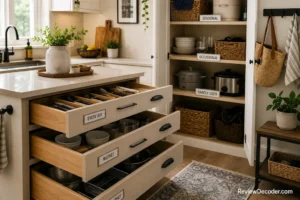
Organizing by activity instead of by category often makes daily life easier. Kitchen towels belong near the sink, charging cables should stay close to the devices they serve, and basic cleaning supplies are often most useful when stored near the rooms they’re used to clean.
Reducing unnecessary movement encourages people to return items to their proper place instead of leaving them wherever the task ends.
Leave a Little Empty Space
Many people believe every shelf, drawer, and cabinet should be filled completely. In practice, such an approach usually makes organization harder.
A storage area packed to its limit leaves no room for temporary changes. New purchases, seasonal items, gifts, or replacement supplies quickly create overflow because there’s nowhere else for them to go.
Leaving some free space allows storage systems to adapt naturally without immediately creating clutter elsewhere in the home. Space isn’t wasted—it provides flexibility.
Organize According to Frequency, Not Category Alone
Grouping similar items together makes sense in many situations, but it isn’t always the most practical approach.
Consider kitchen utensils. Storing rarely used baking tools beside everyday cooking utensils may seem logical because they’re similar, yet separating frequently used items from occasional ones often makes cooking faster and keeps drawers less crowded.
The same idea applies throughout the home. Items used every day deserve the easiest access, while seasonal or rarely used belongings can comfortably occupy less convenient storage locations.
Labels Don’t Solve Poor Systems
Labels can certainly make storage easier to understand, especially in shared households. However, they cannot compensate for an organization system that isn’t practical.
If reaching a storage bin requires moving several other boxes first, adding a label won’t make people use it more often. Likewise, beautifully labeled containers won’t prevent clutter if they’re placed far from where the items are actually needed.
Labels work best as reminders within an already well-designed system rather than as solutions by themselves.
The Best Systems Require Very Few Decisions
Every small decision throughout the day requires mental effort. When organizing a home depends on constantly deciding where something belongs, maintaining order becomes tiring.
Strong organization systems remove those decisions. You should not have to stop and think about where the scissors belong or where unopened mail should go. The answer should already be built into the way your home is arranged.
When everyday choices become automatic, keeping the house organized feels much less like a chore and more like part of the normal routine.
A Good System Should Work Even on Busy Days
The true test of any organization system isn’t how it performs after a weekend of deep cleaning. It’s how well it works on a typical Tuesday when everyone is rushing.
On busy days, people naturally take shortcuts. Shoes are kicked off near the door, receipts end up in pockets, and jackets get placed over the nearest chair. Instead of trying to eliminate these habits completely, it’s often more effective to build your organization system around them.
For example, placing a small shoe rack exactly where shoes are usually removed is far more practical than expecting everyone to carry them to a distant closet. Likewise, people are more likely to use a basket for incoming mail near the entrance than a filing cabinet in another room. Systems that support real-life routines remain useful long after the excitement of reorganizing has faded.
Storage Alone Doesn’t Solve Clutter
It’s easy to assume that buying more containers, shelves, or baskets will automatically create a more organized home. In reality, additional storage sometimes hides clutter rather than reducing it.
When every space becomes another place to store unused belongings, finding everyday items can actually become harder. Drawers overcrowd, cabinets fill with rarely used things, and storage boxes gradually accumulate without a clear purpose.
Before adding more storage, check what you already store. A well-organized home often contains fewer unnecessary items rather than simply more places to put them.
Signs That an Organization System Is Working
| Observation | What It Usually Means |
|---|---|
| Frequently used items are easy to find | Storage locations match daily habits. |
| Surfaces remain mostly clear | Everyday belongings have convenient homes. |
| Family members return items without reminders | The system is easy to understand. |
| New purchases fit without creating overflow | Storage has room to adapt. |
| Tidying takes only a few minutes | Maintenance has become part of the routine. |
The easiest systems are often the ones people hardly notice because they fit naturally into everyday life.
Shared Spaces Need Shared Rules
Living alone makes organization relatively straightforward because one person’s habits determine how the home functions. Shared households are different. Family members, roommates, or guests all interact with the same storage areas, so consistency becomes more important than perfection.
Rather than creating complicated rules, establish simple expectations that everyone can remember. If charging cables always belong in one drawer or reusable shopping bags always return to the same hook, those habits gradually become automatic.
A system that everyone understands is usually more successful than one designed for only the most organized person in the house.
Review the System Before It Stops Working
Homes change over time. Children grow older, work routines shift, hobbies change, and new belongings gradually enter the house. An organization system that worked perfectly two years ago may no longer suit your current lifestyle.
Instead of waiting until clutter becomes overwhelming, take a few minutes every few months to evaluate whether your storage still reflects how the household actually functions. You may discover that frequently used items have changed or that certain storage areas are no longer serving their original purpose.
Small adjustments made regularly are usually easier than completely reorganizing the home later.
Reduce the Distance Between Use and Storage
One principle professional organizers often follow is reducing unnecessary movement. The farther an item travels before you put it away, the less likely you are to put it back there consistently.
This is why everyday items are best stored close to where they are used. Laundry supplies belong near the washing machine, pet accessories work best near the entrance if that’s where walks begin, and remote controls are easier to manage when they always return to a tray beside the seating area.
Saving only a few seconds each time may seem insignificant, but over hundreds of daily routines, those small improvements make organization feel effortless.
Simple Habits That Support Long-Term Organization
| Habit | Why It Helps |
|---|---|
| Return items immediately after use | Prevents clutter from building throughout the day. |
| Keep similar activities in one area | Reduces unnecessary movement around the house. |
| Leave some storage space unused | Makes future organization easier. |
| Review storage seasonally | Keeps systems aligned with changing needs. |
| Avoid keeping duplicates without purpose | Reduces unnecessary volume and confusion. |
These habits don’t require major effort, yet they help organization systems remain effective over time.
Organization Should Make Daily Life Easier
Sometimes people become so focused on creating an organized home that they accidentally make everyday tasks more complicated. Storage shouldn’t feel like a puzzle, and putting something away shouldn’t require opening multiple containers or rearranging other belongings first.
The best organization systems simplify daily routines. They reduce searching, minimize unnecessary decisions, and allow household tasks to flow more smoothly. If a system feels frustrating to maintain, it usually needs adjusting rather than stricter discipline.
Practical organization supports everyday living instead of interrupting it.
Frequently Asked Questions
Why do organization systems stop working after a few weeks?
This usually happens because the system doesn’t match everyday habits. If returning items takes too much time or effort, people naturally begin leaving them in more convenient places.
Should every storage space be completely full?
No. Leaving some available space makes it easier to accommodate new belongings and prevents cabinets or drawers from becoming overcrowded.
Is buying more storage always the answer?
Not necessarily. In many cases, using existing storage more effectively is better than adding additional containers or shelves.
How often should I reorganize my home?
Most homes benefit from small seasonal reviews rather than frequent complete reorganizations. Minor adjustments are easier to maintain and better reflect changing routines.
What’s the most significant difference between organizing and staying organized?
Organizing is the process of creating a system. Staying organized depends on whether that system remains simple enough to support everyday habits with minimal effort.

Hamza Farooq is a home improvement and organization writer who shares practical advice on cleaning, simple DIY fixes, and smart home organization. He focuses on creating easy-to-follow guides that help readers solve everyday household problems with realistic, affordable solutions. His goal is to make home maintenance simpler, more efficient, and accessible for anyone looking to improve their living space.