The first successful home repair often gives people the confidence to tackle the next one. Replacing a loose handle, repairing a small crack, or adjusting a cabinet door can feel rewarding because the results are immediate. That confidence is valuable, but it can also lead beginners to believe that every repair will be equally straightforward.
In reality, most DIY mistakes don’t happen because someone lacks effort or enthusiasm. They happen because small decisions are made too quickly. A measurement is skipped, the wrong fastener is chosen, or a repair begins before the actual cause of the problem has been fully understood. Individually these mistakes seem minor, but together they often create repairs that take longer, cost more, or need to be repeated.
Learning DIY isn’t about avoiding every mistake forever. It’s about recognizing the habits that experienced homeowners develop over time and understanding why those habits make repairs safer, more accurate, and more successful.
Every Successful Repair Starts Before Any Tool Is Used
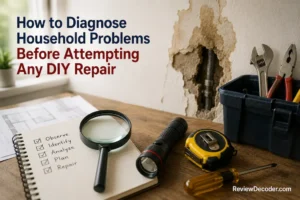
Beginners often think the repair begins when the toolbox is opened. Experienced DIY enthusiasts know it starts much earlier, during planning.
Looking closely at the problem, gathering the correct materials, checking whether replacement parts match, and understanding how everything fits together can prevent hours of frustration later. Spending ten minutes preparing frequently saves much more time than rushing into the repair.
Good preparation also builds confidence. Instead of constantly stopping to search for another tool or missing component, you can focus entirely on completing the task carefully.
Mistakes Often Begin With Assumptions
Many repairs go wrong because people assume they already know what’s causing the problem. A squeaky hinge gets replaced when it only needed lubrication, or a loose shelf receives stronger brackets even though the wall anchors were the real issue.
Taking a few extra moments to investigate before making changes often prevents unnecessary work. Understanding why something failed is just as important as knowing how to repair it.
The goal isn’t to become an expert in every trade. It’s simply to let observation guide your decisions instead of making repairs based on first impressions.
1. Starting Before Reading the Instructions
Some household products appear so simple that instructions seem unnecessary. Whether installing shelves, assembling furniture, applying fillers, or using adhesives, many beginners rely entirely on intuition.
Unfortunately, products often have specific installation steps, drying times, or weight limits that aren’t immediately obvious. Skipping these details may not cause an immediate failure, but it can reduce the quality or durability of the finished repair.
Reading the instructions first usually takes only a few minutes, yet it often prevents problems that require much longer to correct.
2. Measuring Only Once
One of the oldest sayings in DIY work remains popular for a reason: measure carefully before making permanent changes.
A shelf positioned just a few millimeters incorrectly may look uneven forever. A piece of trim cut slightly too short often can’t be extended afterward. Measuring once may seem efficient, but checking measurements again before cutting or drilling provides valuable reassurance.
Accuracy is usually easier to achieve before the repair than after it.
3. Choosing Tools Based Only on Convenience
It’s tempting to use whatever screwdriver, wrench, or drill happens to be nearby. Sometimes that works perfectly, but using the wrong tool can easily damage screws, scratch finished surfaces, or make simple jobs unnecessarily difficult.
Having the correct tool doesn’t always mean buying expensive equipment. Often, it simply means selecting the tool designed for that particular task instead of forcing another one to do the job.
Using appropriate tools often makes repairs easier as well as safer.
Common Beginner Errors and Better Alternatives
| Beginner Habit | A Better Approach |
|---|---|
| Starting immediately | Spend a few minutes planning the repair. |
| Measuring once | Verify all measurements before cutting or drilling. |
| Using the nearest tool | Choose the correct tool for the job. |
| Buying replacement parts by appearance | Match specifications carefully. |
| Rushing to finish | Allow enough time for careful work. |
Small improvements in preparation often produce much better repair results.
4. Buying Replacement Parts Without Checking Details
Two hinges may look identical while using different screw spacing. Light bulbs with similar shapes may require different fittings. Plumbing washers that appear almost the same can vary enough to create leaks if the wrong size is installed.
Taking the old part with you when purchasing a replacement—or carefully noting measurements and model numbers—reduces unnecessary return trips and increases the likelihood of a successful repair.
Visual similarity doesn’t always mean compatibility.
5. Tightening Everything as Much as Possible
Many beginners believe that tighter automatically means stronger. While secure fittings are important, excessive force can strip screw holes, crack plastic components, damage wood, or distort metal fittings.
Experienced DIY enthusiasts generally tighten fasteners until they are secure, not until maximum force has been applied. Knowing when to stop is an important skill that develops with practice.
Controlled pressure usually creates longer-lasting repairs than excessive strength.
6. Ignoring Drying and Curing Times
Paint, wood filler, adhesive, grout, sealant, and many repair materials continue changing long after they appear dry on the surface.
Using repaired items too soon often reduces the effectiveness of the repair because the material hasn’t fully cured. Waiting the recommended amount of time may feel inconvenient, but patience usually produces stronger and more durable results.
Many DIY disappointments happen simply because people put the repair back into service too early.
7. Forgetting to Protect Nearby Surfaces
Attention naturally focuses on the object being repaired, yet surrounding surfaces often need protection as well.
A small amount of paint can permanently mark flooring. Adhesive may drip onto furniture. A slipping screwdriver can scratch nearby cabinets. Spending a few moments covering surrounding areas often prevents damage that takes much longer to repair than the original job itself.
Preparation isn’t only about the repair—it’s also about protecting everything around it.
8. Working in Poor Lighting
Small mistakes become much more likely when details are difficult to see. Misaligned screws, uneven paint edges, incorrect measurements, and overlooked damage often result from inadequate lighting rather than lack of skill.
Whenever possible, choose a well-lit workspace or add temporary lighting before beginning the repair. Seeing clearly allows you to work more accurately while reducing unnecessary frustration.
Better visibility often leads to better decisions throughout the repair process.
The Best DIY Skills Are Built Through Patience
People often associate successful DIY work with experience, expensive tools, or technical knowledge. While those factors certainly help, patience remains one of the most valuable skills any homeowner can develop.
Taking time to prepare, measure carefully, choose appropriate materials, and work methodically usually produces better repairs than trying to finish as quickly as possible. Confidence grows naturally when each repair is approached with care instead of urgency.
9. Skipping Basic Safety Precautions
When a repair looks simple, it’s easy to overlook basic safety habits. Someone replacing a shelf may think eye protection isn’t necessary, or a quick sanding job may seem too small to justify wearing a dust mask.
The reality is that many minor injuries happen during routine household repairs because people become comfortable too quickly. Flying debris, sharp edges, and fine dust don’t become less hazardous simply because the repair takes only a few minutes.
Making safety equipment part of every project creates a habit that protects you regardless of how easy the repair appears.
10. Forgetting to Turn Off Utilities
Certain repairs require more than gathering tools. Before working near electrical wiring, plumbing fixtures, or appliances, you should make sure to safely isolate the relevant utility.
Many beginners become so focused on resolving the visible problem that they overlook this simple preparation. Turning off power or shutting off the water supply usually takes very little time, yet it can prevent unnecessary damage and significantly reduce safety risks.
Whenever you’re uncertain whether to switch off a utility, pause the repair until you confirm the safest approach.
11. Taking Things Apart Without Recording Anything
Removing several screws or small components often seems deceptively simple—until it’s time to put everything back together.
Experienced DIYers frequently take photos with their phone before removing parts. These pictures become a simple reference if there’s any doubt about how pieces were originally arranged. It’s a habit that saves time and prevents unnecessary frustration during reassembly.
Documentation is especially useful when repairs stretch over several days rather than being completed in one session.
12. Believing Every Online Tutorial Matches Your Home
Online videos have made DIY learning much easier, but no single tutorial can represent every home, product, or building style.
Two houses built in different decades may use entirely different materials behind the same-looking wall. Cabinet hardware, plumbing fittings, and electrical layouts also vary between manufacturers.
Use tutorials as learning tools rather than exact instructions. Compare what you see on screen with what actually exists in your home before copying every step.
Habits That Improve DIY Results
| Instead of… | Try This… |
|---|---|
| Guessing measurements | Verify them twice before making permanent changes. |
| Working quickly | Focus on steady, accurate progress. |
| Ignoring instructions | Read product guidance before starting. |
| Discarding old parts immediately | Please hold onto them until the repair is fully complete. |
| Assuming every repair is the same | Adapt your approach to the specific situation. |
Small habits often make the most significant difference over time.
13. Starting Too Many Repairs at Once
Homeowners sometimes notice several small problems and decide to fix everything in one afternoon. While the idea sounds productive, moving between unfinished repairs often creates unnecessary confusion.
Parts mix, tools scatter throughout the house, and concentration naturally decreases. Completing one repair before beginning another usually produces better results and helps maintain a more organized workspace.
Finishing projects one at a time also provides a satisfying sense of progress.
14. Using Force Instead of Understanding
When something refuses to move, beginners often assume they simply need more strength. Unfortunately, excessive force can break plastic clips, strip screws, split wood, or damage fittings that were never intended to be forced apart.
Resistance usually has a reason. There may be a hidden fastener, a locking mechanism, or an installation sequence that hasn’t yet been identified.
If something feels unusually difficult, stop and investigate rather than pushing harder.
15. Cleaning Up Only After Everything Is Finished
An untidy work area can quickly become part of the problem. Loose screws disappear beneath dust, offcuts become tripping hazards, and scattered tools make it harder to stay organized.
Taking a few moments to tidy the workspace during the repair keeps everything easier to manage. It also helps you notice missing parts before they become difficult to find.
A clean work area supports careful work, especially during longer DIY projects.
16. Expecting Perfection the First Time
Every experienced DIY enthusiast was once a beginner. Small imperfections are part of learning, whether it’s slightly uneven paint, a slower installation, or needing extra time to understand unfamiliar tools.
Instead of judging every repair against professional results, focus on improving your technique with each project. Confidence develops gradually through practice and observation.
Approaching repairs with realistic expectations often makes the learning process far more enjoyable.
17. Ignoring Small Problems After the Repair
Completing the repair doesn’t necessarily mean the job is finished. A newly adjusted door should open and close smoothly over the following days. A repaired tap should be checked for leaks, and a filled wall crack should be observed to ensure it remains stable.
Spending a little time monitoring the result helps confirm that the underlying issue has truly been resolved rather than temporarily hidden.
Good DIY includes checking your own work after the tools have been put away.
18–21. Four Habits That Separate Beginners From Experienced DIYers
Many common mistakes have nothing to do with technical ability. They come from rushing, overconfidence, or poor preparation. Four habits deserve special attention because they influence almost every repair.
Working while tired or distracted increases the chance of overlooking important details. Trying to save a few minutes by skipping preparation often creates additional work later. Continuing with a repair despite uncertainty can lead to avoidable damage. Finally, refusing to ask for advice when something doesn’t seem right may turn a small repair into a much larger project.
Experienced homeowners don’t know everything—they simply recognize when it’s time to slow down, gather more information, or seek help before moving forward.
Knowing When to Continue—and When to Stop
| Situation | Sensible Next Step |
|---|---|
| Loose handle or hinge | Suitable for most beginners with basic tools. |
| Minor cosmetic repairs | Proceed carefully after understanding the materials involved. |
| Persistent water leak | Investigate cautiously and seek professional help if the source isn’t clear. |
| Electrical faults or burning smells | Stop immediately and seek qualified assistance. |
| Gas-related concerns or structural damage | Do not continue with DIY work; seek professional assessment. |
Recognizing your limits is an important part of successful home maintenance.
Final Thoughts
Successful DIY repairs don’t depend on how quickly you finish them or how many tools you own. They’re built on careful preparation, thoughtful decision-making, and the willingness to slow down when something doesn’t feel right. Most beginner mistakes happen long before the repair itself—they begin with assumptions, rushed choices, or skipping simple steps that seem unimportant at the time.
As your experience grows, you’ll discover that confidence comes from consistency rather than speed. Measuring carefully, following instructions, using the right tools, checking your work, and recognizing when professional help is the safer option will help you complete repairs that last. Over time, these habits become automatic, making each project a chance to improve both your home and your DIY skills.
Frequently Asked Questions
Is it normal to make mistakes while learning DIY?
Yes. Every homeowner develops practical skills through experience. The important goal is learning from each repair and avoiding repeating the same mistakes.
Do I need expensive tools for basic home repairs?
Not necessarily. A small collection of reliable, appropriate tools is often more useful than having many specialized tools that you rarely use.
Why do DIY repairs sometimes fail?
Failures often result from rushing, incorrect diagnosis, poor preparation, or using unsuitable materials rather than from a lack of effort.
Should I stop if something doesn’t seem right?
Yes. If the repair begins to differ from what you expected or you feel unsure about safety, pause and reassess before continuing.
What’s the most valuable DIY skill to develop?
Patience. Careful planning, observation, and steady work usually lead to better results than trying to finish a repair as quickly as possible.

Hamza Farooq is a home improvement and organization writer who shares practical advice on cleaning, simple DIY fixes, and smart home organization. He focuses on creating easy-to-follow guides that help readers solve everyday household problems with realistic, affordable solutions. His goal is to make home maintenance simpler, more efficient, and accessible for anyone looking to improve their living space.