Most people don’t mix household cleaners because they’re trying to do something dangerous. In fact, the opposite is usually true. They’re simply trying to clean faster, remove a stubborn stain, or disinfect a surface more thoroughly. It’s easy to assume that if one cleaning product works well, combining it with another will produce even better results.
Unfortunately, household cleaners aren’t designed to work that way. Many products contain active ingredients that perform safely on their own but can react unpredictably when combined with certain chemicals. Some mixtures become ineffective, while others can release harmful gases or create substances that may irritate the eyes, skin, or lungs.
Understanding which products should never be mixed isn’t about becoming an expert in chemistry. It’s about recognizing that every cleaner is carefully formulated for a specific purpose. Using the right product in the right way is almost always safer and more effective than experimenting with combinations.
More Cleaner Doesn’t Always Mean Better Cleaning
When a stain refuses to disappear or a bathroom needs extra attention, it’s tempting to reach for another bottle and apply both products together. This habit often comes from the belief that combining two strong cleaners will multiply their cleaning power.
In reality, household cleaning products are tested to work independently. Once another chemical is introduced, the original formula may no longer behave as intended. Instead of improving results, the combination may reduce cleaning performance or create unnecessary safety risks.
Professional cleaners rarely solve problems by mixing chemicals together. They usually choose one suitable product, allow it enough time to work, and clean the surface thoroughly before using something different if necessary.
One Surface Shouldn’t Receive Multiple Chemicals at Once
Another common mistake happens without people realizing they’re mixing products at all. A kitchen counter might first be cleaned with one spray and then immediately disinfected with another before the first is completely removed. The same thing can happen inside sinks, toilets, showers, or washing machines.
Even though the products weren’t poured into the same bottle, they can still contact the surface itself. When the ingredients react with one another, the result can be similar to mixing them directly.
Allowing one cleaner to finish its job, rinsing the surface when appropriate, and following the product instructions greatly reduces the chance of accidental chemical reactions.
Bleach Deserves Special Attention
Bleach is one of the most effective household disinfectants available, but it is also involved in many accidental chemical reactions because people use it alongside other common cleaners.
On its own, bleach can be very useful when diluted and applied according to the manufacturer’s directions. Problems usually begin when people assume they can safely combine bleach with products already sitting under the kitchen sink or bathroom cabinet.
Because bleach reacts with several different types of chemicals, it should always be treated as a product that works independently rather than one that needs assistance from other cleaners.
Cleaning Product Combinations to Avoid
| Combination | Why It’s Unsafe |
|---|---|
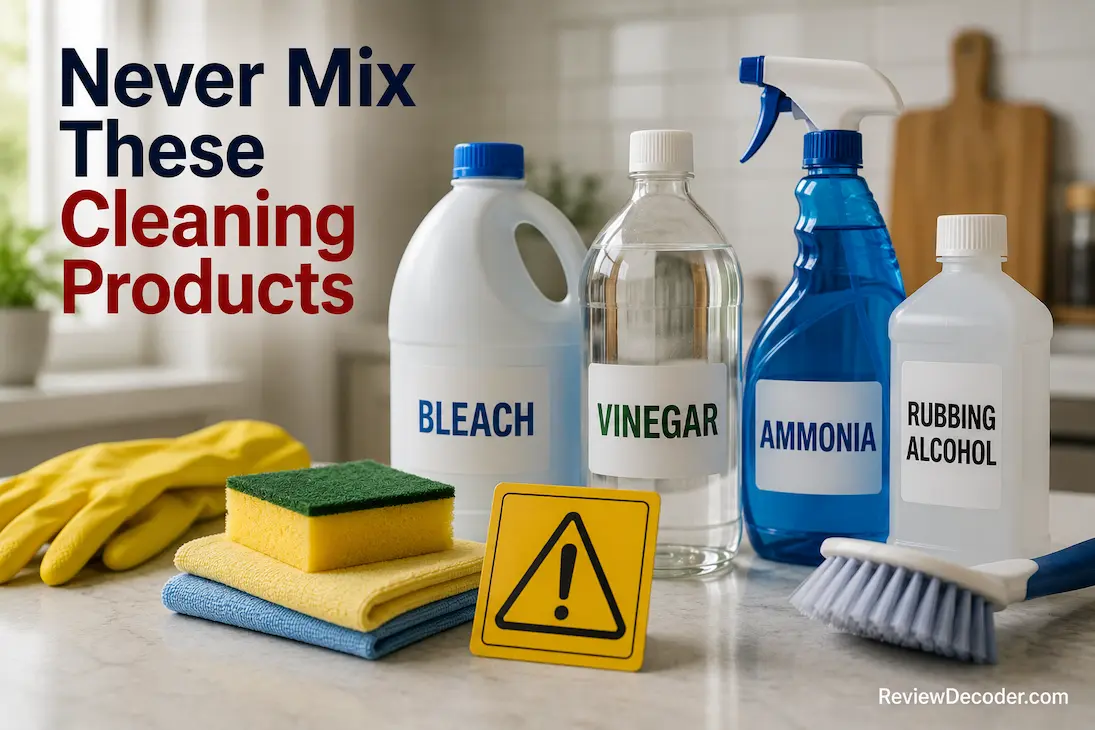
| Bleach + ammonia | Can release toxic chloramine gases that irritate the eyes and lungs. |
| Bleach + acidic cleaners (including many toilet cleaners or vinegar) | May produce chlorine gas, which can be dangerous to breathe. |
| Bleach + rubbing alcohol | Can create harmful chemical compounds that should never be inhaled. |
| Hydrogen peroxide + vinegar (mixed together) | Can form a corrosive substance that may irritate skin, eyes, and airways. |
| Different drain cleaners | Chemical reactions may generate heat or pressure and increase the risk of splashing. |
The safest approach is to use only one cleaning product at a time unless the manufacturer specifically states that products are compatible.
Labels Often Answer the Question Before Problems Begin
Most cleaning products include instructions that many people glance at only briefly. Yet those labels contain valuable information about safe use, recommended surfaces, ventilation requirements, and products that should never be mixed.
Taking a few moments to read these directions can prevent mistakes that are otherwise easy to make during routine cleaning. Manufacturers understand the chemistry of their products and provide guidance based on extensive testing.
If a label specifically warns against combining a cleaner with another product, that instruction should always be followed, even if the mixture appears harmless at first.
Vinegar Isn’t Safe With Everything
Vinegar has earned a reputation as a natural household cleaner, leading some people to believe it can be combined safely with almost any other product. While vinegar is useful for many cleaning tasks on its own, it shouldn’t automatically be mixed with commercial cleaners.
Its acidic nature is exactly what makes it effective in certain situations, but that same property allows it to react with some chemicals in ways that are neither beneficial nor safe. The fact that one ingredient is considered natural doesn’t eliminate the possibility of an unwanted reaction.
Natural products still deserve the same thoughtful handling as commercial cleaning solutions.
Don’t Assume Clear Liquids Are Compatible
One reason accidental mixing happens is that many household cleaners look remarkably similar. A bottle of bleach, glass cleaner, disinfectant, or multipurpose cleaner may all contain clear liquids, making it deceptively simple to assume they’re chemically alike.
Appearance, however, tells you almost nothing about what’s inside the container. Two products that look identical can contain entirely different active ingredients designed for entirely different purposes.
For this reason, identifying products by their labels rather than their appearance is a simple habit that helps prevent accidental misuse.
Bathrooms Are Where Many Mistakes Happen
Bathrooms contain several types of cleaning products within easy reach. Toilet bowl cleaners, mold removers, tile sprays, limescale removers, glass cleaners, and disinfectants are often stored together because they’re all used in the same room.
During a busy cleaning session, it’s easy to switch from one bottle to another without considering whether the previous product has already been rinsed away. This increases the possibility of chemicals meeting on the same surface.
Working patiently with one cleaner at a time not only improves safety but often produces better cleaning results because each product has time to work as intended.
Safe Cleaning Starts With Simple Decisions
Most household chemical accidents don’t happen because someone intentionally ignores safety advice. They happen because everyday cleaning feels familiar, routine, and harmless.
Choosing one cleaner for each task, following label directions, allowing products enough time to work, and avoiding unnecessary combinations removes most of the risk without making household cleaning more complicated.
Good cleaning habits are usually simple habits, repeated consistently.
Homemade Cleaning Recipes Still Require Caution
Many people enjoy making homemade cleaning solutions because the ingredients are inexpensive and easy to find. While some simple combinations can be useful for certain household tasks, it’s important to remember that not every household ingredient is automatically safe to mix with commercial cleaning products.
Problems often begin when homemade mixtures are combined with products that already contain carefully balanced chemical formulas. Even if each ingredient seems harmless on its own, combining them without understanding how they react can create unnecessary risks or reduce their effectiveness.
A homemade cleaner should never be treated as something that can safely be added to every commercial product. When in doubt, use one cleaning method at a time rather than combining different solutions.
Give One Product Time to Do Its Job
One reason people reach for multiple cleaners is that they expect immediate results. If a stain remains after a few seconds, the next bottle often comes out before the first cleaner has had enough time to work.
Many cleaning products are designed to stay on a surface for a short period before being wiped away. This contact time allows the active ingredients to loosen dirt, dissolve grease, or disinfect effectively. Applying another cleaner too quickly interrupts that process and may create unnecessary chemical contact.
Patience often produces better results than stronger chemicals. Following the recommended instructions is usually more effective than trying to speed up the cleaning process.
Safer Habits That Reduce Chemical Risks
| Good Practice | Why It Helps |
|---|---|
| Use one cleaning product at a time | Prevents unwanted chemical reactions |
| Read the product label before use | Explains proper application and safety information |
| Rinse surfaces when changing products | Reduces the chance of chemical contact |
| Keep windows open when appropriate | Improves ventilation during cleaning |
| Wear suitable protective gloves | Helps protect skin from irritation |
These habits are simple to follow and can significantly improve household cleaning safety.
Proper Storage Is Part of Safe Cleaning
Cleaning products continue to require care even after the job is finished. Storing them correctly helps prevent accidental mixing, leaks, and confusion during future cleaning sessions.
Keeping products in their original containers is one of the safest practices. Original labels provide important information about ingredients, usage instructions, and emergency advice if accidental exposure occurs. Pouring cleaners into unmarked bottles or food containers can create unnecessary confusion for anyone using them later.
Storage areas should also remain cool, dry, and out of reach of children and pets whenever possible. Organizing products neatly makes it easier to locate the correct cleaner without grabbing the wrong bottle in a hurry.
Strong Odors Should Never Be Ignored
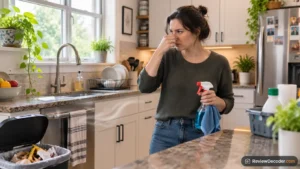
A powerful smell during cleaning isn’t always a sign that a product is working better. In some situations, an unusually strong or unexpected odor may indicate that products have been mixed accidentally or that ventilation is inadequate.
If you notice an unusual smell after combining or applying cleaning products, stop using them immediately and leave the area if necessary. Fresh air is often the first priority. Continuing to clean while ignoring irritation to the eyes, nose, or throat can increase unnecessary exposure.
Any symptoms that are severe or continue after leaving the area should be treated seriously, and appropriate medical advice or emergency assistance should be sought according to local guidance.
Children Learn Safety by Watching Adults
Household cleaning routines often become part of everyday family life. Children naturally observe how adults use and store cleaning products, even if they aren’t directly involved in the task.
Using products carefully, closing containers immediately after use, and returning them to safe storage sends an important message about responsible handling. These everyday habits help create a safer home while teaching children that cleaning products are useful tools rather than ordinary household items.
Safety isn’t only about preventing today’s accident. It’s also about encouraging good habits for the future.
Simplicity Usually Produces Better Results
Modern stores offer cleaners for almost every household surface, making it easy to believe that successful cleaning requires several products used together. In reality, most routine cleaning tasks can be completed effectively with a suitable cleaner, the correct method, and enough time.
Using fewer products thoughtfully often reduces confusion while making household cleaning easier to manage. It also lowers the chance of accidentally combining incompatible chemicals.
Rather than searching for stronger combinations, focus on choosing the right cleaner for each job and using it exactly as intended.
Build a Routine That Prioritizes Safety
Safe cleaning doesn’t depend on memorizing every possible chemical reaction. Instead, it grows from a few reliable habits that become automatic over time.
Reading labels, avoiding unnecessary mixing, using products one at a time, maintaining good ventilation, and storing cleaners responsibly create a routine that protects both your home and the people living in it. These simple decisions require very little extra effort but greatly reduce the likelihood of preventable mistakes.
The safest cleaning routine is often the least complicated one.
Conclusion
Household cleaning products are designed to solve specific problems, but they are intended to work individually rather than in combination. Many accidental chemical reactions occur not because people ignore safety, but because they assume that combining products will clean faster or produce better results. In reality, following the manufacturer’s instructions and giving each cleaner enough time to work is usually both safer and more effective.
Developing a few consistent habits—using one product at a time, reading labels carefully, storing cleaners properly, and avoiding unnecessary experimentation—helps create a cleaning routine that protects both your home and your health. A thoughtful approach doesn’t require more effort; it simply replaces guesswork with safe, reliable practices that work over the long term.
Frequently Asked Questions
Why do people accidentally mix cleaning products?
This usually happens while trying to remove stubborn dirt more quickly or when different cleaners are applied to the same surface without rinsing between them.
Can I use two different cleaners one after another?
Sometimes, but only if the first product has been removed according to its instructions. If you’re unsure whether two products are compatible, it’s safest not to use them on the same surface during the same cleaning session.
Are natural cleaning ingredients always safe?
No. Natural ingredients can still react with commercial cleaning products. Their natural origin doesn’t guarantee that every combination is safe.
What should I do if I accidentally mix incompatible cleaners?
Stop using the products immediately, leave the area if strong fumes are present, improve ventilation if it can be done safely, and follow local emergency guidance or contact your regional poison information service if exposure causes symptoms or you’re concerned about the reaction.
Is using more cleaning product better than using the recommended amount?
Generally, no. Most household cleaners are formulated to work effectively when used exactly as directed. Using more than recommended doesn’t necessarily improve cleaning and may increase residue or unnecessary exposure.

Hamza Farooq is a home improvement and organization writer who shares practical advice on cleaning, simple DIY fixes, and smart home organization. He focuses on creating easy-to-follow guides that help readers solve everyday household problems with realistic, affordable solutions. His goal is to make home maintenance simpler, more efficient, and accessible for anyone looking to improve their living space.