
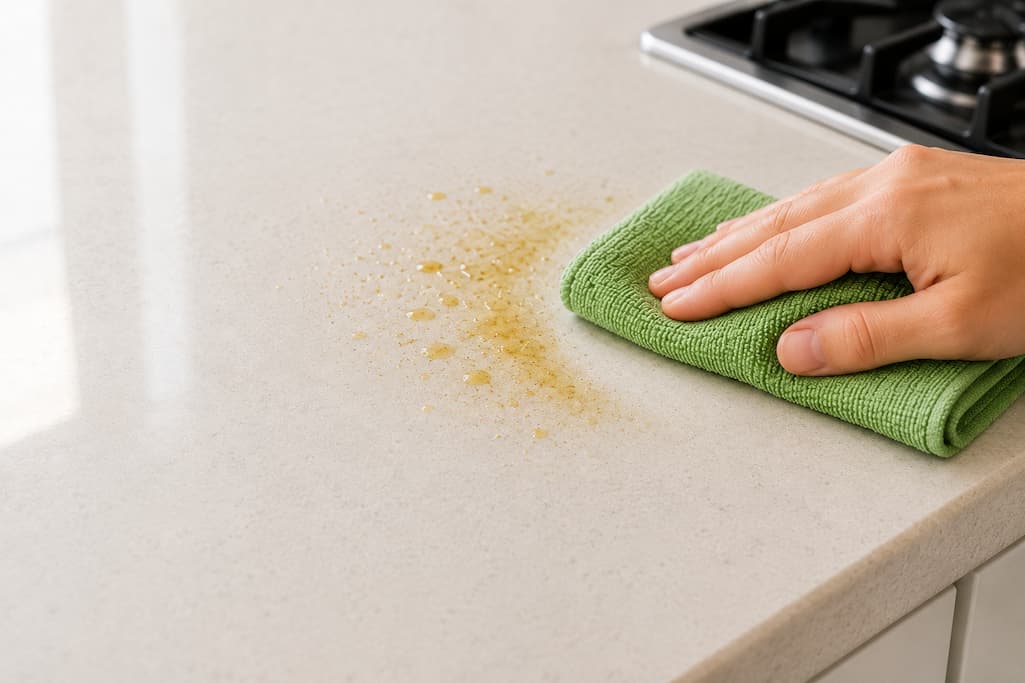
I used to think my stove was clean. I wiped it daily. A quick pass with a damp cloth. The surface looked fine. Shiny, even. Then one afternoon the sun hit at a specific angle. A beam of light crossed the backsplash. And I saw it. A film. A yellowish, translucent layer that covered everything. Not dust. Not splatter. A residue. Years of cooking, condensed into a sticky skin.
I touched it. My finger came away tacky. Slightly oily. I smelled it. Faintly rancid. Like old french fries left in a car. This was my kitchen. My “clean” kitchen. I had been living in a grease museum and calling it home.
That was two years ago. I have not stopped cleaning grease since. I am now the person who degreases the range hood filter monthly. I am not proud. I am not ashamed. I am just no longer sticky.
What I Was Working With
My kitchen surfaces are a grease trap’s greatest hits. The stove backsplash: ceramic tile with grout lines. The cabinet fronts: painted wood. The range hood: stainless steel. The wall near the stove: flat paint. Flat paint is porous. It absorbs grease like a sponge. It does not release it willingly.
I cook with oil. Olive. Vegetable. Sesame. Bacon fat. I fry eggs. I sauté onions. I make stir-fry. I am not a deep fryer. I do not own a fryer. But airborne grease does not care about your intentions. It travels. It lands. It stays.
The grease was not visible head-on. It was visible in profile. At an angle. In direct light. This is the cruel nature of grease. It hides until it does not. Then it is everywhere.
The Method I Thought Would Work (And Did Not)
All-purpose cleaner. The kind that smells like lemons and promises everything. I sprayed. I wiped. The surface felt cleaner. Looked cleaner. The next day, in the same angled light, the film remained. The cleaner had moved the grease around. It had not removed it.
I tried vinegar. Straight. The internet loves vinegar. I sprayed. I wiped. The grease laughed. Vinegar cuts mineral deposits. It dissolves hard water. It does not dissolve oil. Oil and vinegar do not mix. They separate. Like salad dressing. I was making salad dressing on my stove.
I tried baking soda paste. Abrasive. Gentle. It scrubbed the surface. It lightened the grease slightly. But the grout lines? The porous paint? The baking soda sat on top. It did not penetrate. It did not dissolve. It just made a mess I had to clean up.
I wrote about my full kitchen cleaning routine after this failure. The grease was the gateway. Everything else followed.
The Method That Actually Works
Dish soap. Specifically, the kind labeled “grease-cutting.” The blue one. You know the one. It is designed to break oil bonds on plates. It works the same way on surfaces.
But not straight. Diluted. Warm water. A few drops in a spray bottle. Shake gently. Not vigorously. Vigorous shaking creates foam. Foam is hard to wipe. You want solution, not bubbles.
Spray the surface. Let it sit. Two minutes. Not ten. Two. The soap needs contact time to break the grease bonds. But too long and it dries. Dried soap is residue. Residue is the new grease.
Wipe with a microfiber cloth. Not paper towel. Paper towel shreds on rough surfaces. It leaves lint. Lint sticks to grease. You create a new problem. Microfiber grabs. It holds. It releases into the wash.
Rinse the cloth frequently. In warm water. Wring it well. A saturated cloth just moves grease from one spot to another. I use two cloths. One for the initial pass. One for the rinse pass. The second cloth is damp with plain water. It removes the soap residue. The surface should feel smooth. Not slick. Not tacky. Smooth.
For grout lines: a brush. Stiff bristles. An old toothbrush works. Dip in the soap solution. Scrub along the grout, not across. Along the line. The bristles push the soap into the pores. The grease releases. Wipe with the cloth immediately. Do not let the dirty solution dry in the grout. Dried dirty solution is new stain.
Grease and food stains are cousins. The same soap method works for both. I use the same spray bottle. The same cloths. The same brush. One system. Multiple problems.
The Range Hood Filter (Where Grease Goes to Die)
I did not know the filter was removable. For three years. I wiped the outside. I thought that was enough. Then I discovered the latch. The filter dropped into my hands. Heavy. Coated. The mesh was orange. Not metal. Orange. Saturated with years of airborne grease.
I filled the sink with hot water. As hot as my hands could stand. Added dish soap. Generous. A quarter cup. Submerged the filter. Let it soak for ten minutes. The water turned cloudy. The grease began to float. I scrubbed with a brush. The mesh returned to silver. Rinsed. Dried. Reinstalled.
I now do this monthly. The filter is light. The mesh is silver. The hood works better. Grease that used to escape now gets trapped. The surfaces stay cleaner longer. Prevention, not just cure.
The exhaust fan gets the same treatment. Grease does not stop at the hood. It travels through vents. It settles in blades. Monthly maintenance is not obsessive. It is realistic.
💡 What I Learned the Hard Way
I once used a degreaser spray from the hardware store. Industrial strength. The label had warning symbols. I should have stopped there. I sprayed the range hood. The backsplash. The cabinet fronts. It worked. Too well. It stripped the paint from the cabinet. Not immediately. Over a week. The surface became tacky. Then it began to peel. Small flakes at first. Then larger patches. I had to repaint the cabinet door. The degreaser was designed for commercial kitchens. Stainless steel. Not painted wood. The lesson: match the cleaner to the surface. Not to the severity of the problem. A strong cleaner on a weak surface destroys the surface. Grease is removable. Stripped paint is not.
Surface by Surface: What Works Where
| Surface | Method | What to Avoid |
|---|---|---|
| Ceramic tile + grout | Dish soap solution, microfiber, grout brush | Bleach (does not cut grease, damages grout) |
| Painted wood cabinets | Diluted dish soap, gentle wipe, immediate dry | Degreasers, ammonia, anything labeled “industrial” |
| Stainless steel | Dish soap solution, wipe with grain, dry immediately | Abrasive pads, steel wool, chlorine bleach |
| Flat painted walls | Very dilute soap, minimal moisture, pat don’t rub | Excess water, scrubbing, strong solvents |
| Range hood filter | Hot soapy soak, brush scrub, rinse, dry | Dishwasher (can warp or damage mesh over time) |
⚠️ When This Won’t Work
If the grease has carbonized — turned black, hard, and glossy — it is no longer grease. It is polymerized oil. A chemical change has occurred. Dish soap will not touch it. You need a solvent or mechanical removal. A plastic scraper. A razor blade held flat. Or a commercial carbon remover. But be careful: carbonized grease on painted surfaces means the paint underneath is already compromised. Scraping removes paint. Solvents remove paint. You may need to repaint. Also, if the grease has attracted dust and formed a thick, crusty layer — common above stoves in homes where frying is frequent — the layer may be too deep for surface cleaning. You may need to remove it in stages. Multiple light cleanings over days. Not one aggressive scrub. Aggressive scrubbing on a thick grease layer just smears it. Finally, if your grease problem is actually a ventilation problem — no range hood, no window, no air circulation — cleaning is temporary. The grease will return within days. You need airflow. A fan. An open window. Something. Grease settles where air is still.
Frequently Asked Questions
Can I use a magic eraser on grease?
Yes. But it is abrasive. It removes the grease by removing a microscopic layer of the surface. On tile, fine. On painted cabinets, risky. On stainless steel, it will scratch. I use magic erasers only on tile and the stove top. Never on painted surfaces. Never on walls. The eraser is a last resort, not a default.
Why does my kitchen still smell like grease after cleaning?
The smell is in the air. In the vents. In the porous surfaces you cannot reach. Clean the range hood filter. Clean the exhaust fan blades. Open a window. Run a fan. The smell lingers because the source is still active. You are cooking. Grease is airborne. It lands. It smells. Clean surfaces help. Ventilation helps more.
How often should I degrease?
I wipe the stove and backsplash after every cooking session. Not a deep clean. Just a quick pass with a damp microfiber. The deep clean — the soap solution, the brush, the two-cloth method — happens weekly. The range hood filter gets soaked monthly. The exhaust fan gets vacuumed quarterly. This sounds like a lot. It takes fifteen minutes a week. Less than I spent ignoring the problem.
Is hot water better than warm?
Hot water melts grease. Makes it liquid. Easier to remove. But hot water can damage surfaces. Painted wood warps. Some sealants soften. I use warm water for surfaces. Hot water for the sink soak. The filter can take hot water. The cabinet cannot. Match the temperature to the surface’s tolerance, not your impatience.
What about natural cleaners? Lemon? Baking soda?
Lemon smells nice. It does not cut grease. The acid is weak. The oil in lemon peel adds more grease. Baking soda is abrasive. It scrubs. It does not dissolve. For grease, you need a surfactant. Something that breaks the bond between oil and surface. Dish soap is a surfactant. It is cheap. It works. Nature is beautiful. Nature does not care about your stove.
Closing Thought
I still cook with oil. I still fry eggs. The grease still travels. But now I know where it lands. I know how to remove it. I know that “clean” is not a look. It is a texture. A smell. A surface that does not catch light at an angle and reveal its secrets.
My kitchen is not a museum anymore. It is a kitchen. Used. Lived in. But not sticky. Not tacky. Not a film away from rancid.
The dish soap lives under the sink. The spray bottle is full. The microfiber cloths are clean. The brush is ready. I am ready.
Not because I love cleaning. Because I hate the feeling of discovering what I have been ignoring. The angled light. The tacky finger. The smell of old french fries.
Clean your surfaces. Not for guests. Not for appearance. For the moment when the light hits just right and you see what is really there. Make sure what is there does not make you recoil.
That is the goal. Not perfection. Just not sticky.
Sources and References
- U.S. Food and Drug Administration (FDA) — Safe food handling and kitchen sanitation guidelines, including proper cleaning of food preparation surfaces and ventilation systems.
- U.S. Environmental Protection Agency (EPA) Safer Choice Program — Recommendations for selecting safer cleaning products for kitchen use, including surfactants and grease-cutting formulations.
- Centers for Disease Control and Prevention (CDC) — Healthy Homes — Guidelines for maintaining clean and healthy kitchen environments, including ventilation and indoor air quality management.

Hamza Farooq is a home improvement and organization writer who shares practical advice on cleaning, simple DIY fixes, and smart home organization. He focuses on creating easy-to-follow guides that help readers solve everyday household problems with realistic, affordable solutions. His goal is to make home maintenance simpler, more efficient, and accessible for anyone looking to improve their living space.