I saw a video of a dresser falling on a toddler. Three seconds long. The child climbed the drawers. The dresser tipped. The drawers became steps. The weight shifted forward. The base lifted. The whole thing came down.
The child survived. Bruised. Screaming. I watched it at 11 PM. Then I walked through my apartment and saw every piece of furniture as a potential headline. The bookshelf. The TV stand. The tall narrow cabinet in the bathroom. All of them wobbled when I pushed. All of them stood on legs, not solid bases. All of them were waiting for the wrong combination of force and gravity.
I did not sleep that night. The next morning, I bought anchors. Straps. Brackets. I became the person who shakes furniture to test stability. I am not proud. I am not ashamed. I am just no longer willing to trust a dresser with my life.
What I Was Working With
My apartment has six pieces of furniture that matter. The bookshelf: five feet tall, three shelves, particle board, back panel held by staples. The TV stand: four feet wide, low, but the TV on top makes it top-heavy. The bathroom cabinet: six feet tall, narrow, one door, standing on four legs on tile. The dresser: three feet tall, wide, heavy when full, but empty drawers slide out easily. The desk: standard, stable, but the monitor arm extends past the base. The coat rack: freestanding, weighted base, but tall and tempting to pull.
I have no children. I have a cat. The cat climbs. The cat jumps. The cat does not understand physics. I also have guests. Drunk guests. Clumsy guests. Guests who use furniture for balance. The risk is not theoretical. It is statistical. Eventually, someone will pull wrong. Lean wrong. Climb wrong.
I tightened everything. Not just the wobbly pieces. Everything. Because wobble is a symptom. Instability is the disease. And I do not wait for symptoms to become emergencies.
The Tools I Actually Needed
Not many. But specific.
- Furniture straps: Nylon, adjustable, with metal brackets. Two per tall piece. Cost eight dollars per pair.
- L-brackets: Metal, two inches, with screws. For reinforcing joints that have loosened. Cost four dollars for a pack of four.
- Wood glue: For dowel joints that no longer grip. The yellow kind. Titebond II. Cost six dollars.
- Screwdriver set: Phillips and flathead. Already owned. Essential.
- Drill with small bit: For pilot holes in studs. Borrowed from a neighbor. Returned with cookies.
- Stud finder: Magnetic. Not electronic. The electronic ones beep randomly. The magnet finds nails. Nails mean studs. Cost five dollars.
- Level: Small, six inches. To check if furniture is plumb after tightening. Cost three dollars.
Total investment: under thirty dollars. Total peace of mind: incalculable. I do not measure safety in dollars. I measure it in sleep.
Method 1: Anchoring to the Wall (For the Tall and Tippable)
The bookshelf was first. Five feet tall. Narrow base relative to height. The classic tipping profile.
I emptied it. All books on the floor. Heavy piles. The empty shelf was lighter. Easier to move. Easier to access the back.
I found the studs. Magnetic stud finder. Slid it up the wall. Found a nail. Marked it. Found another sixteen inches away. Standard spacing. Marked that. The bookshelf back panel aligned with both studs. Perfect.
I attached the straps to the bookshelf top. Screwed into the solid wood frame, not the particle board back. The back is thin. It tears. The frame is structural. It holds.
I moved the bookshelf into position. Held the strap to the wall mark. Drilled a pilot hole. Screwed the bracket into the stud. Not drywall. Stud. Drywall anchors fail under shear force. The force of a falling dresser pulls parallel to the wall. Drywall crumbles. Studs hold.
I tightened the strap. Not guitar-string tight. Snug. The bookshelf could still move slightly. But it could not tip past ten degrees. The strap caught it. Held it. Prevented the arc that becomes a fall.
I repeated on the other side. Two straps. Redundant. If one fails, the other holds. I test them monthly. Tug. Check. Tighten if loose. This is now part of my basic maintenance routine.
Method 2: Reinforcing Joints (For the Wobbly and Loose)
The bathroom cabinet wobbled. Not because it was tall. Because the legs were uneven. The floor was not level. Tile with slight lippage. One leg shorter than the others. The cabinet rocked. Rocking became leaning. Leaning became stress on the joints.
I flipped the cabinet. Removed the contents. Laid it on a towel to protect the finish. Checked the legs. One was loose. The bolt had backed out. I tightened it. Added a lock washer. The washer prevents the bolt from loosening again. Vibration from closing the door had slowly unscrewed it. The lock washer stops that.
But the floor was still uneven. I did not shim the leg. Shims shift. Instead, I adjusted the leg itself. Threaded base. Screwed it out slightly. Lengthened it. Set the cabinet down. Tested with the level. Perfect. No rock.
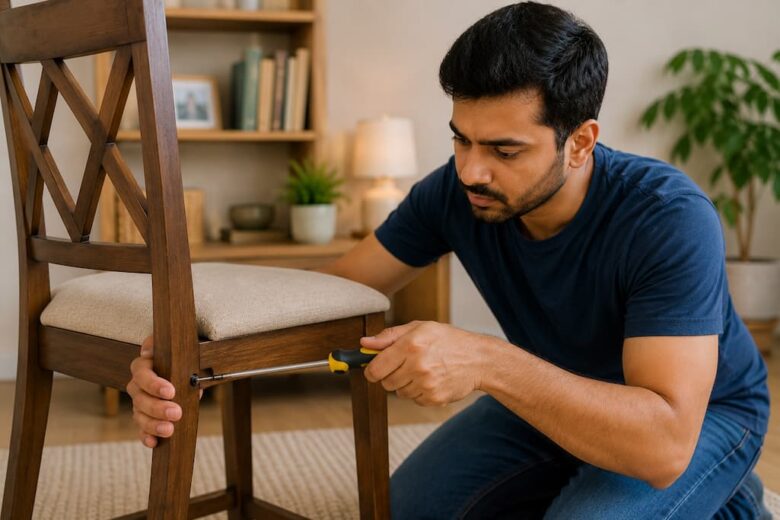
The joints where the legs met the cabinet body were loose too. Dowel construction. The dowels had shrunk or the holes had worn. I injected wood glue into the gaps. Clamped. Let dry overnight. The next morning, the joint was solid. No movement. The cabinet stood like it was built that way.
Clamping and gluing is like patching cracks. Patience. Pressure. Time.
Method 3: Weight Distribution (For the Top-Heavy)
The TV stand was stable. Low. Wide. But the TV was heavy. And I had added a soundbar. And a gaming console. The weight climbed. The center of gravity rose.
I lowered it. Moved the soundbar to a shelf below the TV. Moved the console to the bottom shelf. Kept only the TV and a lightweight router on top. The heaviest items at the bottom. The lightest at the top.
I also added rubber feet. The stand had plastic glides. They slid on the wood floor. Too easily. A push from a vacuum cord could move it. The rubber feet grip. Increase friction. Prevent sliding. Sliding becomes tipping. Tipping becomes falling.
The feet were three dollars. Self-adhesive. Peeling backing. Press on. Done. The stand now resists casual pushes. It knows where it lives. It stays there.
Method 4: Drawer Locks (For the Climbable)
The dresser drawers slid out smoothly. Too smoothly. A child could pull them. Use them as steps. I have no children. But I have a cat. And I have guests. And I have imagination.
I installed drawer locks. Simple latches. Plastic. Cost two dollars each. Screw into the inside frame. Catch on the drawer back. When engaged, the drawer opens two inches and stops. Enough to see inside. Not enough to climb. Not enough to use as a step.
I engage them when I leave the apartment. Disengage when I need full access. It takes three seconds. The habit took two weeks to form. Now I do it automatically. Lock. Leave. Unlock. Live.
This is part of my daily practical system. Safety is practical. Safety is daily.
💡 What I Learned the Hard Way
I once anchored a bookshelf to drywall. Used a toggle bolt. Rated for fifty pounds. The bookshelf weighed thirty empty. I felt safe. Then I loaded it with books. Another forty pounds. Total seventy. The toggle bolt held for six months. Then one night I heard a crack. The drywall around the bolt had crumbled. The bolt dangled. The strap hung loose. The bookshelf stood only because I had not loaded the top shelf. I was lucky. The next morning, I removed the toggle bolt. Patched the hole. Found the stud. Drilled new. Screwed into wood. Real wood. The kind that does not crumble. The lesson: anchors in drywall are temporary faith. Anchors in studs are engineering. Do not trust your life to drywall. It is powder held together by paper. It is not structural. It is decorative.
Furniture by Risk Level
| Furniture | Risk Factor | My Fix | Cost |
|---|---|---|---|
| Bookshelf (5 ft) | High — tall, narrow, climbable | Two wall straps into studs | $16 |
| TV stand | Medium — top-heavy, slides easily | Lowered weight, rubber feet | $3 |
| Bathroom cabinet | Medium — tall, uneven floor | Adjusted leg, glued joints, lock washer | $0 (already owned glue) |
| Dresser | High — climbable drawers, heavy when full | Drawer locks, wall strap | $10 |
| Desk | Low — stable, but monitor arm extends | Monitor centered, arm retracted | $0 |
| Coat rack | Medium — tall, freestanding, pullable | Weighted base, positioned against wall | $0 |
⚠️ When This Won’t Work
If you rent and your lease prohibits wall anchors, you have a problem. Some landlords allow small holes if patched. Some do not. Check your lease. If anchors are forbidden, use tension-mounted poles that brace between floor and ceiling. Or place heavy furniture in front of tall pieces to block tipping. Or accept the risk and watch children and pets closely. None of these are as good as anchoring. But they are better than nothing. Also, if your walls are plaster and lath, not drywall, standard stud finders fail. The lath confuses them. Use the magnetic method. Or drill small test holes. Or hire a handyman who knows old construction. Finally, if your furniture is antique, with brittle joints and fragile finishes, tightening can cause damage. The glue you use might stain. The clamp pressure might crack. The strap screw might split old wood. Consult an antique restorer. Some risks are not worth preventing at the cost of destroying something irreplaceable. Know what you own. Know its value. Protect accordingly.
Frequently Asked Questions
How often should I check the straps?
Monthly. Tug test. If the strap moves more than an inch, tighten. If the wall bracket shifts, investigate. Drywall crumbles slowly. Catching it early prevents failure. I check on the first of every month. Calendar reminder. Takes five minutes. All furniture. All straps.
What if I cannot find a stud?
Use a toggle bolt rated for the weight. But understand the risk. Toggle bolts hold in drywall. But drywall fails under shear. The bolt stays in the wall. The wall around it tears. If you must use a toggle, use two. Redundancy. And check more frequently. Weekly, not monthly. Or hire a professional to install a backing plate inside the wall. They cut drywall. Add wood. Patch. Paint. Expensive. Secure.
Do I need to anchor low furniture?
Not if it is truly low and wide. A coffee table. A bench. These tip only under extreme force. But a TV on a low stand changes the equation. The TV adds height. Adds weight. Makes the low piece top-heavy. Anchor the piece. Or secure the TV to the wall independently. Many TVs have VESA mounts that allow wall anchoring. Use them. The TV cost more than the strap.
What about furniture on carpet?
Carpet compresses. Furniture sinks slightly. Over time, the legs settle unevenly. The piece wobbles. Check quarterly. Adjust legs. Add shims if necessary. Or use furniture cups. Wide, flat bases that distribute weight. Prevent the leg from punching through carpet into padding. They also reduce sliding. Friction matters on carpet too.
Can I use command strips instead of screws?
No. Command strips hold pictures. Light pictures. They do not hold furniture. The adhesive fails under sustained load. Under temperature change. Under humidity. Do not trust your safety to adhesive. Trust it to metal into wood. Physics, not chemistry. Screws, not glue.
Closing Thought
I still think about that video. The dresser. The child. The sound. I do not have children. But I have a home. I have people who visit. I have a cat who climbs.
Furniture should not be dangerous. It is furniture. It holds books. It holds clothes. It should not hold the potential for injury.
I anchored everything. I tightened everything. I check everything. The cost was thirty dollars. The time was one afternoon. The peace is permanent. Or as permanent as maintenance allows.
Walk through your home now. Push your furniture. Does it wobble? Does it slide? Does it tempt climbing?
Fix it. Tonight. Before you sleep. Before you forget. Before the wrong combination of force and gravity finds you.
The strap is eight dollars. The stud finder is five. The drill is borrowable.
The alternative is a headline. A video. A lifetime of wondering what you could have done.
Do it now. Anchor it. Tighten it. Sleep better.
Sources and References
- U.S. Consumer Product Safety Commission (CPSC) — Furniture tip-over prevention guidelines, including anchoring recommendations and statistics on injuries and fatalities in residential settings.
- Anchor It! — CPSC Public Education Campaign — Public awareness campaign for furniture and TV tip-over prevention, including proper anchoring techniques and product selection guidance.
- National Electrical Code (NEC), National Fire Protection Association (NFPA) — Standards for residential structural integrity and safety, including wall construction and load-bearing considerations for furniture anchoring.

Hamza Farooq is a home improvement and organization writer who shares practical advice on cleaning, simple DIY fixes, and smart home organization. He focuses on creating easy-to-follow guides that help readers solve everyday household problems with realistic, affordable solutions. His goal is to make home maintenance simpler, more efficient, and accessible for anyone looking to improve their living space.