A mattress is one of the hardest-working items in any home, yet it’s also one of the most neglected. We wash our sheets regularly, fluff our pillows, and vacuum the bedroom floor, but the mattress underneath often goes months—or even years—without proper attention. Since most stains remain hidden beneath bedding, it’s deceptively simple to assume everything is clean.
The reality is different. Over time, mattresses collect sweat, dead skin cells, body oils, dust, allergens, and the occasional accidental spill. None of these appear overnight, but together they can affect your bed’s freshness and even shorten the mattress’s life.
Fortunately, cleaning a mattress at home isn’t as complicated as many people expect. The important part isn’t using expensive products—it’s understanding what you’re trying to remove and choosing a method that matches the problem. A fresh coffee spill needs different treatment than an old yellow stain, and a mattress with lingering odors requires a different approach than one covered in dust.
Before reaching for a bottle of cleaner, it’s worth taking a few minutes to identify both the type of mattress and the condition you’re dealing with. That simple step often prevents unnecessary damage and leads to much better results.
Every Mattress Doesn’t Respond the Same Way
Although mattresses may look similar from the outside, their construction varies considerably.
Traditional innerspring mattresses allow more airflow and usually tolerate light surface cleaning well. Memory foam models absorb moisture much more slowly, making them especially sensitive to excessive water. Hybrid mattresses combine several materials, while pillow-top designs often contain additional padding that takes longer to dry.
Because of these differences, the safest approach is almost always the same: use as little moisture as possible while cleaning.
A mattress isn’t designed to be soaked. Unlike removable bedding, the interior materials can trap water for days, creating conditions where mold or mildew may develop if drying isn’t complete.
Whenever you’re uncertain, check the manufacturer’s care label before using any cleaning product.
Start With a Careful Inspection Instead of Immediate Cleaning
Many people begin scrubbing the moment they notice a stain.
A better approach is to spend a few minutes examining the mattress first.
Remove all bedding and look across the entire surface under good lighting. You may discover several different issues that require different solutions.
Ask yourself:
- Is the stain fresh, or has it been there for weeks?
- Does the mattress simply smell stale, or is there visible discoloration?
- Are there damp areas that need immediate drying?
- Is the problem limited to one spot or spread across a larger section?
Taking time to answer these questions helps you avoid treating every problem exactly the same way.
The First Step Is Often the Simplest
Before using any cleaning solution, remove as much loose material as possible.
Dust, hair, lint, and tiny debris sitting on the surface can quickly turn into muddy residue once moisture is added.
Using a vacuum cleaner with an upholstery attachment is one of the safest ways to prepare the mattress for deeper cleaning. Move slowly across the surface rather than rushing through the task, paying particular attention to seams, stitched edges, and corners where dust tends to collect.
Even if no stains are present, regular vacuuming helps reduce allergens and prevents dirt from becoming embedded in the fabric over time.
A Quick Guide Before You Begin
| Problem | Best First Action |
|---|---|
| Fresh liquid spill | Blot immediately with a clean, absorbent cloth |
| Dry dust or loose debris | Vacuum the entire surface first |
| Food or drink stain | Remove residue before applying any cleaner |
| Musty smell | Improve ventilation before treating the odor |
| Unknown stain | Test any cleaning solution on a hidden area first |
Starting with the right first step often determines how successful the entire cleaning process will be.
Fresh Spills Need Speed More Than Strong Cleaners
Whether it’s coffee, tea, juice, or plain water, fresh spills are easiest to remove when they’re treated immediately.
The biggest mistake is rubbing the liquid deeper into the mattress.
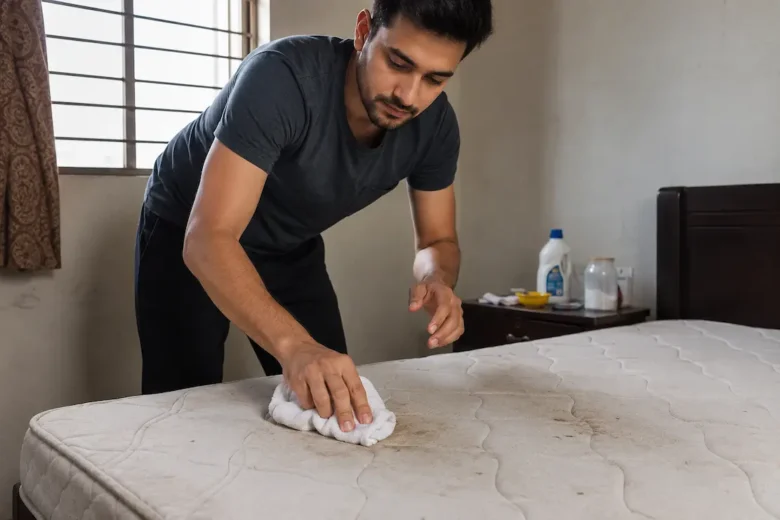
Instead, press a clean towel or absorbent cloth gently onto the spill to lift as much moisture as possible. Replace the cloth as it becomes damp rather than continuing to use the same section.
Blotting removes liquid without forcing it farther into the mattress layers.
Only after most of the moisture has been absorbed should you consider using a mild cleaning solution if staining remains.
Old Stains Require Patience
Older stains behave differently because they’ve had time to bond with the mattress fabric.
Scrubbing aggressively rarely improves the situation and may damage the material or spread the stain into a larger area.
Instead, apply a small amount of an appropriate fabric-safe cleaning solution using a clean cloth rather than pouring liquid directly onto the mattress.
Work gently from the outside edge of the stain toward the center. This reduces the chance of the stain spreading beyond its original size.
You may need to repeat the process several times instead of expecting complete removal after one attempt.
Patience generally produces better results than force.
Sweat Marks Often Build Up Without Anyone Noticing
Unlike accidental spills, sweat stains usually develop so gradually that they’re difficult to notice until the bedding is removed.
Warm weather, thick blankets, and natural body oils all contribute to the yellowish discoloration that sometimes appears after years of use.
Cleaning these areas isn’t simply about appearance.
Removing accumulated residue also helps improve freshness and prevents odors from becoming trapped inside the mattress fabric.
Regular mattress protectors can significantly reduce future staining because they absorb much of the moisture before it reaches the mattress itself.
Less Water Usually Leads to Better Results
It’s easy to assume that more cleaning solution equals better cleaning.
Witmeansresses, the opposite is often true.
Unlike floors or countertops, mattresses cannot simply be wiped dry once they’re wet. Excess moisture travels beneath the fabric where evaporation becomes much slower.
Using lightly dampened cloths instead of soaking the surface allows you to clean effectively while reducing the risk of prolonged drying times.
Whenever possible, clean small sections at a time rather than wetting the entire mattress unnecessarily.
Some Household Products Should Be Used Carefully
The internet is full of homemade mattress-cleaning recipes, but not every suggestion is suitable for every mattress.
Products that are too harsh may fade fabrics, weaken adhesives, or leave behind residues that attract more dirt over time.
Before using any unfamiliar cleaner, read both the mattress care instructions and the product label. When the manufacturer advises against certain chemicals, following that guidance is the best course of action.
Testing a cleaning solution on a small hidden section first is a simple precaution that can prevent permanent damage.
Cleaning Is Only Half of the Process
One mistake many people make is stopping once the stain appears lighter.
A mattress isn’t truly clean until it’s also dry.
Moisture trapped inside foam or fabric may create new problems even after the visible stain has disappeared. That’s why experienced cleaners often spend as much attention on drying as they do on washing.
Planning enough time for proper drying before putting bedding back on is one of the most important parts of successful mattress care.
When the Mattress Smells Clean but Still Doesn’t Feel Fresh
Sometimes a mattress looks spotless, yet something still seems off. The room has a faint stale smell, or the bed doesn’t feel as fresh as it should after I change the sheets. Often, the odor isn’t coming from a visible stain at all.
Mattresses naturally absorb moisture from the air and from daily use. Over time, body oils, perspiration, and tiny particles settle into the upper layers of the fabric. While these may not always leave obvious marks, they can gradually affect how the mattress smells.
Before you reach for strongly scented products, let the mattress air out first. Remove all bedding, open nearby windows if weather permits, and allow fresh air to circulate around the mattress for several hours. Good ventilation often improves freshness more than simply adding fragrance.
Dust Mites Can’t Be Completely Eliminated, but They Can Be Reduced
Dust mites are a normal part of most homes. They’re too small to see without magnification, and while they don’t bite people, they feed on tiny flakes of dead skin that naturally shed during sleep.
The goal isn’t to create a completely dust mite-free mattress, because that’s rarely realistic in an ordinary home. Instead, focus on creating conditions that make their population easier to control.
Vacuuming the mattress regularly, washing bed linens according to their care instructions, using a well-fitting mattress protector, and keeping the bedroom reasonably dry all contribute to a cleaner sleeping environment.
If someone in the household has allergies, maintaining these routines consistently is often more effective than relying on occasional deep-cleaning sessions.
Cleaning Methods at a Glance
| Cleaning Need | Recommended Approach | Important Reminder |
|---|---|---|
| Loose dust and debris | Vacuum with an upholstery attachment | Pay attention to seams and edges |
| Fresh spill | Blot immediately with a clean cloth | Avoid rubbing the stain |
| Older surface stain | Clean gently with a fabric-safe solution | Work from the outside toward the center |
| Everyday odors | Air out the mattress and improve ventilation | Don’t rely only on fragrances |
| Routine maintenance | Use a mattress protector and vacuum regularly | Prevention is easier than stain removal |
The right method depends on the problem you’re trying to solve rather than using the same technique every time.
Drying Deserves as Much Attention as Cleaning
One of the easiest ways to damage a mattress is putting it back into use before it’s completely dry.
Even if the surface feels dry to the touch, moisture can remain trapped beneath the fabric. Covering the mattress too soon with sheets and blankets limits airflow, making evaporation much slower.
Whenever possible, leave the mattress uncovered until you’re confident it has dried completely. Good ventilation, circulating air, and patience all help reduce drying time naturally.
Using excessive heat to speed up the process isn’t always a good idea, especially for foam mattresses that may react poorly to high temperatures. Allowing moisture to disappear gradually is generally the safer approach.
A Mattress Protector Is Easier Than Repeated Deep Cleaning
Many stains become difficult to remove simply because they reach the mattress in the first place.
A quality mattress protector acts as the first layer of defense against everyday moisture, accidental spills, dust, and body oils. Unlike the mattress itself, the protector can usually be removed and cleaned according to the manufacturer’s instructions.
Using one doesn’t eliminate the need for occasional mattress care, but it significantly reduces how often deep cleaning becomes necessary.
For families with children, pets, or anyone who enjoys breakfast in bed from time to time, this simple addition often prevents many common cleaning problems.
Small Habits Extend the Life of Your Mattress
Mattress care isn’t limited to dealing with stains after they appear.
Simple habits throughout the year help maintain comfort and cleanliness.
Changing bedding regularly prevents unnecessary buildup on the mattress surface. Rotating the mattress—if the manufacturer recommends it—may encourage more even wear. Vacuuming every few months removes dust before it becomes deeply embedded.
It’s also worth avoiding prolonged moisture in the bedroom. Rooms with poor ventilation naturally hold more humidity, making it harder for mattresses to remain fresh over time.
None of these habits requires much effort individually, but together they help preserve both hygiene and comfort.
Mistakes That Often Create Bigger Problems
People sometimes damage mattresses while trying to clean them.
Applying too much water is one of the most common mistakes because it greatly increases drying time and may encourage mold if moisture becomes trapped inside.
Using stiff brushes can weaken delicate fabric, while strong chemicals not intended for upholstery may cause discoloration or damage internal materials.
Another mistake is assuming every online cleaning method is suitable for every mattress. Materials differ, and what works safely on one type may not be appropriate for another.
Whenever you’re uncertain, following the manufacturer’s care recommendations is usually the safest choice.
When Cleaning Isn’t Enough
Although many stains and odors can be improved at home, there are situations where replacement becomes the more practical option.
If a mattress has extensive mold caused by prolonged moisture, deep structural damage, broken internal support, or persistent odors that remain after careful cleaning and complete drying, continuing to use it may no longer provide the comfort or hygiene you expect.
Similarly, if the mattress has reached the end of its useful lifespan and no longer provides proper support, cleaning alone won’t restore its original condition.
Knowing the difference between a mattress that needs maintenance and one that needs replacing can save both time and unnecessary expense.
Frequently Asked Questions
How often should I clean my mattress?
Light maintenance such as vacuuming every few months and addressing spills immediately is generally sufficient for most households. Deep cleaning can be performed as needed, depending on use and the condition of the mattress.
Can I use lots of water to remove stains?
It’s better to avoid soaking a mattress. Excess moisture is difficult to remove completely and may increase the risk of mold, mildew, or damage to internal materials.
What’s the safest way to deal with a fresh spill?
Blot the liquid immediately with a clean, absorbent cloth. Avoid rubbing, as this can spread the stain deeper into the fabric.
Will cleaning completely remove dust mites?
Cleaning helps reduce dust mites and the material they feed on, but completely eliminating them in a typical home isn’t realistic. Regular maintenance is the most effective long-term approach.
Is it safe to sleep on a mattress before it’s fully dry?
No. The mattress should be completely dry before replacing bedding and using it again. Trapped moisture can lead to unpleasant odors and other long-term problems.
Conclusion
A clean mattress contributes to more than just the appearance of your bedroom. Regular care helps reduce dust, manage odors, protect the materials inside the mattress, and create a more comfortable place to sleep. Most cleaning tasks don’t require specialized equipment—they simply require using the right method for the specific problem and avoiding unnecessary moisture.
Perhaps the biggest lesson is that prevention is much easier than restoration. Vacuuming occasionally, dealing with spills as soon as they happen, using a mattress protector, and allowing the mattress to stay dry all reduce the need for intensive cleaning later. These habits also help preserve the condition of the mattress over time.
Instead of waiting until stains become obvious or odors develop, treat mattress care as part of your normal home maintenance routine. A little attention every few months often keeps your bed feeling cleaner, fresher, and more comfortable throughout the year.

Hamza Farooq is a home improvement and organization writer who shares practical advice on cleaning, simple DIY fixes, and smart home organization. He focuses on creating easy-to-follow guides that help readers solve everyday household problems with realistic, affordable solutions. His goal is to make home maintenance simpler, more efficient, and accessible for anyone looking to improve their living space.