
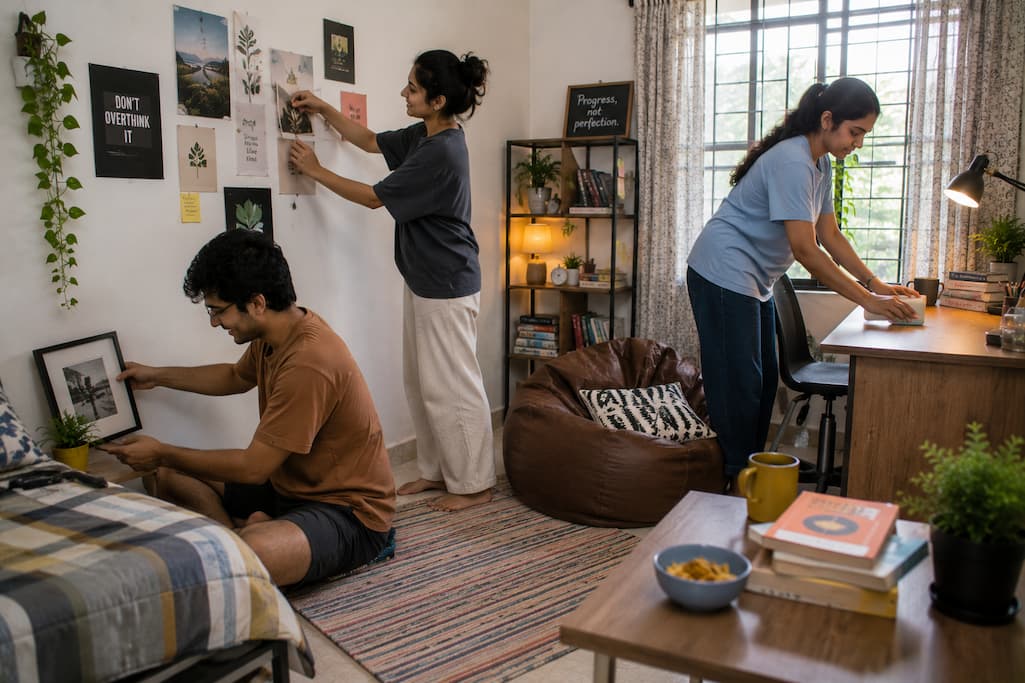
Most small-change lists lie.
They tell you to buy a plant. Rearrange your furniture. Paint an accent wall. And sure, those things change a room. For about forty-eight hours. Then you stop noticing the plant. The furniture arrangement reveals a new problem. The accent wall becomes just a wall.
I have tried dozens of these lists. The changes that actually stuck were not aesthetic. They were functional. Invisible, even. But I use them every single day.
Here are the ones that survived my skepticism.
The Light Switch I Moved Three Feet
My bedroom light switch was behind the door. Open the door, reach around, fumble in the dark. Every night. For two years.
Moving it cost twelve dollars in parts and one afternoon. I watched a twenty-minute video twice. Turned off the breaker. Moved the box three feet to the left, on the accessible wall. Wired it back.
Now I walk in and the switch is right there. Obvious. Invisible. But I notice it every time I do not have to fumble. That is the test of a good change: you notice the absence of annoyance, not the presence of beauty.
Lighting changes work the same way. The best ones are not dramatic. They are where you need them, when you need them.
The Drawer Liner That Stopped the Rattle
My kitchen drawers rattled. Not broken. Just loose in their tracks. Every time I opened one, it sounded like a toolbox falling downstairs. At 6 AM, this is not charming.
I tried tightening screws. No help. The drawer was just slightly smaller than the opening.
Solution: a roll of cork drawer liner. Three dollars. Cut into thin strips. Stuck to the sides of the drawer box, not the drawer itself. Added friction. Silenced the rattle. Took four minutes.
I have done this to every drawer in my apartment now. Bathroom. Bedroom. Office. The quiet is addictive. Drawers are underrated as a source of daily stress. Fix the drawer, fix the morning.
The Hook I Added to the Back of Every Door
Not the front. The back. The side nobody sees.
I used to drape coats on chairs. Bags on tables. Towels on the bathroom counter. Then I bought five over-door hooks. Total cost: twenty-two dollars. One for the front door (keys, mask, headphones). One for the bedroom door (robe, yesterday’s jeans I will wear again). One for the bathroom door (towel, hair wrap). Two for the closet door (laundry bag, donation bag).
The rule is simple: if it touches a flat surface, it gets a hook instead. Flat surfaces are magnets for clutter. Hooks are not. Hooks are vertical. Gravity helps.
I installed none of them with tools. They hang over the door top. Took thirty seconds each. The bedroom organization improved immediately. Not because I planned better. Because I removed the landing zones.
The Power Strip I Mounted Under the Desk
My desk had six cables. Power brick. Monitor. Lamp. Charger. Speaker. Random USB thing I forgot the purpose of. They sat in a pile on the floor. Dust collected around them. I vacuumed around them like they were furniture.
I bought a surge protector with mounting holes. Four screws into the underside of the desk. Cables routed through a cheap cable sleeve. The floor became visible again. Vacuuming became one motion, not an obstacle course.
The change took twenty minutes. The benefit compounds daily. I no longer kick a power brick when I stretch my legs. I no longer wonder which cable goes to what. The answer is always “up.”
The Trash Can I Shrunk
This sounds backwards. Everyone wants a bigger trash can. Fewer trips to the dumpster. Less frequent emptying.
I went smaller. From thirteen gallons to five. Bathroom and office only. Kitchen stayed large.
The result: I empty the small cans every other day instead of every week. They never smell. They never overflow. They never attract the cat. And because they fill fast, I am more aware of what I am throwing away. Receipts I do not need. Packaging I could recycle. Junk mail that should never have entered.
A small trash can is a mindfulness tool disguised as household waste management. Managing daily mess is about frequency, not capacity.
The Mat I Put Inside the Front Door
Not outside. Inside. A small rubber-backed mat, two feet by three. Shoes come off there. Always. The outdoor mat catches dirt. The indoor mat catches the dirt the outdoor mat missed. And it defines the boundary. Shoes stop there. The rest of the floor stays cleaner.
I vacuum half as often now. Not because I changed my habits. Because less dirt enters. The mat cost nine dollars. I have had it four years. It is ugly. It works.
💡 What I Learned the Hard Way
I once bought a “decorative” indoor mat. Woven. Pretty. No rubber backing. It slid across the floor every time I stepped on it. I nearly fell twice. I kept it for six months because it matched the room. Then I threw it out and bought the ugly rubber-backed one. Function beats form in places you step with wet shoes. Every time.
Quick Comparison: Visible vs. Invisible Changes
| Change Type | Examples | How Long It Lasted for Me |
|---|---|---|
| Visible / Aesthetic | New plant, accent wall, decorative pillows | 1–2 weeks before I stopped noticing |
| Invisible / Functional | Hook, moved switch, cork liner, mounted power strip | Still noticing the benefit years later |
⚠️ When These Changes Won’t Work
If you rent and your lease prohibits even minor alterations like moving a switch or screwing into walls, skip the ones that need tools. Focus on the hooks, the mat, the trash can. Also, if you live with multiple people who refuse to use hooks or remove shoes, the system breaks. I live with one other person. We negotiated. A household of five with teenagers? You need buy-in, not hardware. Finally, the moved light switch requires basic electrical comfort. If the breaker panel confuses you, hire an electrician. It is a small job. Cheap. Not worth a shock.
Frequently Asked Questions
How much did all these changes cost total?
Under sixty dollars. The light switch parts were twelve. The cork liner was three. The hooks were twenty-two. The power strip was fourteen. The mat was nine. The small trash can was eight. Some overlap, but the point is: none of these require a budget. They require noticing.
Which change had the biggest impact?
The hooks. By far. Because they eliminated the “chair pile.” The chair pile is where clutter breeds. Coats become bags become mail become random objects. The hook stops the pile before it starts. Everything else is maintenance. The hook is prevention.
Can I do these in a rental?
Four out of six, yes. The hooks, mat, liner, and trash can need no tools. The power strip needs four small screws. Most landlords allow this if you fill the holes when you leave. The light switch is the only one that might violate a lease. Check first. Or skip it and use a battery-powered motion-sensing light instead. Less elegant. Same function.
How do I get other people in my home to follow the system?
I do not know. I still find my partner’s shoes next to the mat sometimes. Not on it. Next to it. I do not nag. I just move them. Systems work when they are easier than the alternative. If the hook is closer than the chair, people use the hook. If the mat is right there, most people step on it. Make the right choice the easy choice. That is all you can control.
Should I do all of these at once?
No. I did them over eight months. One change at a time. Live with it. See if it sticks. Then add another. Doing everything at once feels productive. It is not. You will forget which change solved which problem. And you will not appreciate any of them.
Closing Thought
Big home improvements get the attention. Kitchen renovations. New flooring. Built-in shelves. But the daily friction points are what actually shape your life. The fumbled light switch. The rattling drawer. The cable you kick.
Fix those. Let the plants die if you must.
The invisible changes are the ones you keep.
Sources and References
- U.S. Consumer Product Safety Commission (CPSC) — Electrical safety guidelines for residential modifications, including light switch relocation and power strip usage.
- U.S. Environmental Protection Agency (EPA) Safer Choice Program — Recommendations for selecting safer household products and maintaining indoor environmental quality.
- National Safety Council — Home electrical safety practices, including when to hire a professional for wiring modifications.

Hamza Farooq is a home improvement and organization writer who shares practical advice on cleaning, simple DIY fixes, and smart home organization. He focuses on creating easy-to-follow guides that help readers solve everyday household problems with realistic, affordable solutions. His goal is to make home maintenance simpler, more efficient, and accessible for anyone looking to improve their living space.