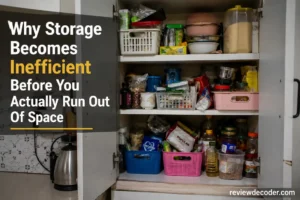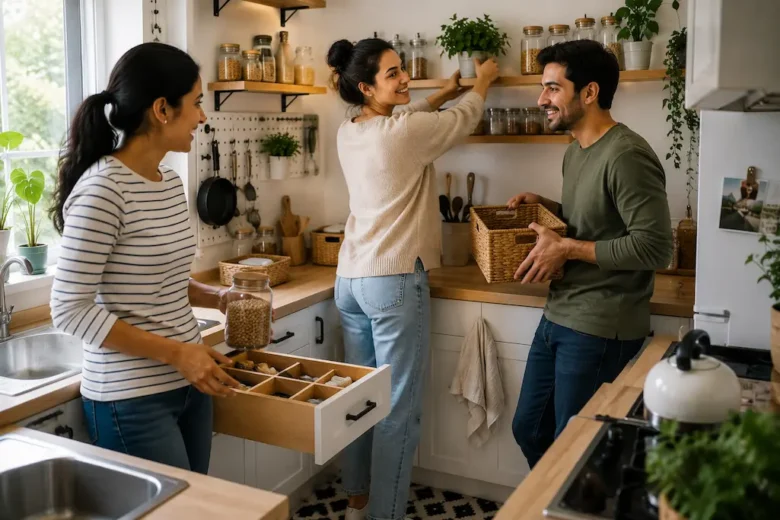
A small kitchen can become difficult to use long before it actually runs out of storage. Appliances left on the counter, a drawer filled with unrelated utensils, or a cabinet where items are stacked on top of each other can make the small kitchen feel permanently crowded. The problem is often not the total amount of storage but how effectively that storage supports everyday activities. When frequently used items are difficult to reach, people naturally leave them out, creating even more visual and physical clutter.
The most useful organization ideas for a small kitchen therefore do not begin with buying containers, racks, or complicated organizers. They begin with understanding how the kitchen is actually used. The pan you reach for every evening needs a different storage position from a serving platter used twice a year. Ingredients used during breakfast should not necessarily be buried behind baking supplies. Once storage is arranged around real habits rather than simply filling available spaces, a small kitchen can become considerably easier to work in without any major remodeling.
Give the Easiest Storage to the Things You Use Most
The easiest mistake to make in a small kitchen is giving valuable storage space to the wrong things. Cabinets and drawers closest to the main preparation area should generally contain items that are used frequently, because convenience has a direct effect on whether the kitchen stays organized. When everyday plates, cooking utensils, knives, pans, or ingredients are difficult to reach, they tend to migrate onto countertops or other convenient surfaces. That creates a cycle in which the kitchen becomes cluttered simply because putting things away takes too much effort.
Start by observing what you actually use over the course of a normal week rather than relying on what you think you use. Everyday cookware, commonly used utensils, frequently reached-for ingredients, and regular tableware should receive the most accessible locations. Items used only occasionally can move into higher cabinets, deeper storage, or less convenient corners. This simple change can make existing cabinets feel larger because the storage becomes easier to navigate rather than forcing everything into one crowded area.
Make Vertical Cabinet Space Work Harder
Many kitchen cabinets contain more vertical space than the stored objects actually require. A short stack of bowls may occupy only half the distance between two shelves, leaving a large amount of unused air above it. Shelf risers, additional adjustable shelves, or appropriately sized organizers can turn some of that wasted height into usable storage, particularly for plates, bowls, mugs, cans, and other items that can safely be stacked or separated.
There is a limit to how much vertical organization is beneficial, however. A cabinet is not truly efficient if every time you need one item you have to remove several others first. The purpose of adding another level is to make more things accessible, not simply to increase the number of objects inside the cabinet. Before adding an organizer, consider how often each item is used and whether you will still be able to see and reach it comfortably after the space is divided.
Turn Deep Cabinets Into Usable Storage
Deep cabinets can appear spacious while actually being some of the least convenient storage in the kitchen. Small objects pushed toward the back can disappear, which often leads to duplicate purchases and forgotten supplies. This is particularly common with pantry items, food containers, cleaning products, and small kitchen tools that are difficult to see once larger objects have been placed in front of them.
One solution is to group similar items and use containers or bins that can be pulled forward as a single unit. This is more useful than simply placing several layers of unrelated products inside a deep cabinet. If you have to move five separate objects before reaching the back, you are not using the cabinet efficiently. A simple pull-out bin or clearly defined category can make the same depth much easier to manage because everything has a predictable location.
Keep the Countertop for Work, Not Overflow
Counter space is particularly valuable in a small kitchen because it is where food preparation, cooking, serving, and cleanup actually happen. When the countertop becomes permanent storage for unopened mail, rarely used appliances, decorative objects, food containers, and miscellaneous household items, the kitchen can become difficult to use even when plenty of cabinet space remains available.
This does not mean every appliance needs to be hidden away. If you use a coffee maker every morning or a toaster several times a day, keeping it accessible may make sense. The important distinction is between something that genuinely supports daily activities and something that remains on the counter simply because nobody has decided where else it belongs. Removing even a few unnecessary countertop objects can create a much larger working area and make the entire kitchen appear less crowded.
Organize Drawers Around Daily Tasks
A drawer can hold a surprising amount while still being inefficient if everything inside it becomes mixed together. Kitchen utensils often end up in one large pile, with measuring spoons, spatulas, peelers, bottle openers, and miscellaneous tools competing for the same space. The problem is not always a lack of capacity. It is the absence of a system that makes individual items easy to identify and return.
Instead of automatically organizing drawers according to generic categories, consider what you do around them. Measuring tools can stay together because they are used in the same cooking activity, while everyday cutlery can be placed where it is convenient to unload from the dishwasher. Dividers can help keep long utensils separated from smaller tools, but they should be sized around the objects you actually own. A drawer that looks perfectly divided but wastes half its capacity is not necessarily better organized.
Use Cabinet Doors Without Overloading Them
The inside of a cabinet door is often overlooked because it is not traditional shelf space, yet it can provide useful additional storage for lightweight objects. Depending on the cabinet’s construction and available clearance, a door-mounted organizer may work for measuring spoons, small kitchen tools, wraps, cleaning accessories, or other compact items that are frequently needed.
Before installing anything, check how much space exists between the door and the contents of the cabinet. A rack that looks slim when the door is open may prevent the cabinet from closing once shelves are loaded. Weight is another consideration because repeatedly carrying a heavy organizer can place additional strain on hinges. Door storage works best when it solves a specific problem without interfering with the storage that already exists inside the cabinet.
Make Narrow Gaps Useful When They Actually Are
Small kitchens frequently contain narrow spaces beside appliances or cabinets that seem too small for conventional storage. A carefully measured pull-out unit can sometimes turn one of these gaps into a useful location for spices, bottles, trays, cutting boards, or other narrow items. The key is to measure before buying anything, because a storage product that is slightly too wide can interfere with an appliance door, cabinet door, or ventilation requirement.
Not every narrow gap needs to become storage, either. A space that is difficult to access or clean may not justify the effort of filling it. If an organizer requires you to pull out several things before reaching one bottle, it may create more inconvenience than it solves. Small spaces are most valuable when they are assigned to items that naturally fit their dimensions and can be retrieved without disrupting the rest of the kitchen.
Store Pots and Pans According to How Often You Cook With Them
Cookware is one of the biggest storage challenges in a small kitchen because pots and pans are large, irregularly shaped, and often difficult to stack. A deep cabinet can quickly become a pile of cookware where the most frequently used pan ends up underneath several other pieces. That forces unnecessary handling every time you cook and can encourage people to leave cookware on the stovetop or counter after use.
Nest compatible pots and pans when doing so will not damage their surfaces, and consider vertical storage for suitable pans, baking sheets, cutting boards, and trays. Lids can often be separated from the main cookware rather than occupying valuable horizontal space inside the same stack. The objective is not to make every piece visible at once but to make the cookware you use regularly accessible without having to dismantle the entire cabinet.
Improve Pantry Visibility Before Expanding Pantry Capacity
A small pantry or food cabinet can often hold more than it appears to, but poor visibility makes the available space difficult to use. Bags, boxes, cans, and packets placed at different depths can conceal what is already there. As a result, ingredients are forgotten until they expire or are purchased again because nobody can remember whether they are already in the kitchen.
Grouping similar foods is one of the simplest improvements. Breakfast items, baking ingredients, snacks, canned foods, grains, and frequently used cooking ingredients can each be assigned a predictable area. Clear containers can be helpful for certain dry goods, but transferring everything into matching containers is not automatically an improvement. The system should help you see what you have, how much is left, and where it belongs when you put groceries away.
Use the Refrigerator as a Storage System, Not Just a Cold Box
A crowded refrigerator can create the same problems as an overcrowded cabinet. Short containers disappear behind tall ones, leftovers are forgotten on lower shelves, and frequently used ingredients move around until nobody knows where to look for them. A small refrigerator becomes more manageable when similar foods have consistent locations and the most frequently used items remain visible.
You do not need a perfectly styled refrigerator to accomplish these goals. A practical arrangement is more valuable than an attractive one that requires constant maintenance. Consider keeping leftovers in a clearly visible area, grouping similar ingredients where possible, and avoiding unnecessary stacking that prevents you from seeing what is behind it. The goal is to make food easier to find and use before it becomes waste rather than creating a display that only looks organized immediately after cleaning.
Use Wall Space Selectively
Walls can provide additional storage in a small kitchen, but covering every available surface with hooks, racks, and shelves can create another form of clutter. The most useful wall storage is generally reserved for items that are frequently used and visually manageable, such as selected utensils, cutting boards, mugs, or cookware that is appropriate to keep exposed.
Before installing wall storage, consider what problem it is solving. If an item already has a convenient home inside a cabinet, moving it onto the wall may not improve anything. On the other hand, if a frequently used object repeatedly occupies the countertop because there is no convenient storage location, a carefully positioned rack could solve a genuine problem. A few purposeful additions usually work better than turning the kitchen walls into a second set of crowded shelves.
Make the Area Under the Sink Easier to Control
The cabinet beneath the kitchen sink often becomes a dumping ground because it is awkwardly shaped and partly occupied by plumbing. Cleaning products, sponges, brushes, bags, cloths, and miscellaneous supplies quickly mix. The result is a space that technically contains a lot but requires considerable effort to locate anything.
A removable bin or two can help group similar products while making the contents easier to access. Keep bottles upright when appropriate, avoid overcrowding around plumbing connections, and regularly inspect for leaks or damaged containers. Cleaning products should remain properly labeled and stored according to their instructions, particularly when multiple products are kept in the same cabinet. Organization should make the area easier to manage without creating a safety risk.
Give Rarely Used Items the Least Valuable Space
A small kitchen cannot allocate every item prime storage space, and trying to do so is one reason cabinets become crowded. Seasonal serving dishes, specialty baking equipment, holiday items, large roasting accessories, and appliances used only occasionally can usually tolerate less convenient storage than the things you use every day.
High cabinets, deep shelves, or other less accessible areas can therefore become useful when you reserve them for occasional items. This creates a natural hierarchy within the kitchen: everyday objects remain within convenient reach, while things used only occasionally are stored farther away. The arrangement becomes easier to maintain because you are no longer trying to make rarely used equipment compete with everyday essentials for the same limited space.
Declutter Before Buying Another Organizer
Storage products can improve an existing system, but they cannot solve the problem of having too many unnecessary items. A small kitchen containing duplicate utensils, unused gadgets, expired food, chipped containers, and appliances that have not been touched in years will remain difficult to organize regardless of how many baskets or dividers are added.
Start by removing things that no longer serve a useful purpose. That allows you to keep everything you rarely use. A specialty appliance that is genuinely useful once a year may deserve to stay. The question is whether the amount of storage it consumes is justified by how useful it is. When space is limited, every item should have a reason for occupying valuable kitchen real estate.
Think About the Kitchen as a Sequence of Activities
One of the most effective ways to organize a small kitchen is to arrange storage around the sequence of tasks rather than simply grouping objects by type. Food preparation items should generally be convenient to the main preparation area, cooking utensils should be accessible near the stove, and dishes or cutlery can be positioned where they are easiest to retrieve during meals.
This approach reduces unnecessary movement and makes it easier to return things after use. Imagine preparing a typical meal and pay attention to what you reach for repeatedly. If you constantly cross the kitchen to retrieve a utensil, open three cabinets to find a pan, or move appliances before you can use the countertop, the storage arrangement is working against you. Changing those relationships can make a small kitchen feel substantially more spacious even though not a single cabinet has been added.
A Practical Storage Hierarchy for Small Kitchens
| Storage priority | What belongs there | Why |
|---|---|---|
| Easiest to reach | Everyday dishes, utensils, cookware and ingredients | Used constantly |
| Convenient but less central | Weekly-use appliances and supplies | Needed regularly but not continuously |
| Upper or deeper storage | Seasonal and occasional items | Accessibility matters less |
| Awkward corners | Large or infrequently used objects that fit naturally | Makes use of difficult spaces |
| Countertop | Only genuinely frequent-use equipment | Protects valuable work space |
This hierarchy can be adapted to almost any kitchen. Someone who cooks every day may give cookware more accessible storage than someone who primarily prepares simple meals. A household that bakes frequently may need to prioritize flour, measuring tools, baking trays, and mixers differently from a household that rarely uses an oven.
The important point is that organization should reflect actual behavior. A storage system copied from another kitchen may look attractive but still be inefficient if your routines are entirely different.
Small Changes That Can Have a Large Effect
The most useful improvements are often surprisingly ordinary. Adding a second shelf inside a tall cabinet can double the practical storage for short objects. Separating lids from cookware can make a crowded cabinet easier to navigate. Moving a rarely used appliance away from the countertop can restore an entire section of preparation space. Even changing the position of one drawer’s contents can eliminate repeated searching.
These changes work because they reduce friction. When an item has a logical location and is easy to reach, people are more likely to return it after use. When putting something away is awkward, people naturally create temporary homes on the countertop, dining table, or nearest empty surface. Over time, those temporary homes become permanent clutter.
That is why organization should be judged by what happens after several days of kitchen use, not just by how good it looks right after rearranging everything.
Create a System That Is Easy to Maintain
A small kitchen does not need an elaborate organization system that requires constant sorting. In fact, complicated systems often fail because household members stop following them once daily life becomes busy. If every utensil has a precise position or every ingredient must be transferred into a special container, putting things away can become more work than simply leaving them out.
A better system is predictable but forgiving. Similar things should generally stay together, frequently used items should remain accessible, and storage locations should make sense to everyone who uses the kitchen. If something repeatedly ends up in the wrong place, that may be evidence that its assigned location is inconvenient rather than evidence that someone is careless.
Good organization should make the correct behavior straightforward.
Frequently Asked Questions
How can I maximize storage in a small kitchen without remodeling?
Start by using existing space more efficiently before considering structural changes. Add appropriate shelf levels to tall cabinets, improve drawer organization, use suitable door or wall storage, group pantry items by function, and move rarely used equipment into less accessible areas. Just as importantly, remove duplicate or unnecessary items so that existing storage is not being consumed by things you rarely use.
What should I keep on the countertop in a small kitchen?
Keep appliances and tools on the countertop when their frequency of use justifies the space they occupy. A coffee maker used every morning may be worth keeping accessible, while an appliance used only a few times a year may be better stored elsewhere. The objective is not to keep the countertop completely empty but to preserve enough open space for the work the kitchen needs to perform.
Are organizers worth buying for small kitchen cabinets?
They can be, particularly when they solve a clearly identified problem such as unused vertical space, difficult-to-access deep cabinets, or disorganized drawers. However, buying organizers before decluttering can simply give unnecessary items more places to hide. Identify the storage problem first, then choose an organizer that addresses that specific issue.
How should I organize a small kitchen pantry?
Prioritize visibility and accessibility. Group similar foods together, keep frequently used ingredients toward the front, avoid hiding small packages behind larger ones, and use appropriate bins or containers where they make the contents easier to see. The best pantry is not necessarily the one with the most matching containers; it is the one where you can quickly tell what you have and where it belongs.
Where should rarely used kitchen appliances go?
Rarely used appliances can generally be placed in higher cabinets, deeper storage, or another suitable location outside the main preparation zone. Their storage position should depend on their size, weight, safety considerations, and frequency of use. Keeping occasional equipment away from prime storage allows everyday items to remain easier to reach.
Make Every Part of the Kitchen Serve a Purpose
The challenge of a small kitchen is not simply that there are fewer cabinets. It is that every inefficient decision becomes more noticeable when space is limited. A poorly organized drawer can make several utensils effectively unavailable, while one oversized appliance can consume enough countertop space to interfere with food preparation. The solution is not to force more and more objects into the room but to make the available space work according to the way the kitchen is actually used.
Start with the things you reach for every day. Give them convenient homes and keep the countertop available for genuine work. Use vertical cabinet space where it improves access, turn deep storage into manageable zones, and reserve awkward or distant areas for things you rarely need. Before buying another organizer, remove anything that is consuming valuable space without providing enough value in return.
Most importantly, judge your organization system by what happens during ordinary life. If everyone can find what they need, items are easy to put away, and the kitchen remains reasonably clear after cooking, the system is doing its job. It does not need to look like a professionally staged kitchen or contain a specialized product for every drawer.
A small kitchen becomes much more functional when storage follows real habits instead of fighting them. You may not be able to add another cabinet or expand the floor plan, but you can make the cabinets, drawers, walls, and countertops you already have considerably more useful. In a limited space, better decisions about what goes where can create the feeling of having more room without creating any new room at all.

Hamza Farooq is a home improvement and organization writer who shares practical advice on cleaning, simple DIY fixes, and smart home organization. He focuses on creating easy-to-follow guides that help readers solve everyday household problems with realistic, affordable solutions. His goal is to make home maintenance simpler, more efficient, and accessible for anyone looking to improve their living space.