
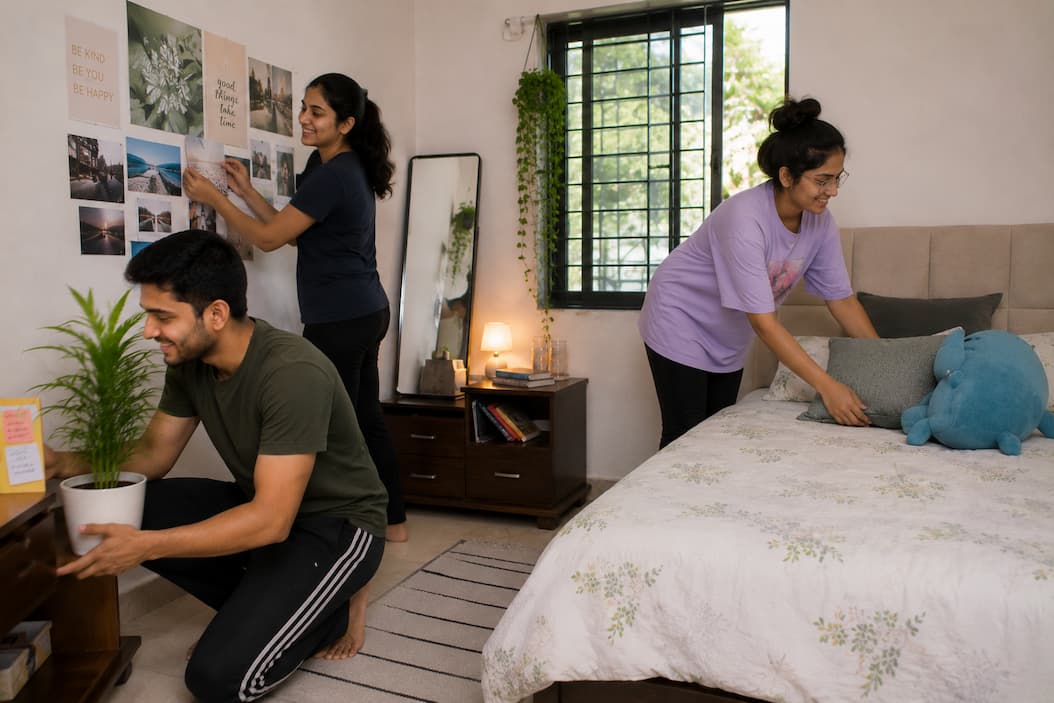
My room used to feel a bit uncomfortable, cluttered, and dull. I always felt like I needed a complete makeover—new furniture or decorations to brighten it up. But over time, I realised that it wasn’t about how much money I spent, but rather how I used the space.
Deliberately making small changes to what I already had worked wonders for me. My room gradually became calmer, fresher, and more functional—without any renovations or new purchases.
How I Improved My Room Without Spending Money
I checked my bank account on a Saturday morning. Forty-three dollars. Rent was due Monday. Groceries were already bought. That forty-three dollars was not touchable.
But I had to spend the weekend in my room. And I hated my room.
Not because it was ugly. Because it was tired. The same tired I felt. Same beige walls. Same pile of clothes on the same chair. Same dust on the same window ledge. Same view of the same parking lot.
I decided to fix it. With zero dollars. Not “under twenty.” Not “almost free.” Zero.
Here is what actually worked.
What I Was Working With
My room is ten feet by eleven. One window facing a brick wall. A bed, a desk, a dresser, and a bookshelf I found on the curb last year. The bookshelf wobbles. I own it anyway.
My inventory for the weekend:
- One spray bottle from the recycling bin (rinsed)
- White vinegar from the kitchen (stolen, technically, but I live here too)
- Old t-shirts too stained to wear
- Masking tape I forgot I had
- Cardboard boxes from Amazon deliveries
- A pillowcase with a rip in the seam
- Water
- Time
That was the budget. That was the team.
I Moved the Bed
Not far. Three feet. From under the window to the wall adjacent.
The old position seemed logical. Window = light. But the window faces a brick wall. The light was gray and depressing. It came in at a sad angle and landed on my face at 6 AM. I had been waking up tired for months. I blamed my sleep schedule. It was the bed.
I moved it to the interior wall. No morning glare. No brick-wall view from the pillow. The room felt larger immediately. Not because it was. Because the walking path changed. I could move from door to desk to bed in a straight line instead of a zigzag.
I did this alone. Bad idea. The bed frame scraped the wall. Left a mark. I will fix that later. For now, the layout is better. The psychology of space is weird. Moving furniture costs nothing and changes everything.
I Cleaned the Window
Not the glass. The glass was fine. The frame. The track. The screen.
I mixed one part vinegar, three parts water in the spray bottle. Sprayed the window track. Let it sit. Used an old toothbrush (mine, but the bristles were dead anyway) to scrub the metal. The dirt that came out was black. Actual black. I had been breathing near that for two years.
I wiped the screen with a damp t-shirt. Both sides. Light came through differently after. Not brighter. Cleaner. Like the difference between a cloudy day and a clear one. The room felt healthier. I know that sounds dramatic. But try it. Clean a window screen you have ignored for a year. You will feel it too.
I Edited My Stuff
Not organized. Edited. Removed.
I pulled everything off the bookshelf. Every item. Put it on the floor. Picked up each thing and asked: “Would I pack this if I moved tomorrow?” If the answer was hesitation, it went in a box. Not donated yet. Just boxed. Out of sight.
Three boxes. Full. Clothes I kept for “someday.” Books I was going to read. A lamp that had not worked since March. A stack of notebooks with three used pages each.
The boxes went into the closet. The closet is now crowded. But the room is not. And I live in the room, not the closet. I wrote about my decluttering method here. The key is the “move tomorrow” question. It cuts through sentiment fast.
The bookshelf stopped wobbling after I removed half the weight. Funny.
I Made Art From Trash
I had a cardboard box. Flattened it. Cut it into four rectangles. Taped them to the wall above my desk in a grid. Not painted. Not decorated. Just brown cardboard frames.
Inside each frame I pinned: a postcard that came with a bill, a leaf I pressed in a book last fall, a photo I printed for two cents at the pharmacy and never framed, a handwritten quote from a novel I love.
It looks intentional. Like a gallery wall. It cost zero. If I hate it next week, I recycle it. No guilt.
Budget-friendly does not mean cheap. It means using what you already stopped noticing.
I Cleaned the Floor Properly
I vacuum weekly. But I never moved the furniture to vacuum. Who does?
I did. Saturday afternoon. Moved the desk six inches. The dust was thick. Hair. A lost earring. A guitar pick I have not owned a guitar in three years. I vacuumed the edges. The corners. Under the bed. The dust that lives in the perimeter, not the center.
Then I mopped with water and vinegar. The floor was sticky in places. I never noticed because I wear socks. Barefoot, it was gross. Now it is not.
The room smelled like vinegar for an hour. Then it smelled like nothing. Which is better than it smelled before.
💡 What I Learned the Hard Way
I used the vinegar spray on my desk. It is wood. Not sealed well. The vinegar stripped the finish in one spot. Now there is a dull patch the size of a quarter that stares at me while I work. I cover it with a notebook. The lesson: vinegar is for glass, metal, and tile. Not wood. Not ever. Test a hidden spot. I knew this. I forgot. Do not forget.
What Changed and What Did Not
| What I Did | Time It Took | Cost | Result |
|---|---|---|---|
| Moved bed | 20 minutes | $0 | Better light, better flow |
| Cleaned window track and screen | 35 minutes | $0 | More light, less dust |
| Boxed unused items | 1 hour | $0 | Clear surfaces, less visual noise |
| Cardboard gallery wall | 15 minutes | $0 | Feels personal, not empty |
| Moved furniture, vacuumed edges, mopped | 45 minutes | $0 | Floor actually clean |
Total time: about two and a half hours. Total cost: zero. Total impact: I stopped hating my room.
⚠️ When This Won’t Work
If your room needs actual repairs — a leaking ceiling, a broken window, mold — no amount of rearranging fixes that. You need a landlord or a professional. Also, if you are dealing with clinical depression or severe anxiety, a clean window track will not solve what is happening in your brain. I am not suggesting it will. This is for the blah days. The “my room is fine but I feel stale” days. Finally, if you literally own nothing — no furniture to move, no items to edit, no boxes to repurpose — then you need acquisition, not rearrangement. Go to a free section on Craigslist. Or a curb. Then come back to this.
Frequently Asked Questions
Does moving furniture really make that big a difference?
Yes. But not because of feng shui. Because your brain stops autopiloting. You notice the room again. New path to the door. New shadow patterns. It is like a software refresh for your spatial memory. After three days it feels normal again. But those three days are enough to break a rut.
What if I live with someone and cannot just move the bed?
Ask. Or move your own stuff. The desk. The chair. The bookshelf. Even rotating a rug changes the feel. If your roommate or partner says no to everything, focus on what is yours. Your side of the room. Your closet. Your window. You do not need permission to clean your own window track.
How do I keep the room feeling fresh after the weekend?
I do not. It fades. That is normal. But now I know the room can feel different. So when I get that stale feeling again, I do one thing. Move one item. Clean one surface. It is never as dramatic as the first time. But it is enough. Maintenance is just a smaller version of the original fix.
Can I really use cardboard on the wall?
It is cardboard. It will not last forever. It might sag in humidity. It might collect dust. But it is free and it looks better than a blank wall. When you have money, replace it with frames. When you do not, cardboard is fine. Your room is for you. Not Instagram.
What if my room is already clean and minimal?
Then you do not need this article. Seriously. If your room is already good, spend the weekend outside. The best room improvement is sometimes remembering you do not have to be in it.
Closing Thought
I spent zero dollars. I gained a room I could stand to be in. The bed is in a better place. The floor is clean. The window lets in light that does not feel dirty. The walls have something I made.
It is not a makeover. It is a reset.
And when I checked my bank account on Monday, it still had forty-three dollars.
That felt like the real win.
Sources and References
- American Psychological Association (APA) — Research on how physical environment and spatial arrangement influence mood, behavior, and cognitive patterns.
- Centers for Disease Control and Prevention (CDC) — Healthy Homes — Guidelines for maintaining a healthy indoor environment, including cleaning practices and reducing indoor dust and allergens.
- University of Minnesota Extension — Practical strategies for home organization and decluttering without specialized tools or significant expense.
That is how I enhanced my room without incurring any expenses, and it was considerably easier than I had anticipated.
The Mindset Shift that Changed Everything
Before anything physical changed in my room, my mindset had to change first. I stopped looking at my space as something that needed new items and started treating it like something that needed better use.
Instead of thinking, “I need new furniture”, I started asking:
- Can I move the item instead of replacing it?
- Do I actually need everything in this space?
- What’s making the room feel crowded?
Once I shifted my thinking, improvement became easier and more creative.
A big turning point came when I started applying ideas similar to Improve Room Without Spending Money, which focuses on improving space through smarter use rather than buying new things.
Decluttering without Stress
The first real transformation came from decluttering. Not organizing—just removing unnecessary things that were creating visual and mental noise.
At first, it felt overwhelming. But breaking it into small steps made it manageable.
What helped me most was following a simple and stress-free approach inspired by Decluttering Home Without Stress.
Here’s what I did:
1. Start small
One drawer, one corner, or one shelf at a time.
2. Sort items quickly
- Keep
- Move elsewhere
- Let go
3. Don’t overthink it
If I hadn’t used something in a long time, it didn’t deserve space in my room.
Once I applied these principles consistently, my room instantly felt lighter and easier to manage.
Rearranging Furniture for Better Flow
After decluttering, I noticed something important—the room still didn’t feel fully right until I changed the layout.
Furniture placement affects how a room feels more than most people realise.
I tested different arrangements until the space felt natural.
What I focused on:
- Keeping movement easy
- Balancing visual weight
- Making sure the light spreads properly across the room
Even small shifts made a noticeable difference. Sometimes moving a bed just slightly or rotating a desk changed the entire feel of the room.
Cleaning as a Full Reset
Once the space was decluttered and rearranged, I treated cleaning as a reset instead of a quick task.
I focused on areas most people usually ignore:
- Under furniture
- Behind objects
- Window corners
- Fans and shelves
My simple routine:
- Clean top to bottom
- Work in sections
- Open windows for fresh air
- Wipe surfaces properly instead of rushing
The result wasn’t just visual—it entirely changed how the room felt.
Using Light More Effectively
Lighting was something I used to ignore, but it made a huge difference once I paid attention to it.
I didn’t buy anything new. I simply optimized what I already had.
What helped:
- Letting natural light into the room during the day
- Cleaning dust from bulbs and lamps
- Repositioning objects so light wasn’t blocked
At night, I shifted to softer lighting, which made the room feel more relaxing and less harsh.
Small Changes that Made a Big Difference
After the major improvements, I started noticing small details that had a surprisingly big impact.
Surface simplicity
Clearing tables and shelves made the room feel instantly more open.
Cable control
Organizing tangled cables reduced visual clutter significantly.
Item grouping
Keeping similar items together made everything feel more structured.
Airflow improvement
Fresh air made the space feel lighter and more comfortable.
These changes were simple, but together they transformed the overall atmosphere.
Keeping the Room Improved Long-Term
The hardest part isn’t improving the room—it’s maintaining it.
So I built a simple routine that didn’t feel overwhelming:
- Spend a few minutes tidying daily
- Put things back immediately after use
- Do a quick weekly reset
- Avoid letting clutter build up
The biggest improvement came when I gave every item a fixed place. Once that habit formed, keeping the room clean became automatic.
Why This Method Worked
In hindsight, I realised a very simple truth: I didn’t need any extra things. What I needed to do was make optimal use of what I already had.
The following points brought about the most significant changes:
- Mindful decluttering
- Carefully rearranging items
- More light and air circulation
- Attention to detail
These improvements cost nothing, yet they completely transformed the atmosphere of my space.
I didn’t invest in upgrading the space; instead, I focused on better aligning it with my daily life.
Conclusion
Improving a room doesn’t always require spending money. Most of the time, it’s about removing what isn’t needed and using space more intelligently.
For me, the biggest improvements came from decluttering, rearranging furniture, cleaning deeply, and adjusting lighting. Each step built on the previous one, slowly turning my room into a calmer and more comfortable space.
The best part is that anyone can do it—no budget required, just time and awareness.
Small changes can lead to significant results.
FAQs
1. Can I really improve my room without buying anything?
Yes. Most improvement comes from decluttering, cleaning, and rearranging what you already have.
2. What should I start with first?
Start with decluttering one small area. It creates instant visual improvement and makes everything else easier.
3. How long does it take to see results?
You can notice changes within a few hours if you focus on key areas like clutter and layout.
4. What if my room is very small?
Focus on spacing, light, and reducing unnecessary items. Small rooms actually improve faster with simple changes.
5. How do I maintain the improvement?
A short daily reset and giving every item a fixed place helps maintain order effortlessly.

Hamza Farooq is a home improvement and organization writer who shares practical advice on cleaning, simple DIY fixes, and smart home organization. He focuses on creating easy-to-follow guides that help readers solve everyday household problems with realistic, affordable solutions. His goal is to make home maintenance simpler, more efficient, and accessible for anyone looking to improve their living space.